 Rachel Sadon
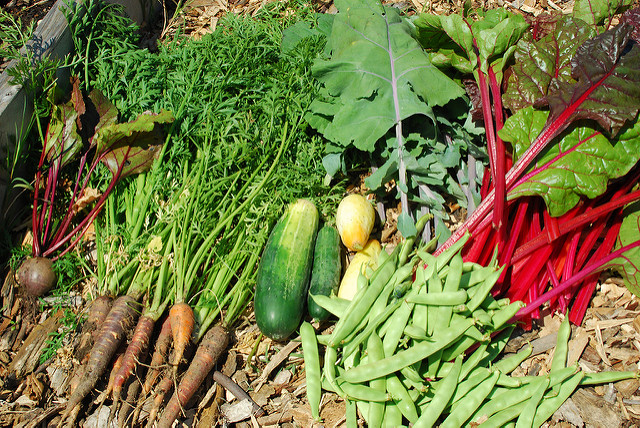 (photo by Carey Dougan)
After a large crop of community gardens was built in D.C. in the 1980s, interest in urban agriculture waned. There were times in the 1990s, into the early 2000s, when people had 20 or 30 plots to themselves, longtime gardeners have told Josh Singer, the founder of Wangari Gardens and a community garden specialist at the Department of Parks and Recreation. Today, though, three years is a typical wait time for a plot.
As interest surged in gardening in the last eight or nine years, there has been a corresponding increase in urban agriculture opportunities. New gardens, classes, organizations, and events keep sprouting up, and even people who work in the field have trouble keeping up with all of them.
But just as the spring gardening season gears up, a new online hub is making it easy to find out all that is growing in the city’s fertile scene. The DC Urban Gardener’s Network has cataloged over 500 urban agriculture, environmental, sustainability, food access and nutrition organizations, and created a comprehensive map of the city’s 70 community gardens.
“There are so many cool things going on in D.C., and we wanted to be able to share them,” says Drew Drozynski, the DUG Network’s technical director. “It’s a larger community than I think we realized necessarily. And it’s a community that, prior to us, there was no umbrella way to sense how big it even was.”
It started with a weekly newsletter that Singer started putting together to keep track of weekly events, which DUG still sends out. But without a permanent digital clearinghouse, there wasn’t necessarily an easy way to figure out how to start beekeeping in D.C. or what kinds of volunteer opportunities there are in the food access field.
So they built a resource to answer those questions, and so many others.
A core group of five people, with the help of more than 20 volunteers, dedicated thousands of hours into getting it into shape. They logged comprehensive information about nurseries, CSAs, places to donate food, food assistance programs, local gardening listservs, landscapers, farmers markets, and much more. There are all sorts of gems, like a totally free community toolshed in Mount Ranier and an organization that provides healthy, locally grown alternatives to selling candles or cookies as a fundraiser.
Even longtime local gardeners were surprised by the deep well of opportunities.
“I hear about more of this stuff than most people, but there are so many cool things I’ve never even heard about,” says Singer (his work with DUG is separate from and not affiliated with DPR).
This isn’t the first time that a group has undertaken an effort to track D.C.’s urban agriculture scene, but previous sites languished after the grant money ran out (Rooting DC, a one day symposium that takes place in the spring, also maintains a map of farmers markets and community gardens and a long list of partners, but it is limited by the nature of the group).
DUG is taking a different approach than its predecessors. They bootstrapped the work, keeping costs to a minimum and relying entirely on volunteers. The plan is to become formally structured as a non-profit cooperative and to continuously serve as a resource for the local urban agriculture community.
“Cooperative governance is like 50 percent of urban agriculture because we don’t really have the economy yet to support for-profit gardens,” according to Singer. “So they have to find systems to maintain themselves.”
As they’ve built out the coalition and its audience, it “became obvious that we might be able to do bigger and broader things,” says Drozynski. They plan to use DUG to help connect business to each other and bring together people for projects or advocacy (they already did so once, mobilizing support for a bill that would help the convert city-owned vacant lots into farms and gardens).
This is all going on as food gardening reached the highest level in more than a decade, according to a 2014 report by the National Gardening Association. It found that urban gardening grew by 29 percent in five years—and millennials make up the fastest growing segment of the population.
Even the Trump administration, so eager to dismantle the work of its predecessor, has decided to keep Michelle Obama’s White House garden going.
For more information, see the DUG Network. They are also looking for both short-term volunteers and people to serve on the board as art, finance, and membership directors.