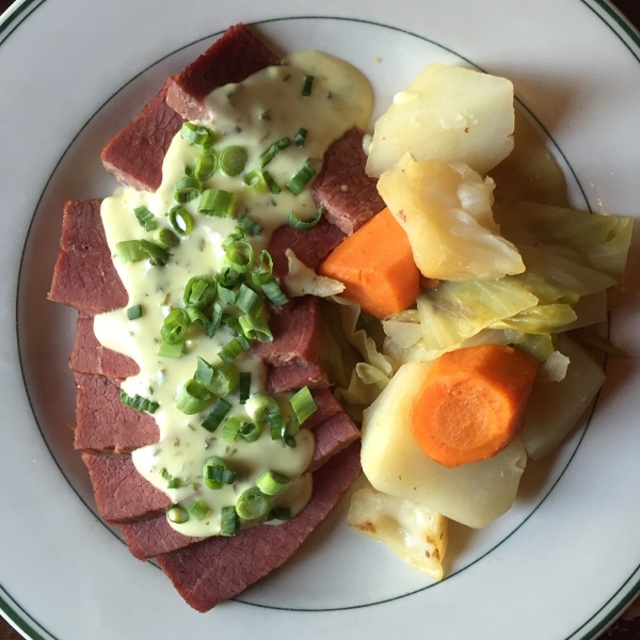
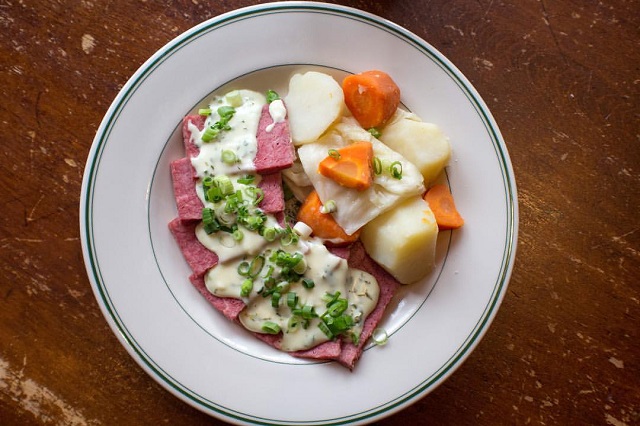
 The Dubliner is serving its way through a couple thousand pounds of corned beef with cabbage this week. (Photo courtesy of The Dubliner)
Dish of the Week: Irish corned beef and cabbage dinner
Where: The Dubliner, Martin’s Tavern, Irish Channel, Fado Irish Pub
Cryovac bags of brisket, brine, and a little packet of pickling spice line supermarket meat aisles this time of year. Perplexingly pink corned beef from those sealed packages, served with cabbage, is the classic dish of St. Patrick’s Day in the U.S. as much as a pint of Guinness is the holiday’s drink of choice.
That said, you are as likely to find the dish in Ireland as you are a green beer (which is to say, not very). Its popularity comes from the United States, where the salted beef was widely available to Irish immigrants and others and not too expensive. Cabbage, potatoes, and carrots cooked in salty broth is the side of choice for the dish. It’s not really a part of Irish cooking, but an Irish American tradition.
Of course, there is no corn involved. The name “corned” comes from the large grains of salt used to cure the meat, sometimes referred to as “corns” of salt. Pink curing salt—sodium nitrite—is typically used, which lends its pink color to the final product. That’s a different product than the pink Himalayan salt you are more likely to find in your closet or at Trader Joe’s. If curing a naked piece of brisket from scratch, though, different recipes do allow kosher or other salt brine, or even a dry rub.
The strong salt water bath was used to preserve cuts of meet in days of yore to make up for a lack of refrigeration. There are plenty of fridges to go around now, but the legacy lives on.
The Dubliner (4 F St. NW), perhaps Washington D.C.’s most popular Irish pub, goes through the stuff by the barrel. They buy their brisket—the cut of the cow used for corned beef—pre-brined, add their own spice blend, and braise them. They go through about 400 pounds of the pink stuff in a normal week. With this Friday being St. Patrick’s Day, they’ll quadruple that number.
Dubliner co-owner Gavin Coleman grew up in the pub. His dad opened it in 1974 and he hopes one of his sons will take the family business over from him some day.
“I wouldn’t say I’m super protective of the spice blend we put into the brine,” Coleman says, as his restaurant prepares for their all-day St. Paddy’s celebration that kicked off with 43 cent pints of Guinness from 9 a.m. to 10 a.m. to celebrate their 43 years in business.
“I would also be remiss if I told you exactly what it is. Last time I helped put it together, I’d say I was probably in high school. I would say it’s a family secret, how about that?,” he adds.
While the exact blend is under wraps, some common inputs are mustard seed, coriander, pepper, ginger, cloves, dill seed, bay leaf, allspice, and cinnamon.
The Dubliner finishes the dish with a parsley cream sauce, but otherwise does a pretty straight up preparation of the dish. Likewise at Martin’s Tavern (1264 Wisconsin Ave. NW) in Georgetown. Fado (808 7th St. NW), features a potato dumpling and unconventionally adds kale, grape tomatoes, and Parmesan cheese with the cabbage side dish. With mustard a traditional accompaniment, they concoct a white wine mustard sauce too.
The dish pops up as a special on St. Patrick’s Day menus at Irish bars all over the country, but it’s not an exceedingly common everyday dish. Ri Ra (3125 M St. NW), which trades on its Irish authenticity, lists it on the “Irish Classics” section of menu for one day only, calling it “emigrants corned beef” in a disclaimer or nod to its American heritage.