 Rachel Sadon
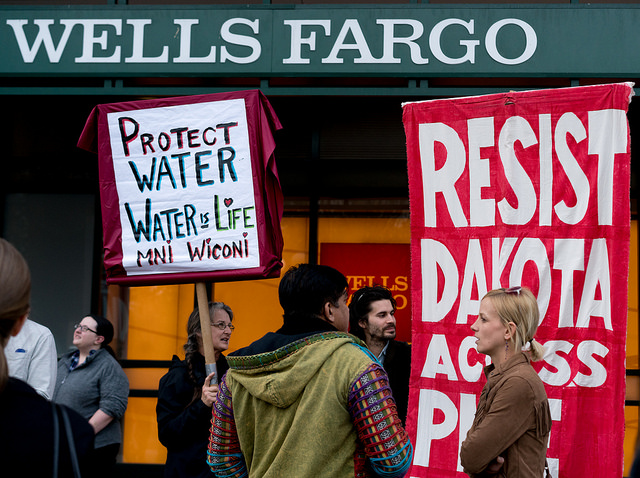 A coalition announced a campaign calling on D.C. to divest from Wells Fargo in February. (Photo by Victoria Pickering)
As several cities have moved to cut ties with Wells Fargo in recent weeks over the bank’s investments in the Dakota Access Pipeline and other business practices, several members of the D.C. Council say the nation’s capital should consider following in their footsteps.
“I believe we have an obligation to fully assess our relationship with Wells Fargo and strongly consider divestment,” said At-large Councilmember David Grosso while introducing a resolution to do just that.
A coalition of groups came together last month to lobby the D.C. government to divest from the city’s bank of record. “We want to send a message that any future attempts to invest in this type of dirty infrastructure will have consequences—financial and public shame,” Charlie Jiang, an organizer with the local chapter of 350.org, told DCist at the time.
At-large Councilmembers Anita Bonds and Elissa Silverman, Ward 1’s Brianne Nadeau, Ward 6’s Charles Allen, and Ward 7’s Vincent Gray joined as co-sponsors of the sense of the council resolution. If passed, it would declare that the city “is committed to promoting fair and responsible banking and lending practices; and to call on the city to reassess its existing relationship with Wells Fargo and consider greater investment in local banks to support community growth.”
The city is in the third of a five-year contract with the bank, according to a spokesperson for Grosso. Introducing the resolution is meant to be the beginning of a conversation about how to move forward. It has been referred to the Finance and Revenue Committee so it can have a full public hearing.
Given the acceleration of the project, Jiang says that organizers feel a “sense of urgency for D.C. to take a public stand against DAPL and its investors as soon as possible. We believe it is important for the city council to act quickly, so opted to support the expedited process of a sense of the council resolution.”
Seattle; Davis, California; Santa Monica; and West Hollywood have already begun discussing or taking steps to divest from Wells Fargo over investments in the pipeline, along with allegations of predatory lending, lending to private prisons, and recent fraud cases. There are also divestment campaigns underway in Raleigh, New York, and Albuquerque.
“We should prioritize partnerships with fair and responsible business entities and financial institutions,” Grosso said.
In a statement, the Wells Fargo pointed to millions in charitable donations and community development loans as “a much more accurate view” of the bank. “Wells Fargo values our relationship with the District, and we stand ready to serve this city,” the statement reads. “We want to stress that Wells Fargo is one of 17 banks financing the Dakota Access Pipeline—less than 5 percent of the total financing. That said, we are a company committed to environmental sustainability and human rights, and respect all the opinions being expressed on this issue.”
This post has been updated with comment from Wells Fargo.