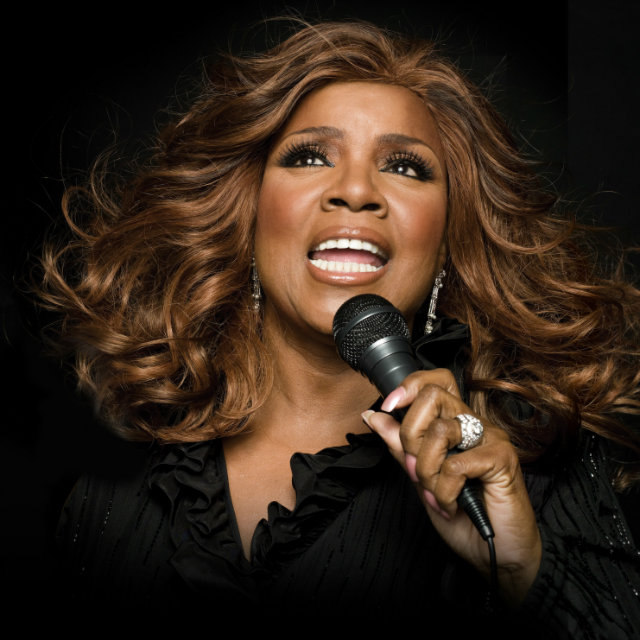
 Gloria Gaynor will sing “I Will Survive” and more at the Library of Congress on May 4. (Photo courtesy of Gloria Gaynor)
Break out the sequins and the spandex. Whether or not you feel like dancing these days, the Library of Congress has planned a series of film screenings, discussions, and events around the theme of disco. And they culminate with a dance party and performance from Gloria Gaynor, a legend of the genre best known for “I Will Survive,” one of last year’s National Recording Registry inductees.
Good Morning America host Robin Roberts will interview Gaynor about the legacy of disco at 4 p.m. on May 4 in the library’s Coolidge Auditorium. Gaynor will also sign copies of her new book, We Will Survive, a collection of 40 stories of people that her music inspired. A few hours later, Gaynor and her band will take to the stage in the Great Hall for a dance party, co-sponsored by Brightest Young Things, which will last from 7 p.m. to 12:30 a.m.
The library’s month-long Bibliodiscotheque celebration also includes 10 disco-themed screenings, including documentaries like Pump Up the Volume, Hollywood classics like Saturday Night Fever, and even a seven-and-a-half-hour marathon of the TV series Queer as Folk. Gaynor isn’t the only celebrity on the roster; on May 2, Project Runway host Tim Gunn will discuss disco fashion with Deputy Librarian of Congress Robert Newlen. All events are free, but require a ticket, which are available on the library’s website.
The library’s Great Hall doesn’t host public concerts very often. The most recent one was the opera, Justice, during the library’s bicentennial in 2001, according to Nick Brown from the Library of Congress Music Division. In anticipation of her disco throwdown, DCist caught up with Gaynor by phone to discuss reflections on “I Will Survive”, concerns about Trump’s proposed budget, and more.
DCist: Why did you decide to participate in this event?
Gaynor: I was just beyond honored to have my song inducted into the Library of Congress. To be asked to do this concert is quite another honor. We went down in November to visit—I’d never been to the Library of Congress. What a gorgeous building. It’s gonna be an acoustical challenge, but I think it’s going to be a great event.
DCist: You’d never been to the Library of Congress, even when your song was inducted?
Gaynor: I was touring, doing shows all around the world, so I wasn’t able to make it.
DCist: Have you spent much time in D.C.? Do you have any fond memories of the city?
Gaynor: I’ve been there a couple times. I once went for a tour of the White House. It just happened that day, something went wrong, and they had to cancel. Jimmy Carter was president. I don’t think they ever told me what happened.
DCist: They should have!
Gaynor: I thought so too.
DCist: Do you see evidence of disco music influencing today’s popular culture?
Gaynor: The music today is definitely influenced by disco music. Some of the young people—Pink, Pussycat Dolls, Little Mix—have even sampled bits of my song into theirs. I think that any music that’s created specifically for dance is going to have influences of disco music.
DCist: How does it feel to have new artists sampling your work?
Gaynor: It’s strange, but it’s wonderful. It’s wonderfully strange, especially when they do it well.
DCist: Are there particular artists or genres of music that you enjoy today?
Gaynor: I’m really not particularly interested in any particular kind of music. I hear a song here and there that I like and add it to my playlist. I love some of the music from John Legend. I like Pharrell. I like a few things that Beyonce has done. I like a few things that Rihanna has done.
I tend to like more the music than the lyrics these days. I come from an era when you were considered about your image and you want to keep it clean. That doesn’t seem to be a concern these days.
DCist: Did you have any idea, when you recorded “I Will Survive,” that it would still be popular so many years later?
Gaynor: I believed it would. When I read the lyrics of “I Will Survive” before I ever heard the melody, I believed it was a timeless lyric that everyone would relate to. I was relating the song to incidents in my life that had nothing to do with unrequited love, what the song was about. The death of my mother. I had been in hospital with surgery on my spine because I’d fallen on stage and woke up the next morning paralyzed from the waist down.
I thought anyone who heard this song who was going through any kind of trauma in their life would relate, and draw hope and encouragement and inspiration from the song. Time has proved me right.
DCist: Do you ever wish that people would identify you with any of your other songs, the way they have with “I Will Survive”?
Gaynor: There were a number of songs that I wished people had listened to more intently and radio stations had played more. But I’ve come to believe that this song is the core of my purpose, and that it is God’s intention that nothing I do will ever overshadow it. He has a purpose for it, and I’m living that purpose.
DCist: What inspired you to translate the song’s message into a book?
Gaynor: People were coming to me with stories of how the song has uplifted and encouraged. I thought, how inspiring and uplifting would it be to read about someone who’s going through what you’re going through and perhaps even something more traumatic than what you’re going through, but they come out the other side victorious? It was time to put pen to paper and make those stories available to the public.
DCist: What’s the most interesting thing you learned in the course of writing the book?
Gaynor: How many different things people relate to the song. It runs the gamut. I’ve got parents with deceased children. Breast cancer. One story of a woman whose child was mentally challenged and he sexually molested a girl, he really didn’t know what he was doing, to the point that when they were in the court, they sentenced him, he turned to his mama and said “What’s going on now?” That’s as far from breast cancer and unrequited love as you can get, and yet this woman was encouraged and uplifted and inspired by this song.
DCist: What’s the role of your song, and others like it, in this tense political climate?
Gaynor: I’m hoping that the song will be able to encourage people and lift them and help them through this situation. I would hope that someone would come up with a way, if they’re going to use the song, to really make an impact there, because people on Capitol Hill need to recognize that we’re their bosses. And if we see something that they’re doing that isn’t right and isn’t benefiting us, they need to listen to us.
DCist: Is there anything the government’s done recently that would inspire you to do that sort of activism?
Gaynor: The fact that they’re talking about stopping the National Endowment for the Arts. I think that’s kind of ridiculous. Also that decision is borne of ignorance. They don’t seem to have any idea how big the music and arts community is, and how much revenue it represents. Young people having a career, what will happen to them? Will they decide to go into something that they don’t love because they can’t make a living in the arts? It will become a hobby. I think that Washington needs to understand that the arts are not just hobbies. They are people’s livelihood.
DCist: How would you describe the appeal of disco at its peak to someone who never got to witness it?
Gaynor: At its peak, disco music is the first music in the history of music ever to bring together people from every nationality, race, creed, color and age group. At its peak it was unifying. It was uplifting. It was encouraging and it was inspiring. All of those things are wonderful, and an example of what music can do at its best.
Bibliodiscotheque runs from April 12-May 6, 2017 at the Library of Congress. See here for the full schedule. Free tickets will be released on March 30.