 Rachel Sadon
Mayor Muriel Bowser has announced new initiatives related to missing children, including a task force and increased police officers dedicated to the issue, and made several national TV appearances on Sunday to try to set the story straight.
“We have no particular issue of children leaving home in the District of Columbia any more than any other jurisdiction. The difference is we’re telling people about it and getting that information out right away so kids can come home more quickly,” Bowser told MSNBC’s Joy-Ann Reid yesterday.
When the D.C. police department changed how it reports people who go missing to the public at the beginning of the year, it inadvertently inspired viral misinformation that has people around the country concerned that black and Latina girls are being snatched off the streets of the nation’s capital.
It is emphatically not true that there has been a spike in missing person cases in D.C. But that doesn’t mean that there isn’t a problem—simply, that it isn’t new, or worsening.
Over the past five years, there have been an average of 200 monthly missing persons cases, according to MPD statistics. In the first few weeks of 2017, that has actually decreased to about 190 on average. Currently, 22 cases remain open, though if past years are any indication, the vast majority are likely to be solved.
From the years between 2012 and 2015, there are a total of seven open cases, and only one of them is a juvenile: 8-year-old Relisha Rudd, who disappeared from D.C.’s largest family homeless shelter with a janitor who seems to have killed his wife and later committed suicide.
But that doesn’t mean that missing teens aren’t an issue worthy of public attention. Vulnerable runaways can fall prey to sex trafficking and gang activity, and children of color are more likely to go missing than white kids (girls and children in the foster care system are particularly at risk).
“What we know is they are not safe when they are not in the care of their parent guardian or another caring adult,” Bowser said on PoliticsNation with Al Sharpton yesterday.
That perspective had prompted a social media change at the beginning of the year. Under the direction of a new commander in D.C. Police’s Youth and Family Services division, Chanel Dickerson, MPD began publicizing all cases of missing teens on social media—whereas previously the alerts were only sent out if police suspected foul play.
The Washington City Paper took note of the change within weeks, but the story didn’t sensationalize the issue.
It took posts like The Root’s “Does Anyone Care About DC’s Missing Black and Latinx Teens?” and misleading viral images on Instagram—many of which were shared by celebrities—to bring the story to national attention.
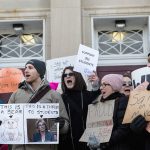
The outcry grew to a point that city officials held a press conference to explain in mid-March. Dickerson said that when she assumed the role in December 2016, she made it a priority “to give the same amount of attention to each and every case.”
It worked to the point that two members of the Congressional Black Caucus on Thursday even asked the Justice Department to investigate, and Bowser spent the weekend responding to the outcry.
On Friday, she announced a series of six initiatives meant to address the issue of runaway youth. D.C. police will increase staffing at the Children and Family Services Division and expand the messaging around missing persons with a new website and more detailed information on social media. Bowser also established a task force in which community-based organizations will propose new protocols to serve children who have been reported missing and a working group to analyze individual cases. The mayor’s office will also promote grants for groups that work to address runaway youth and create a new hotline and website.
“Through social media, we have been able to highlight this problem and bring awareness to open cases, and now we are doing more to ensure that families and children are receiving the wraparound services they need to keep families together and children safe,” the mayor said in a release announcing the initiatives.
Bowser then went on two MSNBC shows on Sunday where she walked the delicate balance of expressing concern for missing children while explaining that the reality isn’t what many have been led to believe.
“We certainly are concerned about all missing children. And I think we should be concerned about it across the nation,” Bowser told Sharpton. “What we think is jurisdictions all around the country need to rethink how we treat missing persons reports when it comes to children. Our department is out in the forefront on this issue.”