Rachel Kurzius
Today is the D.C. Council retreat, and At-Large Councilmember David Grosso is none too pleased with the agenda.
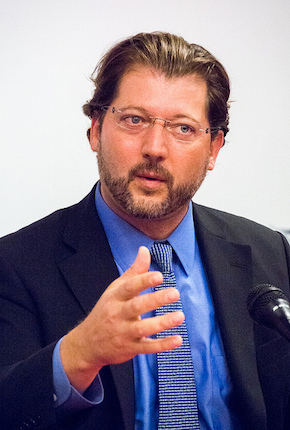 At-large Councilmember David Grosso. (Photo by Tommy Wells)
“This is the one time out of the year where the D.C. Council gets together for the day to discuss issues that are not on a legislative agenda,” says Grosso. “And this morning we spent an hour and 15 minutes talking about IT and why we can’t have Mac computers. It’s ridiculous.”
Grosso, one of the council’s two independent members, went to the first two portions of the retreat, and has since returned to the Wilson Building. He says that he’s had frustrations with the “wasted time” at the council retreat over his past five years in office, even skipping it one year, but “this year forced my hand to speak out more than in previous years.”
In a letter to Council Chairman Phil Mendelson, he expresses his disappointment that the docket is filled with administrative concerns rather than “more substantive matters, especially since the District of Columbia currently finds itself saddled with a White House and Congress bent on meddling in our affairs while promising to enact an agenda that jeopardizes our work.”
The agenda from Mendelson set aside two-and-a-half hours in the morning to discuss issues facing the council, which he listed as IT concerns, tickets and seating, recruitment and retention of qualified employees, converting NPS budgets to discretionary budgets, building amenities, and attorneys and the D.C. bar. After that, there are updates from WMATA’s general manager, the city’s chief financial officer, and the CEO of the Federal City Council.
The councilmembers received the agenda yesterday, according to Grosso. “I don’t think a whole lot of planning went into this,” he says, adding that these speakers often address the council during hearings. He particularly took issue with the Federal City Council—”all they ever do is lobby us down here to do more conservative things than what we’re doing.”
Mendelson, who is currently at the Washington Convention Center for the retreat, has not responded to Grosso’s letter. Grosso says that some of his colleagues agree. “Other members have raised this point and just been soundly ignored by the chairman.”
While the council has unanimously passed a resolution that vows not to cooperate with any attempt to infringe upon human rights and calls upon Congress and the president to treat everyone with respect, it is entirely symbolic.
At a breakfast meeting in February, as fears about congressional meddling heightened with an attempt to roll back D.C.’s Death with Dignity law, Mendelson resisted calls for a coordinated strategy from the council. He later clarified to mean that he prefers to allow individual councilmembers “to be creative on their own and to share their ideas” rather than issuing a uniform response from the body.
Grosso says that the council needs to “at least have similar messaging about what we think D.C. should do to protect itself. We are small and we often don’t have a lot of allies and we have to fight together,” he says. “That is the job of the chairman to do and I don’t think he’s doing that. He has his head in the sand.”
Grosso is now planning an alternative retreat to “bring in some folks that have done some outside-the-box thinking about defending the city’s policies and ideals, and give us some ideas about how we can move forward.”
He’s inviting the council and will talk to the other members about the agenda, and plans to put out a call for speakers. Because the alternative retreat is in its early stages, he doesn’t yet have a date or location for it.
He says one priority in finding speakers will be diversity, like having women and people of color, a dig at the all-male slate of presenters at the retreat today. “If we’re going to be able to defeat Trump, we have to embrace diversity,” he says.
This still isn’t the most drama we’ve seen at a council retreat. That designation goes to the expletive-filled shouting match at the Valentine’s Day meeting in 2012.