Rachel Kurzius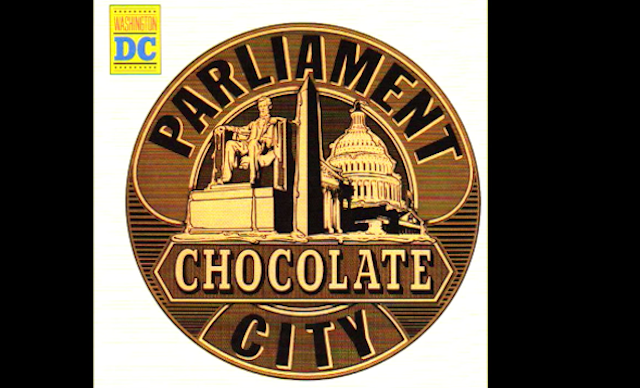
These days, when people outside the District try to sonically invoke the city, they often opt for the theme song of House of Cards. But people have been writing much better music in and about D.C. for far, far longer. While some of the songs use music to describe iconic places, others imagine a future Chocolate City or harken back to its past, and still more are far more biting than some blaring horns could ever be.
Mambo Sauce, “Welcome to D.C.”
Go-go band Mambo Sauce dropped its “Welcome To D.C.” track in 2007 to tell folks that “we ain’t going nowhere,” and the nation’s capital should be credited for its musical contributions. It reminds listeners that the “home of Chuck Brown” inspired the birth of popular bands like Rare Essence and Backyard. Plus, Black Entertainment Television opened its first headquarters in Brentwood in the late 1980s. But what I love most about the song is its nostalgic references to a place once known as “Chocolate City,” where street style consisted of Nike boots and Madness apparel and “lunchin’” and “Jo” was “the lingo.” There was less debate about former mayor Marion Barry who “had a run in with crack, but we all kept it real and we voted him back.” This song is certainly a classic that natives can hold onto in this gentrifying city. And if there was ever a crash course for new residents, “Welcome To D.C.” should be a part of the introduction.—Christina Sturdivant
Parliament, “Chocolate City”
Muhammad Ali is in the White House with Aretha Franklin as First Lady. Stevie Wonder serves as the Secretary of Fine Arts while Richard Pryor heads up the Department of Education. This is the alternate reality George Clinton’s Parliament envisioned when it recorded “Chocolate City,” the title track to its 1975 album. White flight had occurred in many of the nation’s cities during this time, and while the track’s narrator name checks Newark, New York, L.A., and Atlanta, it’s “CC” that serves as the black capital. Clinton’s loving vision of who should be in the White House (the name is a “temporary condition”) makes contemplating the current residents all the more depressing.—Sriram Gopal
Tarica June, “But Anyway”
Using samples of well-known tracks by Suzanne Vega, P.M. Dawn, and Eric B. & Rakim, third generation D.C. native Tarica June confronts the gentrification issue head on with clever word play. June is a lawyer in a different life, and she uses an easy-going production style and laid-back flow to level biting criticism at those who “tryna kick us out just to build more stores.” The stylish video, which June directed herself, takes us through the D.C. that she grew up in, where she remembers “All Black on the Green Line.” “The city’s still filling up with people who dance off beat” is a line that hits a bit too close to home for some of us, but the fact that economic development has not lifted all boats is a problem that needs attention.—Sriram Gopal
The Postal Service, “The District Sleeps Alone Tonight”
This haunting tune from the influential synth-pop side project from the Death Cab For Cutie frontman makes the District the setting for Ben Gibbard’s heartbreak. He’s not here for a long time, as evidenced by his visitor’s badge, but he’s not here for a good time, either—he’s discovering that he was the one worth leaving after all. Considering the album came out in 2003, Gibbard has a whole lot of new gaudy apartment complexes to consider should he ever want to write a sequel.—Rachel Kurzius
John Philip Sousa, “The Washington Post March”
John Philip Sousa, often called “The March King,” was born in Southeast D.C. in 1854. He conducted the U.S. Marine Band’s “President’s Own” from 1880 to 1892 and then went on to lead his own civilian ensemble for 40 years after leaving the service. The marches Sousa composed became some of the most well-known music of the era. In 1889, our city’s paper of record commissioned a march for the awards ceremony of a children’s essay contest. “The Washington Post” was the result and it is now among the most recognizable melodies in the world.—Sriram Gopal
Lead Belly, “Bourgeois Blues”
You’ve gotta love hometown spirit, but one of our favorite songs about Washington reflects on a dark period in the city’s history. When African American folk and blues musician Huddie William Ledbetter, better known as Lead Belly, came to visit D.C. in June 1937, he and his wife immediately experienced racism in the segregated city. He came to record a few of his songs at the Library of Congress, and was supposed to spend the night with Alan Lomax, who was in charge of the library’s folk song archive. But when Lead Belly and his wife Martha tried to come up to the apartment, Lomax’s landlady threatened to call police. The couple spent the night elsewhere, and Lead Belly immortalized the experience by writing “Bourgeois Blues.”—Lauren Landau
The Blackbyrds, “Rock Creek Park”
Donald Byrd was a celebrated jazz trumpeter whose career spanned over half a century and included more than 50 recordings as a bandleader, with dozens more as a sideman. He was one of the few jazzers to come out of the bebop era and successfully transition into R&B and funk. During the 1970s, Byrd served on the jazz faculty at Howard University and assembled several of his students to form The Blackbyrds, and he served as the ensemble’s producer. “Rock Creek Park” is the opening track on the band’s third album, 1975’s City Life. There isn’t much to the lyrics, but we can imagine the encounter that gave rise to them. The melody also serves as the hook for Oddisee’s 2011 track of the same name, which is the title track to an entire album of songs that Rock Creek Park inspired.—Sriram Gopal
The Magnetic Fields, “Washington D.C.”
D.C. is but a blip on the sprawling 1999 masterpiece 69 Love Songs, but it nevertheless inspired one of the album’s most cheerful tracks. That lighthearted mood is probably helped by the fact that it’s led not by Stephin Meritt’s morose bass baritone but Claudia Gonson’s unassuming warble. The song’s lyrical nods to tourist favorites like the cherry blossoms and The Mall seem charmingly unironic, perhaps seen through love goggles because, after all, “It’s my baby’s kiss that keeps me coming back.”—Pat Padua
Wale, “DC or Nothing”
Wale has achieved more national recognition than any other artist who came up through the local hip-hop ranks. “DC or Nothing” appears on his 2011 release, Ambition, and looks at the District’s darker side. “When the city was chocolate, there was death in the air,” he raps. The song also laments lives lost to violence and AIDS, while criticizing the institutions that ignore the city’s problems. Despite the tragedy and loss, Wale also tries to inspire his peers, wishing them health, wealth, and praying that their dreams be allowed. Even more than Seinfeld, Wale draws inspiration from his home town.—Sriram Gopal
Pavement, “Embassy Row”
Appearing on the 1997 record Brighten the Corners, Pavement’s “Embassy Row” is all about failures in diplomacy and the ridiculous nature of nationalism. Stephen Malkmus’s first verse sums it up: “Embassy row, the fumes they lay low / On lanes that are wide where the limousines glide / On the wrought-iron gates and the bone china plates / And don’t forget your manners where the anthems play.” And then there’s the chorus: “In a netherworld of foreign feeds / I’m gonna take the crown.” Although the song doesn’t ever mention D.C. specifically, it doesn’t have to. It’s obviously about our town’s mess of international politics—and also the inherent corruption and socioeconomic disparity. It’s kind of a lot to digest for a song that’s less than four minutes long, which is what makes it so great.—Elena Goukassian
PJ Harvey, “Near the Memorials to Vietnam and Lincoln”
British iconoclast PJ Harvey’s travels to D.C. informed her latest album, The Hope Six Demolition Project, and not everyone enjoyed the look in the funhouse mirror. While her song “The Community of Hope” rankled some area nonprofits and politicians, the upbeat tune “Near the Memorials to Vietnam and Lincoln” turns mundanity into a celebration. She watches crowds squeezing, a boy play with starlings, though the sense of the eternal is never far from her mind. When a man in overalls empties the trash, “A doorway opens up / To the underworld.” Just another day hanging out on the Mall for PJ Harvey.—Rachel Kurzius
Bad Brains, “Banned in D.C.”
Many a band has come out of this city’s harDCore scene, but few, if any, matched the sheer aggression and virtuosity of Bad Brains. At one point, the band’s raucous performances drew the ire of local club owners, and the quartet responded by writing “Banned In D.C.”, which first appeared on the 1983 album, Rock for Light. “Banned in D.C. / With a thousand more places to go,” vocalist H.R. shrieks. While Bad Brains and its music went to more than a thousand places, the relationships among its members was always volatile. The first of several breakups took place after Rock for Light‘s release, but this track captures Bad Brains at peak intensity.—Sriram Gopal
Rahim AlHaj, “Morning in Hyattsville”
Baghdad-born oud player Rahim AlHaj was a political refugee who was forced to leave Iraq in 1991 after his activism against Saddam Hussein. He moved to the States in 2000 and lives in New Mexico. In 2005, he recorded the album When the Soul is Settled: Music of Iraq at Private Ear Recording studios in Hyattsville. The area left enough of an impression that on his 2010 album Little Earth, accompanied by guitarist Bill Frisell and violist Eyvind Kang, he recorded this instrumental homage to waking up in Prince Georges County.—Pat Padua
Remy Munasifi, “Arlington: The Rap”
Federal Washington has more than its fair share of parodies, so it is nice to see another part of the region spoofed with some panache. And the home of the B.R.O. Ball and the G.O.A.T. Bar is rife with possibility for musical mockery. Comedian Remy Munasifi asks the tough questions we’ve all been wondering, like “why are all these dudes wearing brown flip flops?”—Rachel Sadon