Rachel Kurzius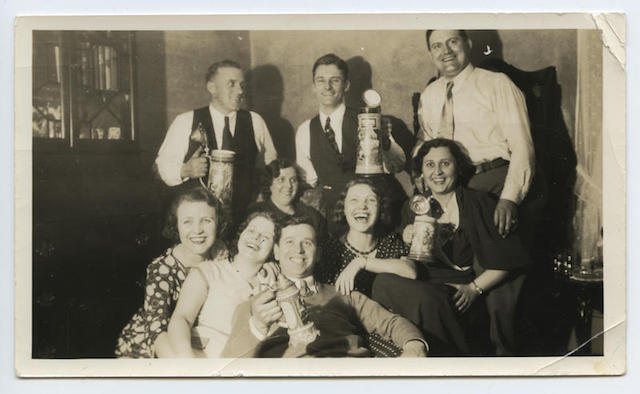
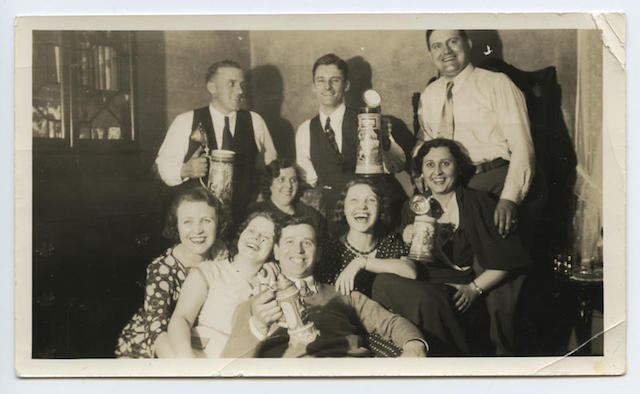 Photo of Heurich Brewery workers with steins, likely from the 1930s. (Photo courtesy of D.C. History)
The Historical Society of Washington D.C. specializes in old images, maps, directories, collectibles, and more from the District’s past, but now the group needs some help from modernity to continue its mission.
In the society’s first attempt at GoFundMe crowdfunding, they are soliciting money for a new server to house many of their collections digitally as they work to “up our game in the technology arena,” says executive director John Suau.
The society, founded in 1894, has had its server for the past 15 years. While that makes the technology significantly younger than most of what’s in the collection, Suau says that it isn’t up to snuff for providing residents and researchers access to more of the archives.
Already, some of the wares, like the 4,000-item strong Kiplinger Collection, are available digitally, through funding assistance from the City Fund. However, Suau says those files are housed on the cloud.
The crowdfunding ask of $18,000 would “allow us to stabilize everything—the images and data—we have on our server,” says Suau, though it would not provide for making the entire collection available online. That would take 1,000 times more funds—he estimates a total price-tag of $18 million to fully digitize the collection, including new technology and staffing costs.
The Historical Society of Washington D.C., also called D.C. History, has been housed in the Carnegie Library since 2003. Events DC, the city’s semi-private events and convention authority, finalized its own lease in the iconic building in 2011 that still allowed for the society to remain there.
“We view it as our biggest icon of D.C. history,” says Suau. “We’ve begun to give tours around the history of the building.” It was one of the first city buildings fully integrated to the public.
Now, as Events DC is working through an agreement to open an Apple store at Carnegie Library, Suau says that D.C. History isn’t going anywhere. In fact, per a lease hammered out by Congress in 1999 under the Save America’s Treasures Act, the society will be housed there through 2098.
“We would co-exist with Apple,” Suau says, and he’s optimistic about what the tech store and its customers would do for attendance at the society’s museum and archives. “Hopefully it would make us more accessible than we currently are and turn the space into much more lively place.”