
 Erin Lowry, second from the right, speaking about how millennials view their finances at Capital One’s CapX Talk: Reimagining Finances in Seattle.
Going out on a limb here—you’ve likely once looked at your checking account or your wallet or your face in the mirror and uttered “ugh, I’m so broke.” Money is complicated, and talking about it can feel even more complicated, if not taboo. With tax season in the rearview mirror and money on the mind, DCist spoke with Erin Lowry, founder of BrokeMillennial.com and author of the soon-to-be-released book, Broke Millennial: Stop Scraping By and Get Your Financial Life Together, about saving, spending and how all that shade thrown at expensive “millennial coffee” might be a little misplaced.
You’re well known as a millennial personal finance expert, having literally written the book on it. Can you tell us how you became the go-to guru for talking money, savings and everything in between?
I guess it really all started when I was just a kid and my parents were taking steps to teach both me and my little sister about money. They’d use every opportunity to ensure we had an understanding of how money worked, the importance of budgeting, savings and goal setting. This started when I was around seven-years-old.
It’s also important to know I was never a math-oriented person nor did I study finance or economics in college. I was a journalism and theatre double major! I always mention that because I refuse to accept excuses like, “I’m just bad with money” or “I don’t get math” as reasons for people to avoid getting their financial lives together. By the time I struck out into the “real world” on my own, I had a comfort level with money that served me well, even when I was only making around $23,000 in New York City.
Once I started to realize how few people had this same feeling of control, I decided to do something about it—so I created BrokeMillennial.com. It started as a spot for me to just share stories from my childhood that ended with financial lessons and eventually morphed into moving from the basics to broader topics like investing and talking to loved ones about finances.
What is it about millennials that requires they have a different set of rules? Are they that much different from older generations in terms of handling their finances?
We’re certainly experiencing different pain points than previous generations—notably the student loan debt burden. Plus, the older portion of the millennial generation (those in their thirties and late twenties now) experienced a rude awakening when graduating college into the recession and finding it hard to get steady, well-paying jobs.
It’s also important to note there’s been a significant shift in gender roles from previous generations. Women are more educated now than ever before, and many of us are choosing to delay life milestones like getting married and having children to first focus on building careers.
As technology shifts and gives the consumer more power, we’re also seeing completely new ways to interact with money. It’s so much easier to start investing and just keep constant tabs on our bank accounts for our generation than it was for our parents and grandparents.
As an expert, what’s the most common mistake you see young people making with their money and their financial plans?
One of the biggest mistakes is refusing to face the numbers. You have to have an intimate understanding of your cash flow (how much is coming in each month and how much is going out) before you can make any real decisions. In addition, you also need to know exactly how much debt you have, where it is, what the interest rates are and the payment plans. Too many people fear seeing the total tally of debt and just keep paying minimums and avoid making an action plan to get debt free.
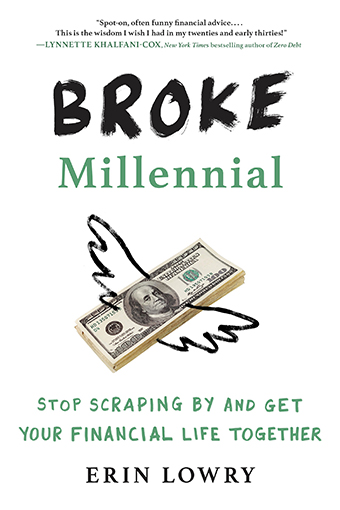 You speak a lot about the idea of “financial empowerment.” Can you tell us what that term means to you and why it’s important?
The goal is to feel in control of your money instead of letting it control you, even when you feel like you don’t have much. You don’t have to have oodles of cash or a huge salary to be financially in control. When you get your financial life together, it can really help reduce stress and minimize the worry that often impacts other areas of your life, including relationships.
For many who may not know, April is National Financial Literacy Month. Why is it so critical to dedicate an entire month to learning the ins and outs of smart financial habits?
If we just had one day, it could easily be lost in the shuffle. A month helps celebrate and promote the idea of getting your financial life together and people are more likely to see it shared on social media or hear about it from their financial institutions.
How are you personally celebrating National Financial Literacy Month?
I’ve been fortunate enough to be able to partner with Capital One Bank to help promote awareness of not only National Financial Literacy Month but also help empower more people to get their financial lives together so that they can bank with confidence! I’ll be sharing tips and strategies on my site, as well as running a giveaway throughout the month for 10 people to win a copy of my forthcoming book. More details about the giveaway will be getting released on Twitter, Instagram and my blog throughout the month.
We’re sure there are a lot of tips and tricks, but what’s the number one way that young people can help manage their finances more effectively? It’s got to be more than reminding people that they don’t always need a $7 cup of coffee.
I actually get frustrated by all the hate on lattes because I love my lattes! The point isn’t the latte though—it’s getting mindless spending under control and putting money towards what you actually want and value.
In addition to capping the mindless spending, you need to know your cash flow and have a basic budget. Then you also need to get to know yourself a bit better and figure out ways you can set up gates around potential bad money decisions. For example, if you struggle to save, then you need to prioritize it and not just hope you have a little bit at the end of the month to put away. Have a percent of each paycheck routed into a savings account and a 401(k) before it even hits checking.
It seems like technological innovation and convenience has been a big area of growth in the world of finance (like banking apps, text integration, etc.). Do we have millennials to thank, at least in part, for that?
I’d love to say that millennials are responsible. We can’t take all the credit, but banks needing to cater to a new demographic is part of the reason you’re seeing a shift to a more technologically advanced financial world. We also shouldn’t discount that some of the companies are starting to put millennials in positions of decision-making and power, so it makes sense that we’re seeing more integration with technology.
Do you have any favorite financial tools and technologies that help you save more wisely?
One of my favorite tricks is to nickname my savings accounts and I always look for higher interest rate options. So my Capital One savings account is nicknamed “Mosby Emergency Fund.” Mosby is my dog and I have a dedicated emergency savings account just for him, so that he isn’t such a budget buster when he gets sick or needs an annual check-up. Plus, it makes life easy that I can deposit checks right into the account from the app on my phone.
I always have my Capital One app on my phone so I can conveniently check my balance on the go if I need to and I set up alerts for credit cards that send me balance updates via text and let me know when I’ve made a purchase—or if someone else has gotten my card and started making purchases!
Any final words of advice for all those broke millennials out there?
Don’t give up on getting your financial life together. You will trip up along the way, we all do, but it’s important to keep focusing on getting and maintaining control of your money. There are so many resources out there from blogs to books to podcasts to TV and radio shows. You will find something that speaks to you and helps you #GYFLT!
Capital One is proud to help lead the charge on the future of finances and celebrate Financial Literacy Month. Their banking experience is built on digital tools like mobile check processing and Amazon Alexa integration, physical locations and human connection to provide enhanced security and convenience for you to bank digitally, but not digital only. They’re always listening to what you want because, after all, they have your back.
This post is a sponsored collaboration between Capital One Bank and Gothamist staff.