 Rachel Sadon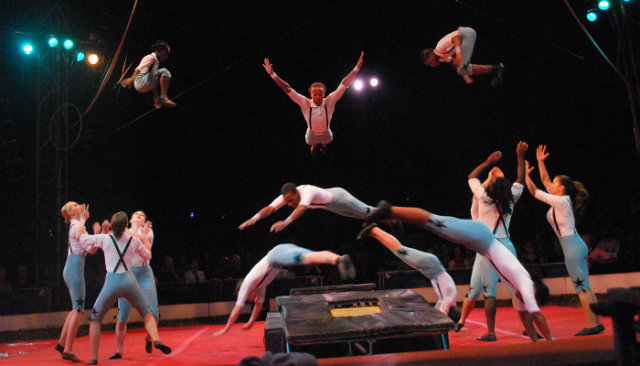
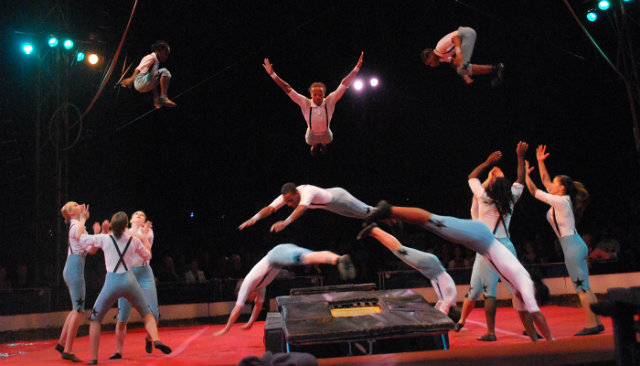 A St. Louis circus performs. (Photo by Jessica Hentoff, courtesy of the Folklife Festival)
There’s usually a carnivalesque atmosphere to the Folklife Festival, the exuberant riot of color and cultural celebration that has descended on the National Mall each year for half a century. As the festival turns 50 this year, it is going full razzle-dazzle, with a dive into the enthralling world of the circus.
“It has spectacle, but it allows to do what we like to do: pull back the tent flap and see beyond that spectacle,” says festival director Sabrina Lynn Motley.
While many recent attendees have come to associate the Folklife Festival with country and regional explorations—in recent years, it has covered Basque Country, Peru, China, and Kenya— the 50th anniversary is a look at two longtime, domestic traditions: the aforementioned circus and a second theme of inter-generational migration.
Both were planned long before certain recent events that might make putting programming around “Circus Arts” and “On The Move: Migration Across Generations” on the National Mall seem like pointed statements.
Work began, for example, long before the demise of the Ringing Bros. and Barnum & Bailey Circus, whose parent company cited declining ticket sales and the fallout from campaigns by animal rights organizers in deciding to shut down “the greatest show on Earth.” It is currently on the final legs of the final tour of a 146-year-old tradition.
Those performers will have taken their final bows before Folklife even hits the Mall at the end of June.
“The value of us doing this now is, in a weird way, a happy coincidence,” Motley says. “Circus is definitely not dying. Ringling is not the only show in town and it never really has been. This gives a lot of people in the circus community not only the opportunity to say were here, but we’ve been here and we’re expanding.”
And “On the Move” is rooted in the festival’s very foundations. “Culture and migration—that’s something that the festival has explored since its beginning,” she adds.
The place this year, then, is America, albeit from new angles. The questions about identity, representation, and community engagement, though, are as familiar to the Folklife as ever.
“In 1967, there was a question about who are we, and what does it mean to be a cultural practitioner in the U.S.? What does it mean to be in community? What are the stories we want to share with each other? Those are the things we still ask ourselves,” Motley says. “Who are we and how do we express ourselves? How do we come in community? How do we think about our collective sense of creativity? What are the things that challenge us?”
As they approach the 50th and think about Folklife’s future, Motley and her team have been spending a lot of time digging through the archives to learn about its past.
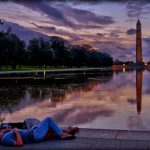
There’s a long tradition of looking at occupational cultures, which circus fits right into, she says. While space constraints have narrowed and moved the festival up and down the Mall in recent years (there was a point where it looked like new turf regulations would kick them off entirely, sparking a Save the Folklife Festival campaign), that was actually always the case in its earlier days. Photographs show programming near the Reflecting Pool and on the spot that is now home to the American Indian Museum, as well as its more recent iconic spot in front of the Smithsonian Castle. This year, it will take place between Seventh and Twelfth Streets.
“For some, it’s difficult. They miss what they thought the festival used to be. We have to keep telling them that the mission and that soul of the festival lives. It may look different, but it’s still there. It’s still vibrant, no matter where on the Mall it is,” Motley says.
In addition to the regular programming, there will be a circus performance each night this year. There won’t be live exotic animals at any of them, but organizers plan to foster conversations about an issue that inspires passionate debate on both sides. “It is impossible to talk about the history of the circus and its future without talking about animals,” Motley says. “There are some people who say, ‘Without the animals, there is no circus,’ and some who say, ‘With animals, circus can’t survive.'”
Performers from groups all around the country plan to join, sharing both the culture and artistry of the show as it is practiced today, in addition to its storied history.
Says Motley, “It’s where the expansiveness of the imagination and the limits of the physical body meet in all sorts of really astounding ways.”
The Folklife Festival will take place June 29 – July 4 and July 6-9 on the National Mall, between Seventh and Twelfth streets