Rachel Kurzius
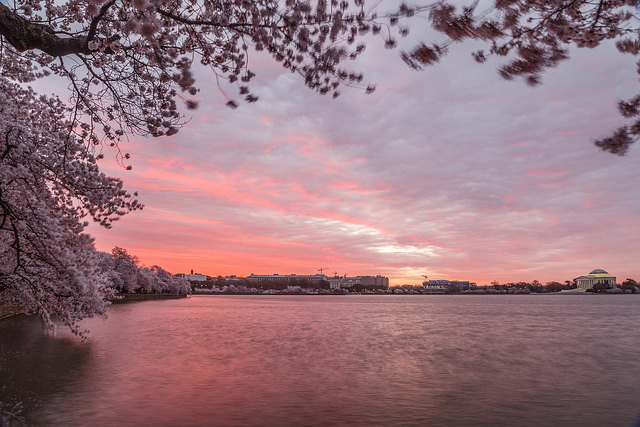 Photo by Mark Andre.
The journey of this year’s cherry blossoms was not for the faint of heart.
First, the National Park Service predicted that the iconic flowers could reach their peak at the earliest date on record, buoyed by a more-than-prompt spring.
Then, just as the warm weather had begun to coax the blossoms out of their buds and into their most lovely, and vulnerable, stage, below-freezing temperatures threatened to damage 90 percent of them. Ultimately, cold weather felled about half the Yoshino cherry blossoms
But enough about the dang flowers—let’s talk money. The herky-jerky nature of this year’s cherry blossom growth got the folks over at District, Measured (the official blog of D.C.’s Office of Revenue Analysis) thinking: What, exactly, is the impact of peak bloom on the District’s sales tax collection?
Peak bloom means that 70 percent of the trees are in full bloom, and it’s become a shorthand for when the colors are most dense and the views most spectacular. While peak bloom varies, the tourist-magnet National Cherry Blossom Festival spans parts of March and April each year.
It’s too soon to determine the impact of the nail-biting journey of this year’s blossoms, so District, Measured took a wider approach. They looked at sales tax collections in both March and April since 2005, comparing those figures to peak bloom dates. Analysts also asked whether the sales tax collections in those month had any relationship to an overall higher rate of collections during that year.
In the past dozen years, the month during which peak bloom occurred had higher sales tax collections 10 times, as you can see here:
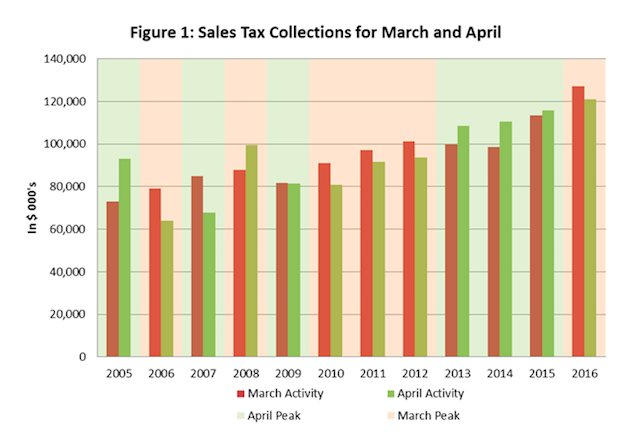 Image courtesy of District, Measured.
NPS says that about 1.5 million people come out to see the cherry blossoms each year, and a 2010 George Mason University study found that the District receives about $82 million in direct receipts from tourists, who spend a total of $126 million on the entire region.
We chatted with one of the study’s authors, Maggie Daniels, a professor at GMU, last year. Her research estimates that of the visitors, about 40 percent are overnight guests. These are the cash cows of the tourism industry, because they need to pay for lodging, meals—the whole shebang. Plus, they’ve booked their tickets well in advance, so they’re coming regardless of how many blossoms have survived.
It’s the other 60 percent, the day trippers, who are more flexible. They can track peak bloom and show up accordingly. It’s not important from an economic standpoint when they come, just that they do: “If they buy their hot dog from a street vendor in March or in April, it doesn’t matter for the economic impact,” Daniels says.
But as District, Measured discovered, there is a relationship between those hot dogs (and everything else) getting purchased and D.C.’s total sales tax collections for the year. From 2005 to 2016, those two months (about 16.7 percent of the year) accounted for 17.7 percent of total sales tax collections.
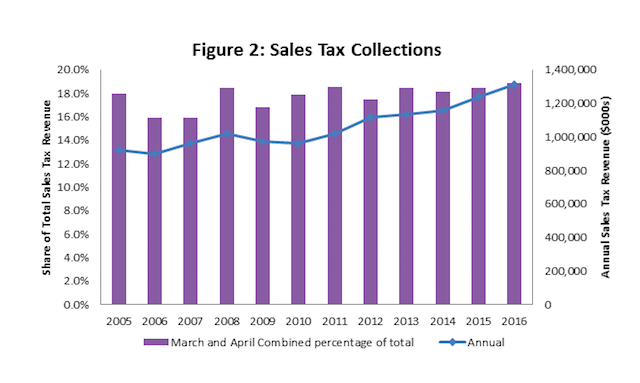 Image courtesy of District, Measured.