 Rachel Sadon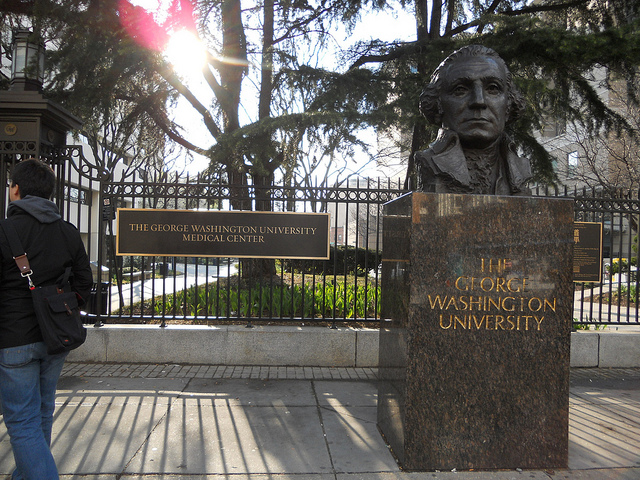
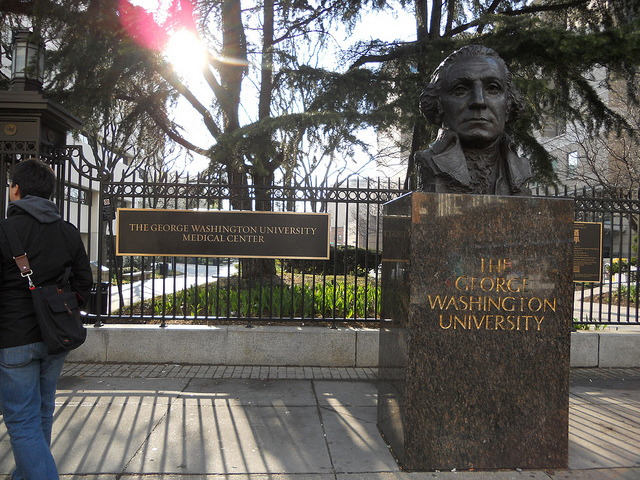 (Photo by Bianca Bueno)
SEIU Local 500 has cancelled a planned union election for resident advisors at George Washington University, which would have been an unprecedented vote.
The election was originally scheduled for today following a decision by the National Labor Relations Board, which found that residents advisors meet the definition of an employee and have the right to unionize.
GW hires about 110 resident advisors each year to live in the university dorms. They receive free housing and a stipend in exchange for spending about 20 hours a week on coordinating programming, advising students, and other duties.
“The news of the NLRB recognizing GW’s resident advisors as statutory employees—not just participating in an extracurricular activity, that they are employees and they have rights—is monumental in itself,” Celeste Aguzino, a former RA and one of the organizers of the campaign, told DCist.
They would have been voting to become the first unionized resident advisors at a private university in the country (RAs at the University of Massachusetts Amherst unionized about a decade ago under state law that governs public-sector employees). However, the evening before the election, SEIU Local 500’s director of higher education informed students in a statement that the union decided to withdraw the petition.
“The circumstances in which you were being asked to make this important decision were not ideal,” said Anne McLeer, in announcing the decision. “We had only 5 days in which to ensure participation of RAs in this democratic process, and those 5 days happened to be in the middle of your exams.”
A spokesperson for SEIU declined to comment further, referring back to McLeer’s statement, but said that they would be open to scheduling another election after the six month waiting period, per NLRB rules, “if the RAs want.”
A group of students that had been working on the unionization effort said that they received the news “with great frustration” on Tuesday evening.
“We were not consulted in this decision and are upset that RAs will not have the opportunity to express their favor or disfavor for unionization. We do not agree with the decision to pull the vote,” the RA Organizing Committee said in a statement. “We are currently trying to make sense of SEIU’s choice to pull the election as it adds to the confusion that many of you have expressed during this long process.”
The university, which has been in steadfast opposition to a RA union, issued a statement saying that it is “pleased” with SEIU Local 500’s request to withdraw the petition. “As we have stated, it does not make sense to apply a federally regulated system of collective bargaining to undergraduate students who are participating for a limited period of time in a program as part of their educational experience.”