 Rachel Sadon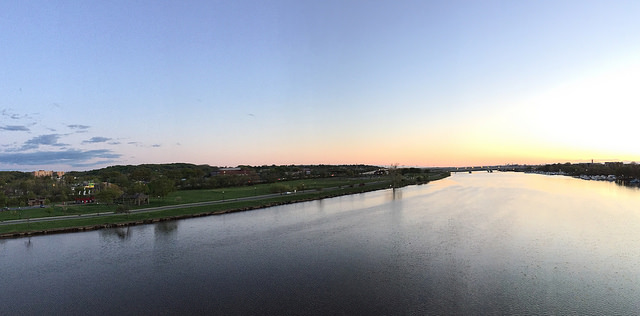
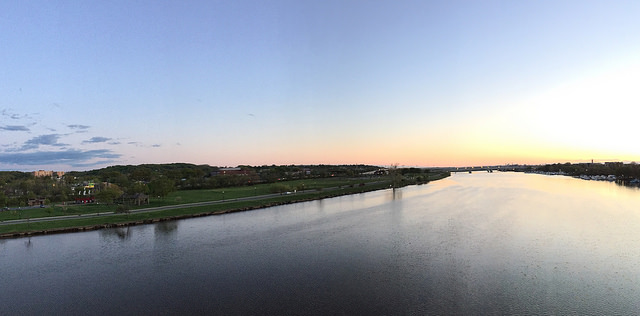 The Anacostia River received an ‘F’ on an annual report card, but advocates say that a passing grade is in sight within a few years. (Photo by Jim Havard)
With a pathetic-seeming score of 49, there is still a big F on the Anacostia River’s annual report card. That failing grade belies years of improvements to the health of the river, though, which isn’t being graded on a curve.
“Things are trending well. We’ve got a lot of the key components in place and working hard,” says Anacostia Watershed Society President Jim Foster. “We’re on a trajectory to have a positive grade here in the next few years.”
The non-profit has been doing the assessment since 2010, and it saw a two-point increase from last year. Nearly all of the key indicators that the Anacostia Watershed Society tracks, using standards established by the EcoCheck scoring system, saw improvements from 2016.
Several projects in the works are expected to keep that progress going. The completion of a major tunneling project, slated to come online next year, will have a particularly significant impact. It is part of the Clean Rivers Project, a plan D.C. Water says is the largest infrastructure project in the city since the Metro was built. The network of newly built storm water storage facilities will help century-old sewers during heavy storms, when polluted runoff dumps into the Potomac and Anacostia Rivers.
“I’d drink the sewage before I’d drink the stormwater,” Foster says of the sediment, trash, and animal poop-filled runoff that currently winds up in the river.
Speaking of animal poop, the society lobbied the National Park Service to mitigate the overgrown population of geese, which should improve the river’s fecal bacteria score on next year’s report card.
“Big things are in process, and it’s not something that you turn the switch and the light goes on or off,” Foster says about the still failing grade. Significant strides have also already been made. Submerged aquatic vegetation, which provides a habitat for animals and helps increase water clarity, earned “a giant zero” in the report card’s early years. A score of 37 then represents a marked improvement, if still a ways off from conditions that would make the river swimmable and fishable.
In 2011, a report released by advocacy group DC Appleseed called the Anacostia River “one of the most polluted waterways in the nation,” and suggested that cleaning it up would require the work of pretty much every jurisdiction you could imagine.
That’s actually where the Anacostia scores the highest, with a B- for “overall effort and commitment” from political and community leaders across the jurisdictions.
Those efforts are spread across the area’s major bodies of water, and the Anacostia’s improvement isn’t an anomaly. The Potomac River and the Chesapeake Bay have also both gotten cleaner over the past few years.
Foster and other environmentalists worry, though, that the progress will see a backslide under the administration of President Donald Trump, who has proposed slashing funding for the Environmental Protection Agency. Trump’s original budget also cut the entirety of federal funding for the Chesapeake Bay—dismissing the effort to clean up the largest estatuary in the Western Hemisphere as a “regional” concern—but those funds have since been restored.
There’s some reason to be optimistic for the Anacostia’s sake, though, as many of the major projects already underway.
One major one is looming though: ridding the river of toxic sediments. There is a 2018 deadline for the city to come up with a clean-up plan, after which the responsible parties (most of which are federal) will have to come up with as much as $1 billion to get it done.
Anacostia Watershed 2017 Report by RachelSadon on Scribd