The 27th edition of the annual festival that celebrates a broad range of the Jewish experience in cinema runs from May 17-28. Among the 63 feature-length films offered this year are a number of repertory screenings, including favorites like Cabaret (May 21 at DCJCC and May 27 at the AFI Silver), Clueless (May 25 at DCJCC, with director Amy Heckerling in person) , and Ernst Lubitsch’s classic To Be or Not to Be (May 28 at the AFI) as well with lesser-known titles like the Bruno Schulz adaptation Hourglass of the Sanatorium (May 21 at the AFI), and a 35mm print of the 1939 Polish drama A Letter to Mother (May 22 at the DCJCC). DCist staff previewed some of the more interesting new features and shorts at this year’s festival. See the whole schedule here. Note: Saturday screenings before 6:15 p.m. are pre-sale only in honor of Shabbat. Tickets to these screenings will not be available for purchase at the door.
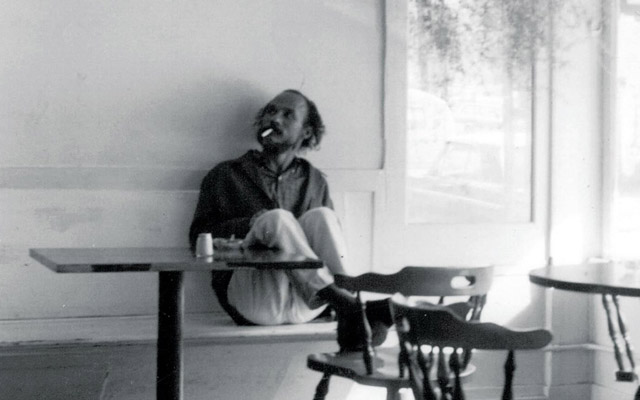
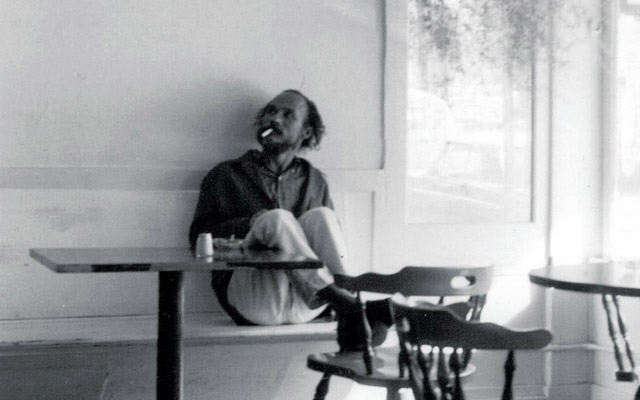 Bob Kaufman (Rosa Filmes)
AND WHEN I DIE I WON’T STAY DEAD
Chronicling the life of beat poet Bob Kaufman, this documentary is riddled with talking heads that begin to blend into one another, with superficial observations and a common refrain about the social inscrutability of this revolutionary writer. Along the way, one of his contemporaries explains, “Bob spoke in italics and capital letters. Everything he said was urgent.” This is clear in the film’s strongest asset: Kaufman’s words spoken aloud. Hearing his work firsthand comes with it a palpable sense of the man that no anecdote could begin to capture. But having a film about one unsung black artist helmed by another (director Billy Woodberry) has its other advantages, as the director’s first film in three decades showcases his masterful skill for assembling evocative images. Other than Kaufman’s words, Woodberry’s gift carries the film, with hypnotically arranged archival footage that creates an impressionist tableau of an era gone by. It’s just a shame that the shaky narrative and haphazard editing don’t get deeper into Kaufman himself, as the recreation of his work is truly stirring.—Dominic Griffin
Watch the trailer.
Monday, May 22 at 6:30 p.m. at Landmark E Street Cinema and Saturday, Mary 27 at noon at Edlavitch DCJCC.
 (NYFF)
ANGEL WAGENSTEIN: ART IS A WEAPON
Through the life of a Jewish-Bulgarian writer-filmmaker, this documentary tells the 20th-century history of the Balkan country, from its involvement on the side of the Axis powers in World War II through the fall of communism in 1989 and beyond. In his early 20s, the anti-fascist Angel Wagenstein was tortured by the police and sentenced to death for setting a Nazi storage warehouse full of winter coats on fire during the invasion of the Soviet Union, only to be rescued when the Russians pushed the Germans back in 1944. He was an idealistic communist until he realized that it had turned into a totalitarian regime and began making movies criticizing the government, some of which were banned. Angel Wagenstein is extremely well made, with film clips from historical archives as well as from Wagenstein’s own films interweaved into the stories of one man and of an entire country. Wagenstein himself, now in his 90s, plays a large role in the narration of the film, recounting events in a uniquely poetic and philosophical manner. In this documentary, Bulgarian history reads as a kind of microcosm of the world at large, with lessons we should all take to heart. —Elena Goukassian
Watch the trailer.
Thursday, May 18 at 7 p.m. at AFI Silver Theatre and Saturday, May 20 at noon at the National Gallery of Art.
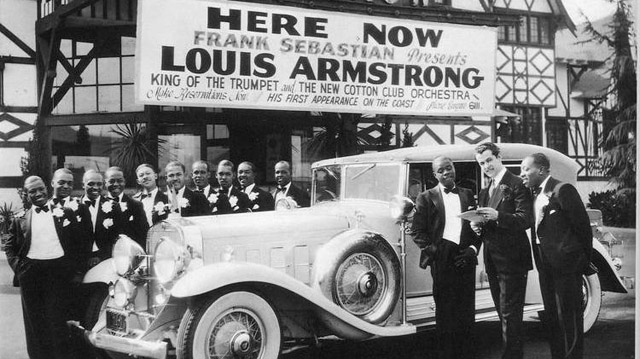 (Shoga Films)
Robert Philipson’s hour-long documentary looks at the fascinating history of a jazz standard that has been recorded hundreds of times. What makes “Body and Soul” particularly striking in an age when cultural appropriation has become verboten is the light it sheds on the rich cultural exchange between Jewish immigrants and African-Americans. The standard was composed by Johnny Green, who was Jewish, and first made waves in a jazzy arrangement performed by Libby Holman, a Jewish torch singer who some listeners assumed was black. But the song’s harmonic complexity (that bridge!) was expanded upon most by jazz artists like Louis Armstrong and Coleman Hawkins. An hour isn’t nearly long enough to exhaust the rich history of “Body and Soul”—you’ll probably have your own list of omissions to gripe about—but this densely-packed doc will make you think about the song—and about jazz—in a way you may not have considered before—Pat Padua
Watch the trailer.
Saturday, May 20 at 4:30 p.m. at Landmark Bethesda Row and Sunday, May 21 at noon at Edlavitch DCJCC.
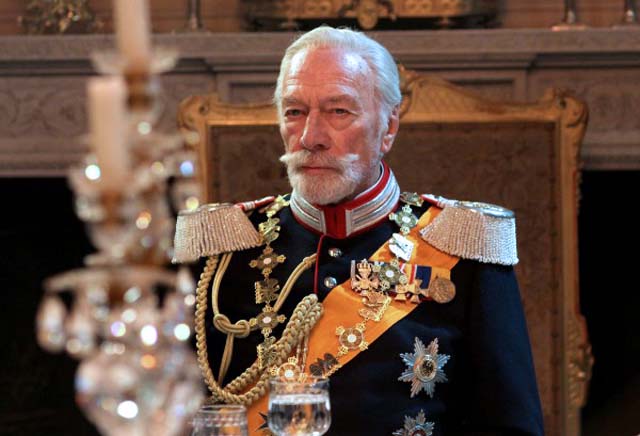 Christopher Plummer (WJFF)
The central problem with this World War II drama lies in the casting. Jai Courtney plays the ostensible protagonist Captain Stefan Brandt, a Nazi soldier tasked with standing guard over Germany’s former monarch Kaiser Wilhelm II (Christopher Plummer), who fumed in exile in the ’30s as the country fell to a dictatorship. Courtney doesn’t work nearly hard enough to earn sympathy for his character, and even worse, he’s not dastardly enough either, coming across as a blank unworthy of the affections of the Kaiser’s heady maid Mieke (Lily James). And yet writer Simon Burke and director David Leveaux rest their hopes on Courtney’s charm and chemistry with James to carry the movie past unremarkable sets and costumes, goofy dialogue and plot twists visible from miles away. There’s fun to be had observing the carefree Kaiser, as Plummer injects him with bubbly insouciance. But even that performance lacks nuance. In striving to be old-fashioned in storytelling and scope, The Exception ends up being a plain drag.—Mark Lieberman
Watch the trailer.
Saturday, May 20 at 7 p.m. at AFI Silver Theatre and Sunday, May 21 at 8:45 p.m. at Landmark E Street Cinema.
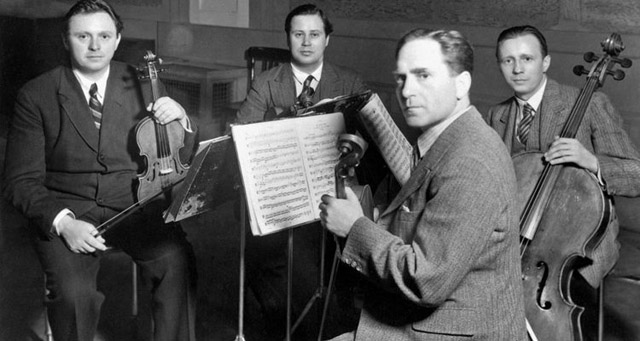 (WJFF)
This documentary focuses on five composers forced into exile due to the Nazis’ rise to power. Four were Jews fleeing the regime: Mieczyslaw Weinberg fled two, first the Nazis, then after he escaped to the USSR, the Stalinists. Adolf Busch, the only goy in the film, was so disgusted by Hitler’s pervasive terrorism and stifling of creativity that he left Germany for good. When the Nazis pleaded with him to return, he answered that he’d gladly do so, but only after “Hitler, Goebbels, and Göring were publicly hanged.” Horrifyingly familiar stories of discrimination, unwarranted jail time, escape, and concentration camps pervade, but with the power of music weaving throughout all the narratives. As the president of the Royal Conservatory of Music notes toward the end of the film, there’s an irony in totalitarian regimes valuing the power of music enough to censor it, whereas in democratic societies, we often see music as mere entertainment. —Elena Goukassian
Watch the trailer.
Sunday, May 21 at 2 p.m. at Bethesda Row Cinema and Tuesday, May 23 at 8:45 p.m. at E Street Cinema.
 (WJFF)
Roommates Leila and Salma love late nights and loud music—usually enjoyed over a cigarette and a beer. Not too keen on the balancing act between modern and traditional life, the women live the way they want, even when religious roommate Noor arrives. Wearing a hijab and modest clothing, the computer science student joins the flat but distances herself from the gatherings and behavior around her. The three live in the middle of Tel Aviv, the place to be if you’re young, hip, and looking to party in the Middle East—like Leila and Salma. But as Arab Israeli citizens, the women face discrimination and judgment from all sides. Israelis view them as “other,” and their Palestinian families see wild girls who are taking too long to settle down and play the obedient wife. Meanwhile, Noor is preparing to take on that role, but with a fiancé who might not be the best fit. Her new friends on the other hand? Those she might keep. Mouna Hawa, Sana Jammelieh, and Shaden Kanboura deliver strong, thoughtful performances. Written and directed by Maysaloun Hamoud, this 2016 Israeli film by, about, and for women is worth checking out. —Lauren Landau
Watch the trailer.
Wednesday, May 24 at 8:15 p.m. at Landmark E Street Cinema and Sunday, May 28 at 1:45 p.m. at the AFI SIlver.
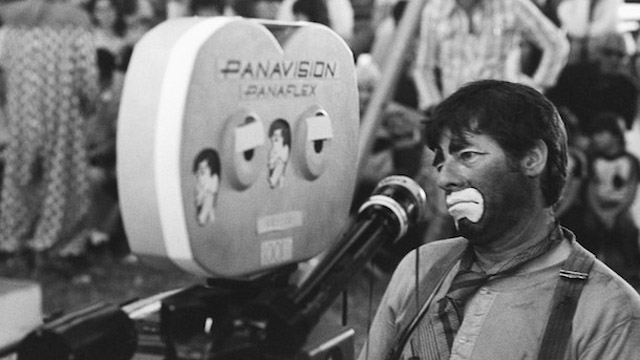 (French Connection Films)
JERRY LEWIS: THE MAN BEHIND THE CLOWN
How many documentaries are you going to watch that feature interviews with both director Jean-Luc Godard and Will and Grace‘s Sean Hayes? Such is the range of admiration for the divisive comedian-director Jerry Lewis. Gregory Monro’s hour-long documentary may not win any converts, but it’s a concise introduction to his work and conveys Lewis’s visual inventiveness as a director. The film doesn’t mention Lewis’ infamous The Day the Clown Cried by name, curious especially because one of the talking heads includes French actor-director Pierre Etaix, one of Lewis’ co-stars in that ill-fated holocaust comedy; but footage of Lewis putting on clown makeup may well come from that notorious film. Still, the best parts of The Man Behind the Clown may well be the candid interview with Lewis that closes the documentary, in which he gleefully curses the ignorance of American film critics.—Pat Padua
Watch the trailer.
Thursday, May 25 at 6:15 p.m. at Landmark E Street Cinema and Saturday May 27 at 11 a.m. at the AFI Silver.
 (Other Worlds Austin)
Danny (Yotam Ishay) is not a stereotypically masculine man. He is skinny, not the strongest, and cries quite a bit—okay, he cries all the time. That’s totally cool for some, but his girlfriend Noa (Hili Yalon) isn’t having it. Utterly devastated by the breakup, Danny decides to kill himself. That’s a pretty messed up set-up for a film, and it’s a surprising choice for a comedy. But when the poor guy slits his wrist, he discovers wires where veins should be. Danny is a robot! Things get progressively weirder and more hilarious from there. It turns out Noa has been kidnapped, and her roommate is some kind of man-eater villain. With the help of a billionaire genius inventor and a religious robot (Rob Schneider)—who is sadly not named R-Jew D-Jew—Danny sets off on his quest to save his beloved. But will she take him back? Written and directed by Tal Goldberg and Gal Zelezniak, this 2016 Israeli film is a fun pick for action and sci-fi lovers who’d appreciate a robot that shouts “Oy vey!” and an Orthodox assassin shooting a menorah gun.—Lauren Landau
Watch the trailer.
Thursday, May 18 at 9:20 p.m. at the AFi Silver and Saturday, May 20 at 2:45 p.m. at Landmark E Street Cinema.
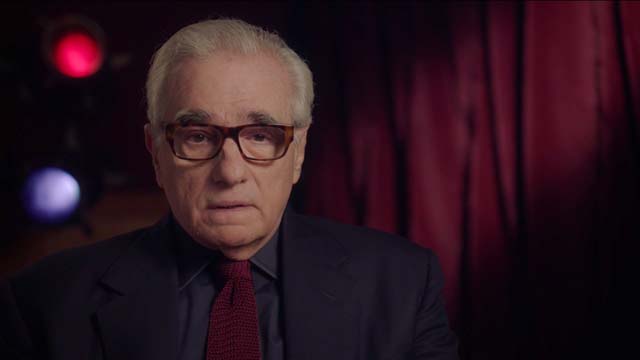 Martin Scorsese (WJFF)
There’s nothing wrong with this documentary’s approach to the nation’s most prestigious prize for literature and journalism, but there’s nothing special about it either. Award-winning actors including Natalie Portman and John Lithgow read selections from Pulitzer winners; writers and reporters recount stories from the work that earned them the honor; and archival drawings and photographs illustrate the life of Joseph Pulitzer, whose efforts set the foundation for the award and the works that receive it. While individual vignettes are compelling — fans of All the President’s Men will be particularly excited to see Carl Bernstein discussing Watergate, for instance. But the film’s trajectory is trajectory is somewhat aimless. Talking head interviews frame each segment, but director Kirk Simon doesn’t build each smaller piece into a larger whole. The movie leaves the viewer with a jumbled impression of what the Pulitzer means to the communities it honors, and how prizewinners have shaped American culture. A more disciplined examination would have dug beneath the surface. The Pulitzer at 100 is content to skim it.—Mark Lieberman
Watch the trailer.
Saturday, May 20 at 2:15 p.m. at Landmark Bethesda Row Cinema and Sunday, May 21 at 7:45 p.m. at Landmark E Street Cinema.
 “Jewish Blind Date” (WJFF)
In a program of short films, you get variety, gripping storylines, and the guarantee that anything uncomfortable will be over soon. That’s great, because in some cases, like 11-minute-long coming of age tale “Cowlick,” the whole film is an awkward moment. Walk A Mile In My Shoes presents comedies from Canada, Israel, Switzerland, the U.S., and the U.K. The films aren’t quite “ha ha” funny, but they do present amusing circumstances. Each of the works in this collection centers on a moment of transformation. A nonagenarian tries pork for the first time in “Bacon & God’s Wrath.” In “Mordechai,” a Hasidic Jew is presented with the opportunity to trade his pe’ot in for a passport. Will he abandon religious life for one of adventure? In “Jewish Blind Date,” a baal teshuva goes on a shidduch date with a man who isn’t who—or what—he claims to be. But maybe that’s not such a big problem after all? And in “The Postman in Underwear,” a mail carrier takes an unconventional approach to winning a stranger’s love. This program will be presented as part of the annual Two Jews Walk Into A Bar (and a Deli) pub crawl.—Lauren Landau
Sunday, May 21 at 2:30 p.m. at Landmark E Street Cinema and Sunday, May 28 at 2 p.m. at Two Jews Walk Into A Bar (and a Deli).