Rachel Kurzius
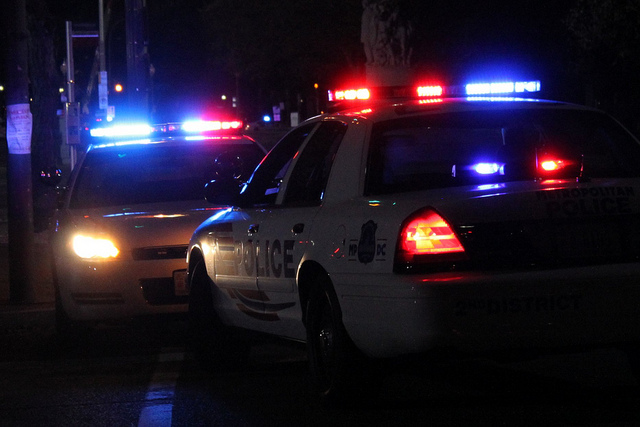 Photo by Brian Allen.
The Metropolitan Police Department has arrested 16 people in three separate prostitution enforcement operations on the corner of 12th Street and Massachusetts Ave NW since late April, noting “an increase in visible prostitution activities.”
This is part of the weekly operations conducted by MPD’s Narcotics and Special Investigations Division, says police spokesperson Aquita Brown. Locations for the sweeps are determined with input from the District stations.
Police say the operations on 12th Street and Massachusetts Avenue occurred “in response to community concerns.”
And indeed, Kevin Deeley, the commissioner of ANC 2F08, which includes the corner of 12th and Mass, says that, for his constituents, the activity is “a consistent complaint. People wake up to go to work and walk their dog at 6 or 7 a.m. and are still seeing prostitutes on the street.”
“You’ll see women in thongs walking next to cars on the street or walking on the sidewalk, looking back as cars are going by,” says Deeley. Other districts in ANC 2F “complain about parked cars and used condoms,” he says.
Through May 29, MPD has arrested a total of 71 people for prostitution-related offenses this year, 68 percent of whom were arrested for sexual solicitation, according to data provided to DCist by D.C. Police.
The most prostitution-related arrests occurred in May with 32, followed by April, with 19, and then February with 18. (There were zero in March, and two in January)
Of the 32 arrested in May, 30 of them were charged with sexual solicitation and two with prostitution.
That’s a lower number of prostitution-related arrests overall year-to-date than in 2016, when police arrested 98 people on prostitution-related arrests from January through the end of May. Of those, nearly 76 percent were sexual solicitation arrests. These numbers reflect MPD’s stated policy in primarily targeting customers, known as johns.
Deeley says that Third District officers are in constant communication with the ANC about their concerns, though “MPD generally has some pessimism about their ability to really address it comprehensively and effectively so there’s a resignation that it’s just going to move around if you enforce it in a certain place.”
Cyndee Clay calls the arrests a “band-aid.” She’s the executive director of HIPS, an advocacy group that works towards the health and rights of sex workers. She would like to see MPD enact what’s called law enforcement assisted diversion, which allows officers to make a referral to a program like HIPS to provide wraparound services instead of arresting someone for sex work.
Overall, though, she says that she has observed “pretty significant reductions in the number of people we’re seeing on the streets.” HIPS’ mobile outreach program now serves an average of 30 sex workers per night, “which is down from the hundreds that we saw 10 years ago. We also have to travel further to find the kind of clients we’re trying to serve.”
However, Clay says that there’s a link between law enforcement targeting sex work advertised online and some of D.C. residents’ sense that there’s an uptick in this activity. “When you cut down on quieter, online ways for people to do that, the result is that people are on the streets more,” she says. She adds that there’s generally an increase in street-based sex work when the weather warms.
Police declined to make a representative of their Narcotics and Special Investigations Division available for an interview.
Deeley says that he doesn’t know whether the sweeps in his district will continue, “but if it leads to some, at least temporary, reduction in prostitution right in front of all these apartment and condominium buildings, I think it’s a welcome step.”
Update: This headline originally cited that 23 percent of arrests occurred on this corner, but that included six arrests in early June, which were not part of the total MPD arrest data.