 Photo by Ted Eytan
The salary a person needs to rent a two-bedroom home in D.C. has increased by nearly $5,000 since last year, according to a new report.
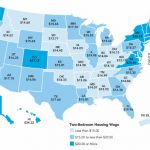
District residents need to bring in $69,840 a year to afford a two-bedroom rental—that’s up $4,920 from last year, according to the 2017 “Out of Reach” report by National Low Income Housing Coalition.
The U.S. Department of Housing and Urban Development lists D.C.’s fair market rent for a two bed-room home as $1,746, according to the report. (A one bedroom is $1,513.)
A household must bring in $5,820 per month in order to spend one-third of income on housing, according to the coalition. Assuming they work an average of 40 hours a week, that translates to $33.58 an hour.
But the average renter in D.C. makes $27.20 an hour, according to the NLIHC report. Meanwhile, people who make the city’s $12.50 minimum wage would have to work 107 hours per week to afford a two-bedroom home in D.C. or 93 hours a week to snag a one-bedroom residence. (The minimum wage is set to increase to $15 by 2020.)
According to a DC Fiscal Policy Institute report last year, the District’s investment in affordable housing is “not well targeted to the households in greatest need” even as the city sees the most housing construction activity in decades. While 77 percent of the D.C. renters who need affordable housing have extremely low incomes, only 39 percent of affordable apartments backed by the city with public dollars since 2010 are within reach of these families.
Folks in the suburbs can make $11,000 to $21,000 less a year than renters in D.C., according to the coalition. Maryland residents would have to earn $58,803 a year, which translates to $4,900 a month, to afford a two-bedroom on one-third of their monthly income. And Virginia household would have to bring in $48,435 annually, which is $4,036 per month.
A recent report from RentHop that looked at rentals near Metro stops showed that one-bedroom rentals are up by 2.6 percent from 2015, with rents increasing near 61 of the area’s 91 Metro stations.
Out of Reach Report by Christina Sturdivant on Scribd