Rachel Kurzius
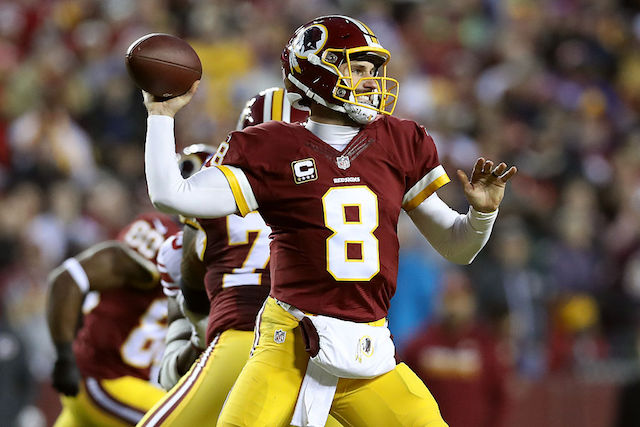 (Photo by Rob Carr/Getty Images)
Dan Snyder won this round.
The owner of Washington’s football team is no longer facing legal challenges to the franchise’s name, a dictionary-defined slur. (This website does not use the name in print.)
This comes after the Supreme Court ruled earlier this month that the law permitting the U.S. Patent and Trademark Office to turn down “disparaging” trademarks violates the First Amendment.
Using that law, the PTO cancelled the team’s trademark in 2014. The reasoning? It was a racial slur that disparages Native Americans. While the team could still use the name, without a trademark it lost protections against counterfeit merchandise. The team’s case had been on hold at a federal appeals court in Richmond while the Supreme Court agreed to hear another trademark case, brought by a band called The Slants.
In that case, the Supreme Court ruled unanimously that the disparagement clause “offends a bedrock First Amendment principle: Speech may not be banned on the ground that it expresses ideas that offend,” as Justice Samuel Alito wrote in his opinion for the court.
“I’m THRILLED,” Synder said in a statement in response to the ruling, which was a death knell for legal challenges to the NFL team’s name. He claims the team’s name “represents honor, represents respect, represents pride. Hopefully winning.”
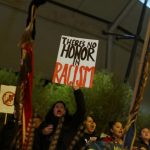
Groups like Change the Mascot counter that it “is a dictionary-defined racial slur designed from the beginning to promote hatred and bigotry against Native Americans. This is a word that was screamed at Native Americans as they were dragged at gunpoint off their lands—and the hate-infused meaning of the word is precisely why this particular name was given to the team by avowed segregationist and first team owner George Preston Marshall.”
The Justice Department announced it was giving up its court battle over the name, following the SCOTUS decision, the Associated Press reports.
Five Native Americans also ended their legal fight over the team’s trademark on Thursday, according to The Washington Post.
“There’s no more challenge to make,” Jesse A. Witten, an attorney representing Native Americans, told The Post.
It is quite the turn of events for a movement that had garnered widespread support from local and national politicians. The Interior Department under President Barack Obama said the team could not return to federally owned RFK Stadium without rebranding.
“If I were the owner of the team, and I knew that its name—even if it had a storied history—that was offending a sizable group of people, I’d think about changing it,” Obama said in 2013, before the trademark was revoked.
Snyder’s response at the time to calls for him to change the name? “NEVER—you can use caps.”