Rachel Kurzius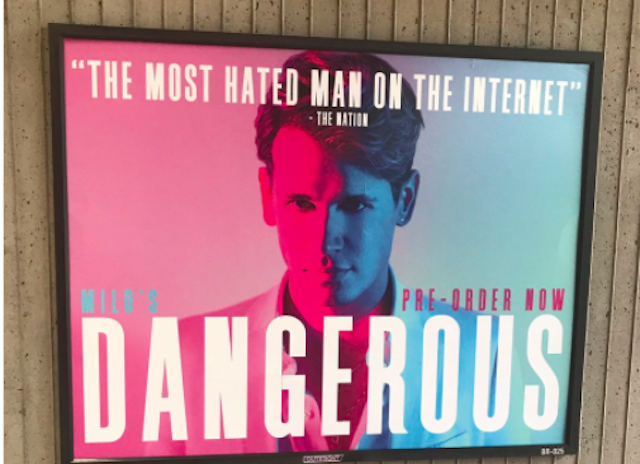
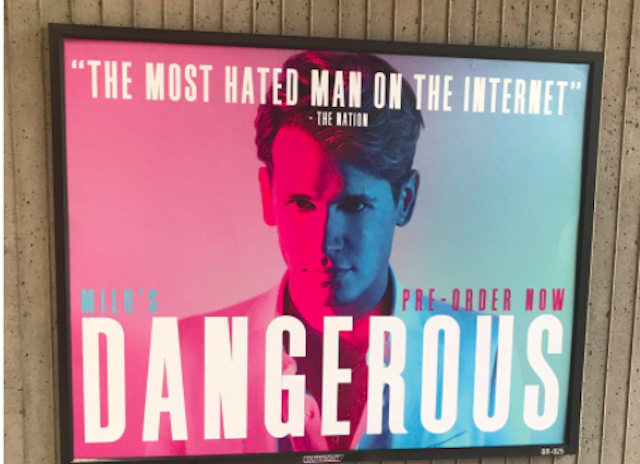 One of the ads, spotted at the Braddock Road Station. (Photo by William Goodman via Twitter)
Metro is taking down advertisements for the new book from Milo Yiannopoulos, a controversial “alt-right” media personality who’s bullied his way into prominence.
The advertisement for Yiannopoulos’s self-published new book, Dangerous, showed his face in technicolor with the words “The Most Hated Man On The Internet.”
Yiannopoulos was a senior editor for Breitbart, who was banned from Twitter for calling on his hundreds of thousands of followers to harass other users. He ultimately resigned in February and lost his book deal after comments he made in favor of sexual relations with 13-year-old boys.
A slew of riders complained about the ads for his book on social media and through the transit agency’s official complaint system.
“It’s more than a little ironic to see his face in the poster spots that once housed anti-harassment posters,” says Katie, a daily rider on the system who says she saw the ads four times a daily on her commute. (She asked that we not use her last name, “I don’t want it to come up in Google searches, though the fact that Milo’s followers are known to harass people in the internet definitely also influenced my decision.”)
“He can say what he wants, but he’s not entitled to a platform and, advertising revenue be damned, WMATA does not have to advertise hate speech,” says Katie.
She sent a formal complaint and received a response from the customer relations team that said, in part, “The display of this ad is consistent with Metro’s policy of remaining content-neutral when accepting advertising. Although Metro understands that feelings and perceptions will vary among individuals within the community, we cannot reject advertising because some find it inappropriate or offensive.”
But now, it seems Metro has changed its tune, after multiple complaints led to a review.
“The ad violates Metro’s advertising guidelines,” spokesperson Richard Jordan tells DCist via email. “We are in the process of removing the ads.”
Tipsters spotted ads at the Bethesda, Cleveland Park, Braddock Road, and Friendship Heights stations, though it is unclear the total number of stations that had them on display. Metro declined to give details about the size and cost of the campaign.
Jordan says that the advertisement specifically violates two of the guidelines: 9, which states that “advertisements intended to influence members of the public regarding an issue on which there are varying opinions are prohibited”; and 14, which says “advertisements that are intended to influence public policy are prohibited.”
It’s unclear what, precisely, about the ads violates the guidelines. Is it the contents of the book, or the presence of Yiannopoulos at all? Metro declined to answer.
“Is my face a hate crime?” Yiannopoulos responded to the news in a Facebook post, saying Metro did not let him know the ads would be removed or give him an opportunity to contest the decision.
“We believe that the removal of our billboards constitutes unconstitutional viewpoint discrimination by a government regulator in violation of the First Amendment and are preparing our response now. We continue to fight to defend free speech against pressure groups that prefer to suppress speech rather than allow the marketplace of ideas to operate,” he writes.
This isn’t the first time in recent memory that Metro has taken down ads after the agency found that they violated their guidelines. They took down bus ads for a faith-based adoption service in April, and in January, rejected ads for an abortion pill from a local women’s health clinic, after mistakenly allowing its first ad campaign to run in April 2015.
Metro, which makes about $20 million annually through ad revenue, works with a vendor called OutFront Media. The third-party flags ads it thinks will run afoul of the guidelines. Then, if there are complaints about ads that are posted, a committee comprised of Metro’s general counsel and marketing team makes the final determination.
Metro permanently changed its advertising policy in November 2015, shortly after Islamophobic activist Pamela Geller submitted an ad that depicted an image of the prophet Muhammad. She had previously won $35,000 in court from WMATA after the transit agency refused an ad equating Muslims with savages. Metro had added disclaimers to a previous ad campaign of hers.
Updated with comment from Yiannopoulos.