 Rachel Sadon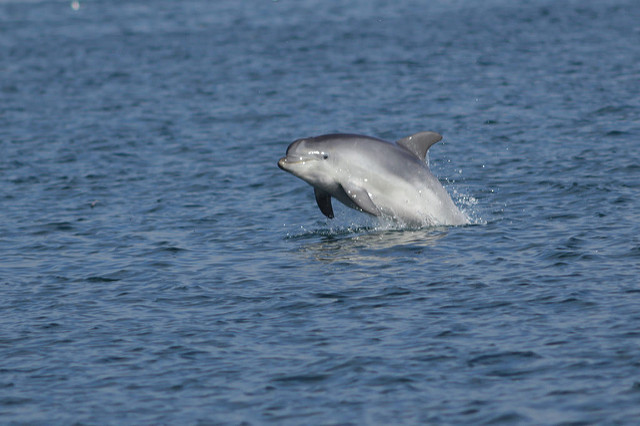
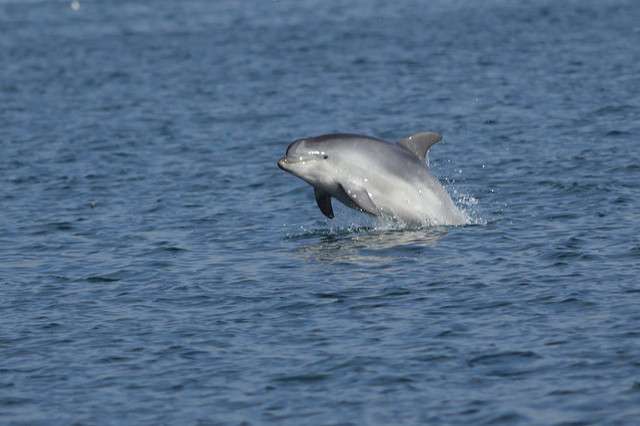 (Photo by Muchaxo)
Bottlenose dolphins have long shared the waters of the Chesapeake Bay with jet skiers, fishermen, kayakers, and boaters. As researchers begin studying the marine mammals for the first time, they’re calling on that aquatically inclined public to help out.
“While we can put our listening devices in the waters, we can’t have our eyes there at all times,” says Leila Fouda, a faculty research assistant at the University of Maryland Center for Environmental Science’s Chesapeake Biological Laboratory. “By involving the public who are on the water, we can have as many eyes as possible to get a feel for where the dolphins are going and when.”
People who spot dolphins are asked to log their sightings on the Chesapeake Dolphin Watch website, where they are added to a map showing where the animals have been spotted.
Dr. Helen Bailey is leading the research project, one of the first ever systemic efforts to study the Chesapeake’s dolphins. Last year, they placed listening beacons in the water to do acoustic monitoring. The goal is to eventually have a long-term data set.
“It’s quite exciting because we don’t know anything almost about them. We’re getting to learn everything as we go,” Fouda says. “When the dolphins are in the bay, where they’re going in the bay, even what time of day they’re spending in certain locations, and what they’re doing. Are they feeding? Socializing? How are they utilizing the different ecosystems within the bay?”
The project is a complement to one conducted by Georgetown University researchers, which is focusing on a narrower slice of water in the lower Potomac region near Ophelia, Virginia.
Professor Janet Mann has been cataloging hundreds of dolphins as they pass through and studying their behaviors (her team is also naming them for presidents, vice presidents, and their families). “Other than a couple of newspaper articles, we have no literature to go on,” Mann told DCist last month.
Though little is certain, the area that Mann is studying appears to be an important area for breeding and birthing, with sightings of a high number of very young dolphins.
Both the Georgetown and University of Maryland researchers note that it is hard to say for certain, given the lack of hard data, but there is anecdotal evidence that there’s been an increase in the marine animals in the Chesapeake in recent years.
It corresponds to the improving health of the Chesapeake Bay, the largest estuary in the U.S.
“One of the theories is that they’re coming into the Chesapeake to follow fish species,” Fouda says. “The healthier bay has led to healthier fish. And more fish means more dolphin sightings.”
Report your sightings to the Chesapeake Dolphin Watch.
Previously:
There Are Dolphins In The Potomac And We Know Almost Nothing About Them … Yet