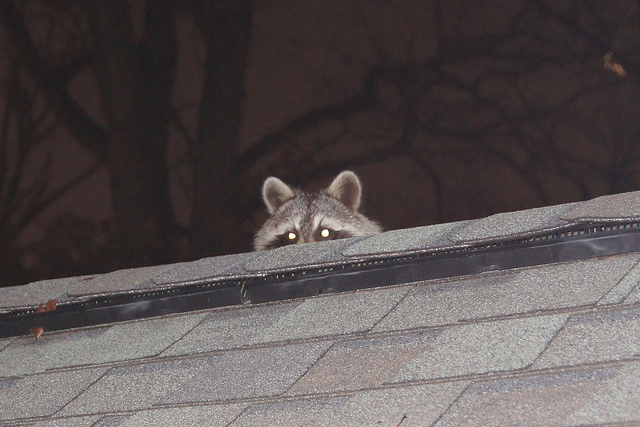
 (Photo by Kevin Wolf)
By DCist contributor Megan Draheim
Sure, raccoons are cute when they’re hitching a ride on the back of a trash truck, but the Fairlington neighborhood of Arlington County has been experiencing a bit of a raccoon crisis lately.
Two of the creatures attacked a man while he was standing on his front porch last week. “They started clawing at me and biting my leg,” Gregory Purcell told FOX5. “So I was knocking them away, trying to get them away and kicking them away. Trying to back into my house and close the door.”
The week before, a raccoon bit a woman while she was standing on her patio with her dog; she required 87 stitches.
It’s not the first time the neighborhood has been set on edge by the creatures. There were three separate incidents of raccoon bites reported occurred last year.
The culprit? Possibly garbage. Right now Fairlington residents are told to leave their garbage bags on the street between 6 a.m. and 9 a.m., which still gives wildlife plenty of time to find whatever tasty bits they can. To make it worse, although residents aren’t supposed to leave bags out overnight, it does happen. And the trash is picked up six days a week, resulting in ready and consistent meals for a whole host of animals (although the neighbor who witnessed the most recent attack said there was no trash in the immediate vicinity, having an ongoing issue can cause the same problems, whether or not there is an attractant present at the time ).
Besides being messy, the problem is that when a raccoon starts to associate people with food, they can become overly bold while seeking out food, which can ultimately result in them becoming aggressive.
“At this point they’re not just cute little woodland animals. They are aggressive and attack without provocation. They need to be gotten rid of—one way or another,” Peggy Donas wrote on a Facebook discussion about the situation. “I love animals as much as the next person (for all of you that will jump down my throat) but we need to worry about the safety of the community at this point.”
While some residents are calling for trapping and relocating or killing the raccoons in a colorful Facebook discussion, both acts are illegal and unlikely to work as a long-term solution because it creates a so-called “habitat vacuum.” In other words, if there are desired resources accessible to a raccoon (food, water, shelter), one way or the other, a raccoon is likely to stumble on to them. If you remove that raccoon, more will find the way. It’s the urban wildlife version of: “if you build it, they will come.”
Trash is not necessarily the only problem. Leaving pet food outside can be an attractant, as can feeding birds and being careless with cleaning outdoor grills. But putting garbage in secure, raccoon-proof cans instead of leaving easily-rip-able bags on the street would go a long way. The Fairlington property managers are now considering their options. At least one has already changed its trash procedures.
The Animal Welfare League of Arlington says they are taking the situation seriously, including reaching out to neighboring agencies to ensure quick response times and contacting a biologist with the Virginia Department of Game and Inland Fisheries to discus raccoon population management.
“We are actively working on a multifaceted approach to reducing the risk to the public as well as preventing future incidents as quickly as possible,” says Jennifer Toussaint, Arlington County’s chief animal control officer. “It is important that the community stay alert, and that they remove any attractants around their properties including—standing water, trash, and bird feeders. Dogs and domestic pets should be kept inside or on leash at all times. Do not feed or approach any wild, stray, or feral animals, even if they appear friendly or injured.”
Rabies is always a concern when it comes to bites or scratches from wildlife, but the specific animals that bit these residents could not be captured (the only way to test if an animal has rabies is to take brain samples, so the animal has to be captured and euthanized). Luckily, prophylactic rabies vaccines will prevent rabies infection in injured humans.
(If you do see a raccoon acting weirdly—staggering and walking in circles in the daytime, drooling excessively, biting itself, or otherwise acting erratically—steer clear and call your local animal control office! Raccoons are a rabies vector species in the DMV, so there’s always the chance that it is sick.)
But it sounds like at least part of the problem in Fairlington has to do with the human environment; leaving trash in bags outside for wildlife to rummage through is a surefire way to cause problems in the long-run. The raccoons and other wildlife that make use of this easy resource are just doing their jobs: staying alive and caring for their young. It’s up to humans to change their behavior.
For more tips on dealing with raccoons, check out the Humane Society’s “Wild Neighbors” site.