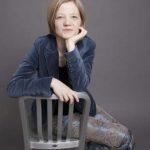
By DCist Contributor Jamie McCrary
The Lyceum Chamber Music Series, says music director Ulysses James, is about two things: “joy and nourishment.” He believes the recitals offer something intangible—a pause to everyday life where people can recharge, reflect, and rest.
“I think these concerts provide an oasis in the city,” James says. “Classical music, especially chamber music, fills people in a way that’s hard to explain.”
Violinist Marlisa Woods agrees. A regular performer in the series, she describes the concerts as “intimate” and “accessible” for both the performer and the listener.
“It’s just such a rich and rewarding experience,” she says. “They create a special space where the audience and musicians can communicate.”
The concert series, now in its 27th year, is a central component of the Washington Metropolitan Philharmonic Association’s (WMPA) programming. Held Sunday afternoons from June through September at the Lyceum in Old Town Alexandria, the recitals feature everything from Mozart to Stravinsky, performed by some of D.C.’s finest musicians.
James sees the chamber series as an act of musical community service. The concerts, all free and open to the public, are WMPA’s way of connecting and giving back to D.C. area residents.
“We don’t do this to make money or advance the organization. We do this so audiences can experience excellent classical music,” James says.
Old Town’s Lyceum, Alexandria’s history museum, is a particularly distinctive venue. The historic building is set with Greek-style columns, beautiful marble flooring and wide open rooms, a perfect space for classical music concerts. Woods loves the building’s design, which offers “very clear but resonant acoustics.” She also appreciates its intimate feel. Performers are positioned steps away from the audience, creating a communal atmosphere that fully engages listeners.
“It’s this whole experience of not just performing a piece for the audience, but performing it with them,” Woods explains. “You’re all in that room together, experiencing the music as one.”
The concerts, though prepared with the audience in mind, are just as much about the performer as the listener. Each group is self-assembled and selects their own repertoire, giving musicians the chance to rehearse and perform pieces that most excite them. Woods described as a “rare treat” for classical musicians, who often have music chosen for them. In particular, she recalled recent performances of clarinet quintets by Brahms and Mozart, pieces for which members of her ensemble had been searching for opportunities to play.
The series’ open-ended structure is part of its charm, as is the informal nature of the performances themselves. Upcoming performances include this coming Sunday’s concert featuring Schubert’s Little Symphony for Winds and Dvorak’s Czech Suite. The ensemble consists of the Washington Metropolitan Philharmonic’s flute, oboe, clarinet, bassoon, and French horn players. Other programs include music by Brahms, Beethoven, Bizet, Crespo, Piazzolla, as well as seasonal classics, including Barber’s Summer Music.
James is excited for the series to grow. He’s planning to continue the recitals for years to come, with hopes of attracting new musicians and audience members. Typically orchestral groups only offer programming during the fall and spring, but he believes “it’s important to give people music throughout the entire year.”
The concerts are authentic and moving, with deep expressions of emotion through some of the most treasured pieces in the classical repertoire.
“This music was meant to be experienced live, and it’s really special to have the opportunity to do so,” says Woods. “I can’t think of a better group of musicians to perform it.”
More information about the Lyceum Chamber Music Series and the full schedule is available on the WMPA website. The series includes performances on July 30, August 6, 13, 20 and 27, and September 3. It is free to attend, but donations ($15 suggested) are accepted.