Rachel Kurzius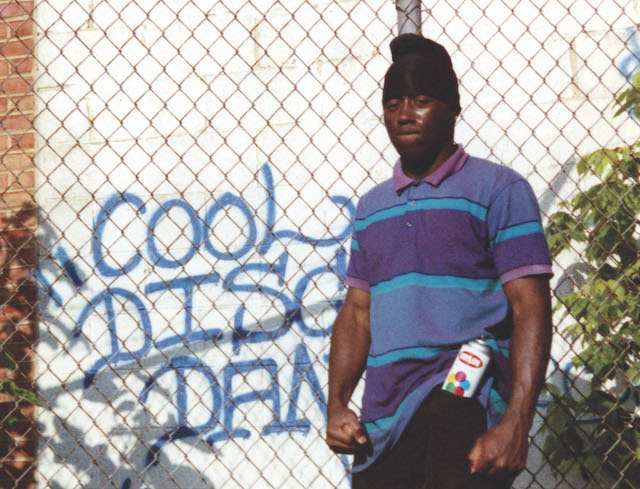
The man who tagged D.C. with the signature “Cool ‘Disco’ Dan” died this week.
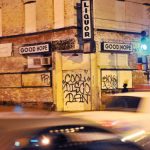
His name was Danny Hogg, but he was known by his go-go-lettered tag—Cool “Disco” Dan—which was visible on just about any surface throughout the District in the late 80s and early 90s.
Hogg died on July 26 of complications from diabetes, according to Roger Gastman, Joseph Pattisall, and Caleb Neelon, who all collaborated over the course of a decade to make the documentary film The Legend of Cool “Disco” Dan. He was 47 years old and is survived by his mother, sister, grandmother, and other relatives.
“Like most people in the Washington D.C. area, we knew Cool ‘Disco’ Dan’s mythic graffiti signature before coming to know him as a person. We were teenagers in the early 1990s and this name was everywhere. His signature really was mythic, because in our circles, tall tales abounded about the Dan behind the name,” Gastman, Pattisall, and Neelon write in a statement.
“Dan fascinated us more and more, year by year, we realized that this was one of the rarest of people: a person who embodied Washington, the real Washington, not the federal Washington, but the one where people live, love, grow, and die. He was Washington, D.C.—ask anyone who knows,” they write.
According to a Washington Post profile that revealed the identity of the “urban phantom” in 1991, Hogg grew up in Southeast D.C. and began his foray as a graffiti artist when he was 16.
“With a name so big and so famous, one expects an enormous, superhuman character to be behind it,” write Gastman, Pattisall, and Neelon, who describe Hogg as “short, with dark skin and an ability to become almost invisible even as he stood right in front of you. He was quiet and avoided eye contact. But he wasn’t unfriendly, you just had to be patient as he overcame his shyness to become the laughing, smiling storyteller he could be when he was comfortable.”
Hogg struggled with homelessness and mental illness. In a 2013 Washington Post article, Clinton Yates wrote that Hogg was “a personal testament to the struggles of the city and the people who lived here, and his staggering visibility, even if illegal, was a steadying hand for many when we had few others.”
Gastman and Pattisall say that they’re currently working on finalizing plans for a public memorial.
Gastman says that Hogg’s goal was “being everywhere at once but nowhere at all,” and would carefully consider the locations for his signature. “It was more important to get the high profile spot and wait out all night to get it, then go get 20 other spots in the area.”
Can people still find his tags in the city, which has significantly changed since his heyday?
“There’s definitely some Cool ‘Disco’ Dan signatures in the city,” says Gastman. “Not as many as there used to be, but if you ride the Red Line, there’s still some.”
This post has been updated.