 Julie Strupp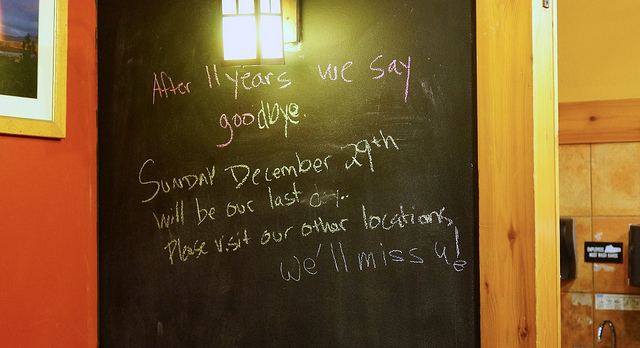
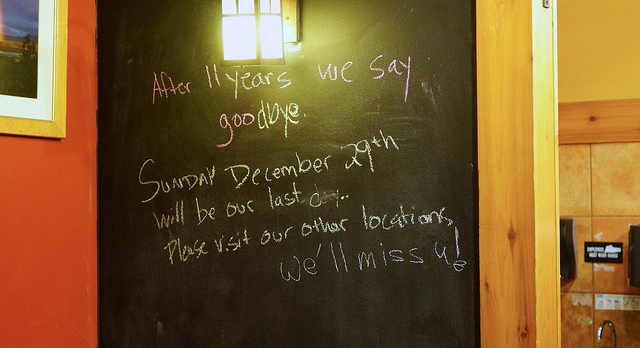 Caribou Coffee closes after 11 years in Logan Circle (Photo by Ted Eytan)
According to a new analysis from the D.C. Policy Center, the golden days of the District’s burgeoning restaurant and entertainment industry scene may ending. The study shows that the city granted 165 new liquor licenses in 2010, but by 2016, less than half of those same businesses remained.
Researcher Kate Rabinowitz reviewed data obtained from the Alcoholic Beverage Regulation Administration to suss out nightlife trends in the District. She found the number of bars, restaurants, and nightclubs has grown dramatically in the past decade, nearly doubling from about 800 in 2008 to just under 1,300 such establishments in 2016. However, a growing number of of closures could be a sign that the boom is deflating.
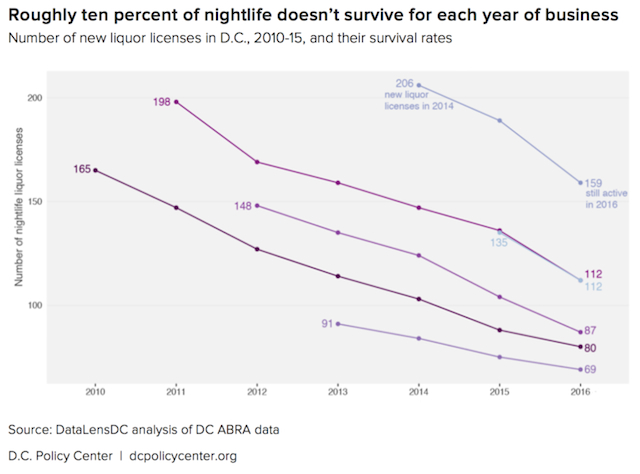
“A large uptick in closings across the board in 2015-2016 potentially signals oversaturation of the market, suggesting that the District’s nightlife and restaurant boom could be coming to an end,” Rabinowitz writes.
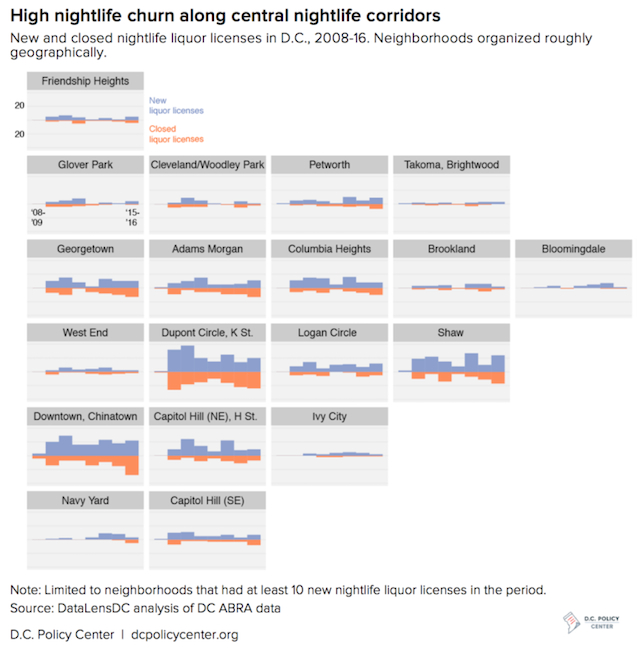
The analysis shows roughly ten percent of bars, restaurants, and nightclubs close each year. Dupont Circle, Shaw, Downtown, and Chinatown all showed the highest rates of turnover, with large numbers of both new and closed applications for liquor licenses.
“The first period of data, 2008-2009, shows almost no activity across D.C., possibly due to the uncertainty and pullback in loans during and after the Great Recession. There’s is a bounceback the next year, particularly along central corridors,” Rabinowitz writes. “The area encompassing Dupont and the K Street corridor saw the greatest number of new licenses in early years as well as the greatest number of closed licenses, making it the area with the most nightlife churn. Downtown and Chinatown also experienced markedly high churn rates.”
There is some good news though: certain neighborhoods on the periphery of nightlife in 2008—including Bloomingdale, Brookland, and Ivy City—have seen a slow but steady growth in bars, restaurants, and the like—and seem to be less afflicted by high rates of closures.