Rachel Kurzius
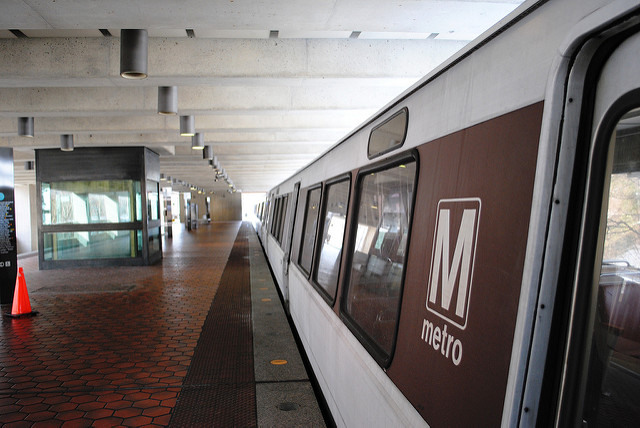 Photo by Dennis.
With the flick of a pen, a new safety oversight body for Metro is officially law. But there’s still more to do before it begins the job of overseeing the Washington Metropolitan Area Transit Authority.
President Donald Trump signed a joint resolution to create the Metro Safety Commission, the final legislative step in the years-long process to get a more robust watchdog in place for the second-busiest transit agency in the country. To get to this point, D.C., Maryland, and Virginia all had to pass identical legislation, which then had to make it through Congress.
In October 2015, the Federal Transit Administration assumed direct safety oversight of the transit agency after “a number of accidents, incidents, and a demonstrated pattern of safety lapses and concerns with WMATA’s operations,” FTA Acting Administrator Therese McMillan wrote.
The previous body, the Tri-State Oversight Committee, had no way of enforcing its findings or recommendations. But when Metro became the first subway system in the country that FTA directly supervised, the agency had control over the purse strings.
Indeed, then-Transportation Secretary Anthony Foxx threatened to withhold millions of dollars from the transit agency and the states that use it. “You would think that if you have thousands of people traveling on this system every day, from all these jurisdictions, that safety would be something that nobody would let fall off the table,” said Foxx. “And yet it has.”
The FTA made good on that promise this February, after Maryland and Virginia dragged their feet on passing the Metro Safety Commission bill that the D.C. Council had already approved. It is still withholding a total of $8.9 million this year from transit agencies in Maryland, Virginia, and D.C.—including about $4.5 million for Metro.
That jumpstarted the states’ fervor to get the commission going. The bill passed in Virginia and Maryland earlier this year, and was approved by Congress in early August.
The Metro Safety Commission still needs to staff up and find office space before it can officially start doing its job as an independent body that can compel Metro to make changes. The transit agency will still be responsible for enacting those directives.