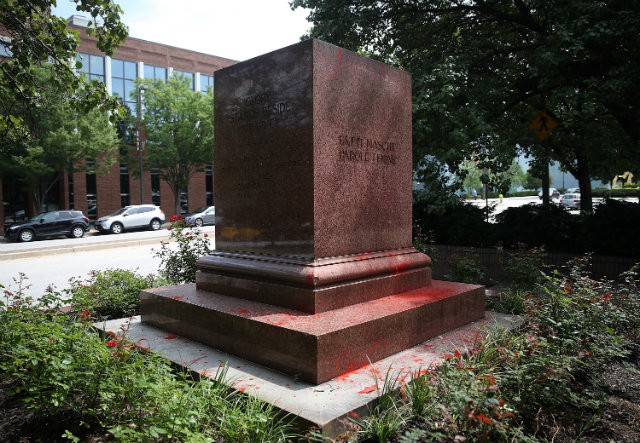
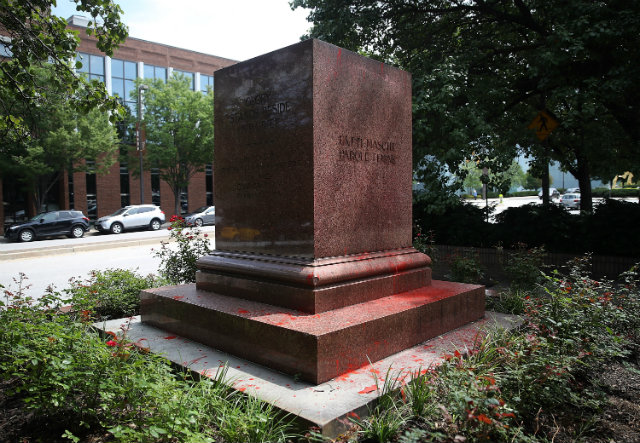
 Empty pedestal where the Confederate soldiers and sailors monument once stood in Baltimore, Maryland. (Photo by Mark Wilson/Getty Images)
Since quietly removing four monuments with Confederate ties on August 16 in Baltimore, city leaders are asking for the public’s opinion on what to do with the now-vacant spaces.
The Baltimore Office of Promotion and The Arts has created an online portal called “Monumental Sites” to collect public suggestions and ideas. The site will be live through the end of the year.
Baltimore Mayor Catherine Pugh told NPR that she likes the idea of honoring people who have positively impacted the city, but she also doesn’t want people to forget what stood there before and why it was taken down.
She said she received an “awesome proposal” from a black artist who wants to paint the pedestals in an educational way to explain the history of the sites.
The memorials that crews removed include one of Confederate soldiers and sailors on Mount Royal Avenue; Confederate women at Bishop Square Park; Roger B. Taney (the U.S. chief justice who oversaw the infamous Dred Scott Supreme Court decision) on Mount Vernon Place in North Park; and Confederate generals Robert E. Lee and Stonewall Jackson in Wyman Park.
They were taken down in the early morning hours of August 16, days after white nationalists protested against the removal of a General Lee statue at a rally in Charlottesville. During the demonstration, an alleged Nazi drove a car into a crowd of counterprotesters, killing 32-year-old Heather Heyer and injuring 19 others.
Although she was criticized for bypassing approval from the Maryland Historical Trust, Pugh told The Washington Post that she conducted the stealth operation because “we all are seeing lessons via the media of uprisings and violence, and violence is not what we need in our city.”
Earlier this summer, the city of Rockville, Md. also quietly removed a statue of a Confederate soldier from outside its courthouse after several years of debate. Like Baltimore, Ellicott City officials removed a statue following the incident in Charlottesville. And leaders other cities, including D.C., are advocating to have them removed.
Baltimore officials are also deciding whether to permanently place the statues in museums, Civil War cemeteries, or elsewhere.