 Rachel Sadon
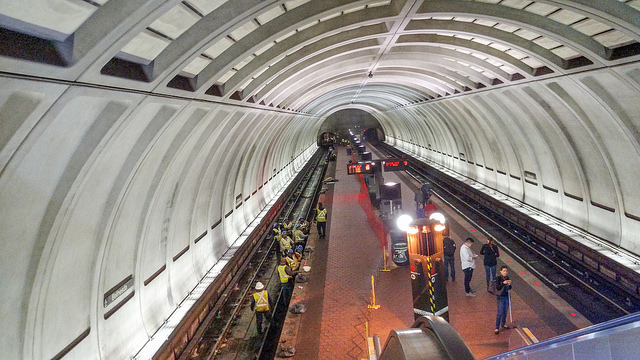 (Photo by Tim Brown)
After more than a year without a new contract, the union that represents about 9,200 Metro employees has broken off negotiations, moving the impasse to a binding arbitration process.
The last four year contract, reached without resorting to arbitration, expired in July of 2016. The two sides have been unable to agree on wages, healthcare, safety issues, and pensions (WMATA is proposing moving away from the current system to a 401(k)-style retirement program).
Metro officials say that they must bring labor costs down amid budget pressures caused by declining ridership and maintenance costs.
“The Union’s proposal to increase wages and benefits by $213 million over the contract period ignores the financial reality of the region and would threaten the viability of the transit system,” said Metro General Manager Paul Wiedefeld in a statement.
Union leadership counters that they aren’t asking for anything “extraordinary,” pointing to a study that found Metro’s labor costs are in line with industry norms.
“Our members are baffled by the position that Metro has taken to refuse to bargain in good faith at a time when Metro finds itself at a historic breaking point,” said ATU Local 689 president Jackie Jeter. “There is no way that Metro will improve if it plans to do so by destroying the morale of its workforce while offering less service and higher fares.”
The shift from collective bargaining to the arbitration process won’t affect service, Metro notes.