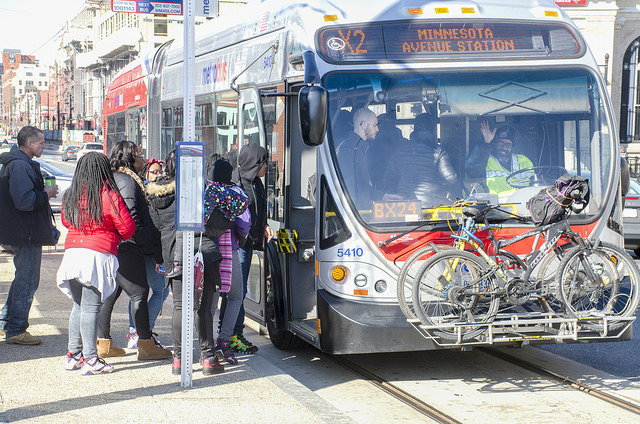
 Photo by Tim Brown
While reports of serious crimes have decreased overall across the Metro system, there have been more assaults against Metrobus drivers, fare evasion incidents, harassment complaints, and theft from cars in the first six months of 2017 compared to the same time last year, according to a new report by Metro Transit Police.
On the heels of several high-profile incidents on the bus and rail system, transit police released its semi-annual security report on Wednesday, stating that serious crimes collectively fell by 17 percent.
Among the offenses that increased, there was a 20 percent spike in assaults against Metrobus drivers—from 34 to 41—between January and June compared to the same period last year. The report says that 36 percent of the time, there’s no known reason for the attacks, 27 percent of them are the result of verbal altercations, and 23 percent are due to fare disputes.
In 80 percent of the assaults, suspects threw objects, spit on, hit, pushed, or kicked bus operators.
After a recent case in which a woman poured a cup of urine on an X2 bus driver, the Amalgamated Transit Union Local 689, which represents most WMATA workers, said in a statement that Metrobus’ Plexiglass protective shields are “poorly designed,” and they called for the agency to create shields that will completely prevent riders’ ability to attack operators.
In the security report, Metro officials say their strategies to reduce bus operator assaults include making transit officers more visible and placing them on targeted patrols, investigating operator complaints, offering seminars for bus operators, and having transit police attend bus safety meetings.
Officials say that another method to lower bus driver assaults is targeting fare evaders. According to the report, officers handed out 6,961 fare evasion citations between January and June—that’s more than double compared to the same time frame last year. And officers recorded 780 arrests for fare evasion, which accounted for 52 percent of all arrests in the system.
Among other spikes in Metro offenses, harassment complaints jumped 65 percent to 61 reports between January and June compared to last year. Among the complaints, those classified as criminal dropped by five reports and those categorized as criminal non-sexual and harassment rose by 11 and 16 reports, respectively.
In April 2016, Metro released a report saying that more than three-quarters of people harassed on Metro don’t report it. A Metro spokesperson told The Washington Post that the uptick in complaints reflected new ways for riders to report incidents such as an online portal and the system’s anti-harassment campaign that encourages riders to alert them about offenses.
The security report also notes a 10 percent increase in theft from cars, two-thirds of which were parked at Metro lots in Prince George’s County. In 23 of the 99 cases, suspects stole handicap placards.
Notable decreases in the report include violent crimes such as robbery and aggravated assault, which fell by 25 percent. There were also no reports of rape or homicide on Metro property in the first six months of 2017—there were three of each crime during the same time last year.
MTPD Security Report by Christina Elyse Sturdivant on Scribd