 Photo via Mobike
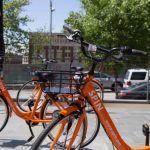
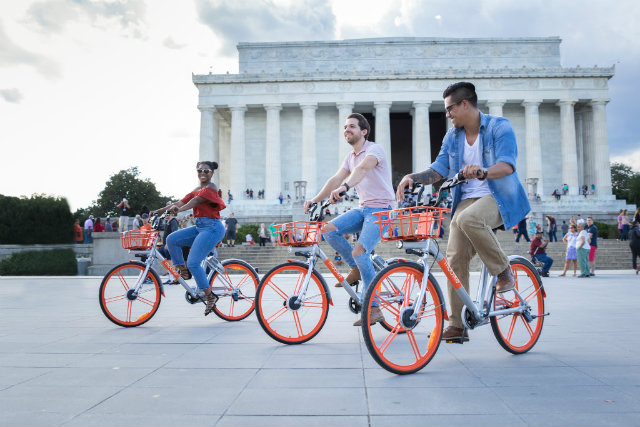
A fast-growing bikeshare company that lets cyclists park at public bike parking spaces around the city rather than at designated docks is launching in the District on Wednesday.
China-based Mobike has chosen bike-friendly D.C. as its first pilot city in the U.S., bringing the dockless bike service to more than 180 cities globally in less than 18 months.
“Mobike is committed to developing a global bike share culture by collaborating closely with cities, and the U.S. capital is key in achieving this,” said Mobike’s president and cofounder Hu Weiwei in a release. “We look forward to working with more cities across the nation to make cycling the most convenient, affordable, and environmentally friendly transportation option for residents and tourists alike.”
In 2008, D.C. became the first city in North America with a bikesharing system, SmartBike, which was replaced by the Capital Bikeshare program in 2010. Riders pay $2 to ride up to 30 minutes and are required to park at designated docks, most of which are stationed west of the Anacostia River. The company launched its first mobile app last month.
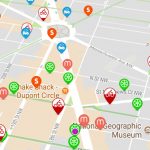
Comparably, Mobike is $1 for 30 minutes. The two-wheelers have GPS tracking so that riders can find and reserve the bikes, and so the bikes don’t wind up lost or stolen—an issue that led to the downfall of another dockless bikeshare company.
Mobike riders can use an app that lets them unlock the wheel by scanning a QR code, and they can leave the bikes at any public bike rack as they would a personal bike—much like Car2go lets members leave vehicles in any public spot.
For the first week, District residents will see bikes in “high-demand areas” such as downtown Metro stations and college campuses “to introduce the service and gather community feedback,” says Mobike spokesperson Jamie Moore. “Mobike is committed to service all eight wards of the city. Bikes will be supplied to more locations based on demand, which can be assessed with the usage and location data supplied by Mobike’s innovative IoT smart lock technology.”
To address performance issues, the high-tech bikes have features such as chainless shaft transmissions, non-puncture airless tires, and lightweight aluminum anti-rust frames that make them maintenance-free for four years, according to the release. With its D.C. launch, the company has also made specific changes to the including the shape of the bike itself and the addition of several gears.
Among other issues with the dockless model, including the Mobike brand, cities have contended with abandoned bikes piled up along busy city corridors and sidewalks. According to the release, Mobike will use data analytics to check on the condition of the bikes and move fleets across the city depending on traffic, weather, and other factors.
Florian Bohnert, the head of international expansion at Mobike, told Mashable earlier this year that the company also tries to offer users incentives to take care of the bikes, including ride credits to users for “rescuing stranded bikes.”