 Rachel Sadon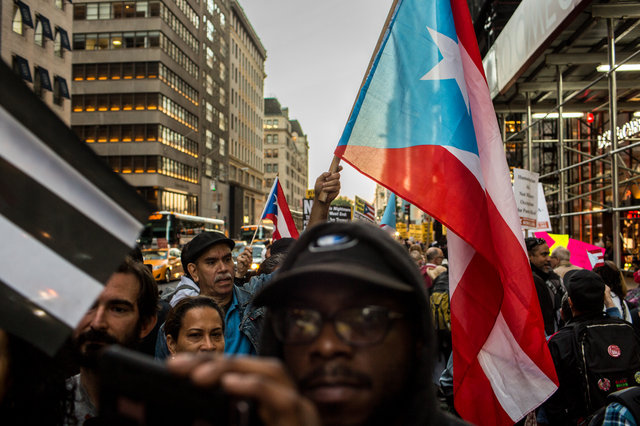
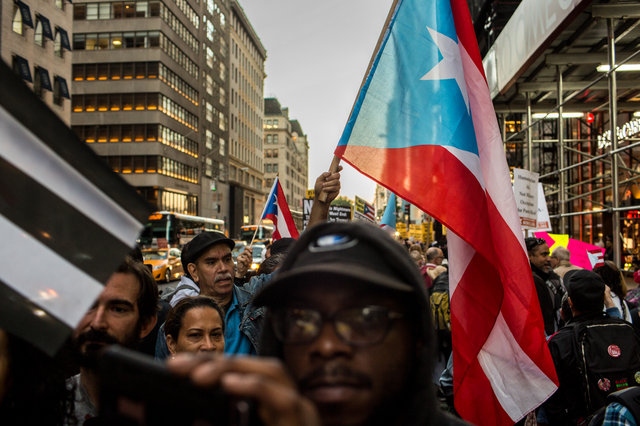 Dozens of people rallied in New York last week to demand the Donald Trump administration do more to help Puerto Rico. (Scott Heins/Gothamist)
As Puerto Rico continues to struggle to recover in the wake of Hurricane Maria, several hundred people said they plan to protest in front of the Capitol on Wednesday afternoon.
“This is a humanitarian crisis and we need Congress and the federal government to act immediately,” organizers write, saying “we are the voice in the mainland of our family and friends suffering on the island.”
Hours after President Donald Trump visited the island, dozens of protesters gathered in New York City and criticized the administration’s relief efforts.
“When he went to Puerto Rico today, he tried to humiliate us, in essence,” said New York City Council Speaker Melissa Mark-Viverito near the Trump Tower in Manhattan. “We have too much dignity for that, but we’re going to keep calling him out on the fact that he’s being irresponsible and neglecting and not treating Puerto Rico or the U.S. Virgin Islands fairly.”
The D.C. protest will take place from 2-5 p.m. outside the U.S. Capitol.
Here are their demands:
We call for an expansive “Marshall Plan” like approach for Puerto Rico’s recovery and reconstruction. This will help the island stabilize its finances, prevent an even greater outmigration to the mainland and unleash Puerto Rico’s full economic potential and capacity in a sustainable way.
We urge Congress to approve a substantial federal emergency funding package. This is essential to meet the IMMEDIATE and long-term recovery needs of 3.4 million U.S. citizens on the island.
We petition Congress and the President to permanently exempt Puerto Rico from the Jones Act maritime shipping law. For decades the outdated and anticompetitive requirements of this law have led to higher shipping costs that have negatively impacted the island’s economy and will slow down the long-term economic recovery if reinstated.