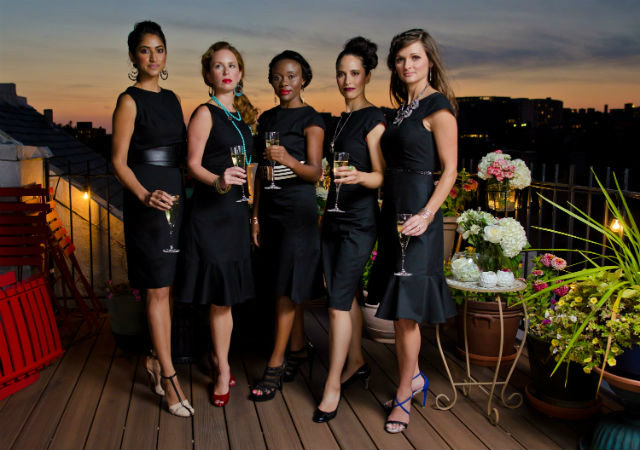
 A group wearing the black capsule dress from Maven Women, a D.C.-based ethical clothing line. (Photo by Verena Radulovic)
In a city known for its politics, nonprofits, and think tanks, D.C. has slowly but surely been upping the ante in the food, art, and lifestyle scenes. It may be time to add fashion to that list, too.
The group of local fashion designers who are creating and selling clothes in the District is fierce but small. They cite the close-knit nature of the Washington design community as a benefit, however, as it allows more space for emerging designers and a sense of non-competitive fraternity. Meet four local designers who are making it work.
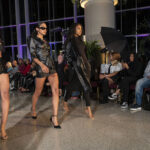
 A model wears a creation by designer Amanda Casarez. (Photo courtesy Amanda Casarez)
Amanda Casarez
It took designer Amanda Casarez a bit of time to figure this out about Washington, but now she’s a convert. The creator behind her eponymous label of contemporary womenswear moved to D.C. from Hawaii in 2014, and now her line is based here.
Originally, Casarez felt she didn’t know anyone in the D.C. design community, so she applied to the D.C. Fashion Incubator. She was one of eight designers selected in its inaugural year, and started her fashion line in 2015 during her residency.
Her clothes can be described as “advanced contemporary wear,” she says, and while not as eccentric as the abstract designs one would see at New York Fashion Week, they are fully high-fashion.
“I definitely target the woman who really prefers quality over quantity,” she says of her designs, which often feature structural, linear cuts with a tomboyish flair. “She really likes pieces that will last and won’t be something she’ll just wear for that season.”
Casarez has her formula down—she recently showed her spring-summer 2018 line, which is her fifth collection. The pieces were all inspired by Japanese culture, she says, featuring plenty of kimonos and structural lines, and were shown at fashion weeks in St. Louis, Omaha, and Kansas City.
The design, travel, and inspiration parts of the process are all exciting, Casarez says, but nothing is more important than listening to your customers.
“When you start actually getting into fashion, you realize you can’t design things that you yourself only like,” says Casarez, who also makes custom wedding dress and evening gown orders. “You have to take your customer into consideration if you want to make money.”
It’s a fine line between staying true to your design aesthetic and catering to consumer demand, but it’s one Casarez knows how to walk. “I think that when people see (my line) and really get to see what my clothing is all about, they get excited, and they’re willing to pay a little more for those items.”
 A dress by Flowers. (Photo courtesy of Shantae Flowers)
Shantae Flowers
Native Washingtonian Shantae Flowers is also a D.C. Fashion Incubator participant. When she left her 9-to-5 job, Flowers knew she wanted to take the plunge into entrepreneurism, and decided to turn her love of fashion into a full-time career.
She taught herself to sew and took classes at the Art Institute of Washington, learning the ins-and-outs of retail management, fashion history, and branding. A stint at D.C. Fashion Week followed, as did her acceptance to the Fashion Incubator, where she has been a resident designer for two years.
Her line, Belle Flowers Designs, specializes primarily in made-to-order gowns and evening wear, though Flowers is quick to add that she can make whatever a client wants. She’s created four collections so far, with themes ranging from “Winter in Madagascar” to a “Lavender Lakes” collection of purple-hued capes and dresses.
The underlying theme, though, is luxury. Flowers’ overall business is named Chante La Belle Epoque LLC, combing the French era of innovation with the French spelling of her first name, which translates as “to sing.”
Flowers wants her business to “sing” a new wave of couture, she says, one in which the romance and luxury of getting dressed is still alive.
“Luxury is just in the craftsmanship and fabrication that I choose,” she says. “I’m presenting myself as a new era to the fashion world.”
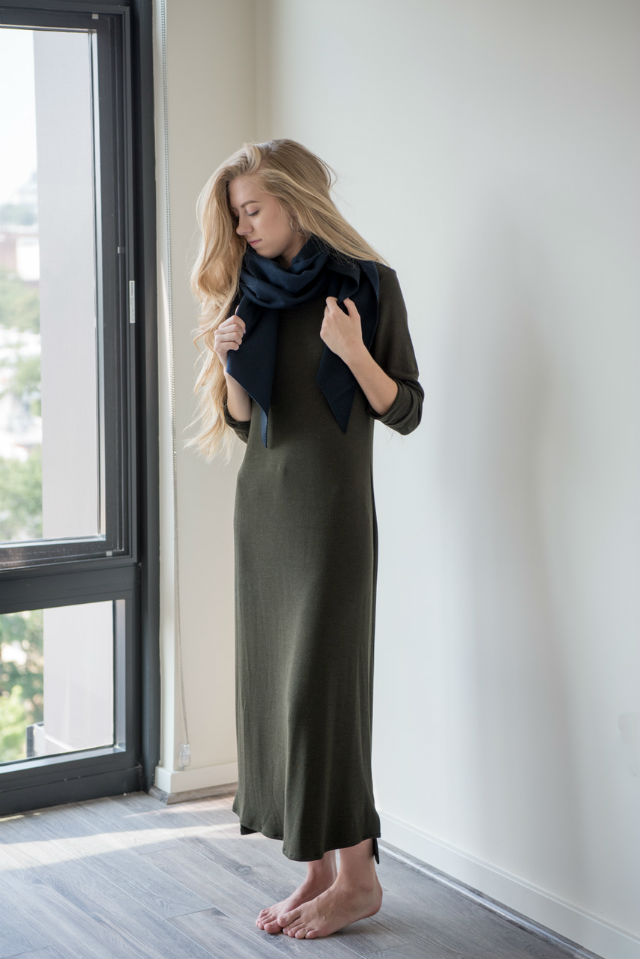 A design by Mimi Miller. (Photo courtesy of Mimi Miller)
Mimi Miller
Mimi Miller, another local designer, agrees with this sentiment—quality reigns.
After graduating from Marymount University in 2015, Miller knew she wanted to make a collection of womenswear that provided looser, more comfortable silhouettes for women without compromising on fit or style (no baggy sweatpants here).
“The goal is to provide longer, looser styles that still make you feel polished and refined and effortless—not like you’re wearing a trash bag,” Miller says.
And, of course, quality is important, too. “When I went to start my brand, I didn’t want to exploit someone else to make a buck and a profit,” she says. “Making sure that the people who make my product are treated well and paid what they’re deserved is super important to me.”
As is keeping things local. Miller sells her clothes on consignment at Steadfast Supply and Shopkeepers Gallery, and everything is manufactured right here in D.C.
“This is made locally and ethically. This isn’t some fly-by-night piece that has the same quality as an H&M or Forever 21 fast fashion brand,” she says. “People understand that in D.C.”
Her self-titled line turned one last month, and this fall marked the release of her third collection. Miller tries to create between six to eight pieces per season to focus on the clothing’s integrity. She recently debuted a top, skirt, and scarf, as well as heavier knit pieces for the colder months.
To maintain such a level of sartorial integrity is a tall order while designing new collections and constantly sourcing inspiration.
“Running your own business is a lot of work, more than I think anyone could tell you,” says Miller, who says Google is an entrepreneur’s best friend. “You just have to experience it yourself, but I still enjoy it and still love it.”
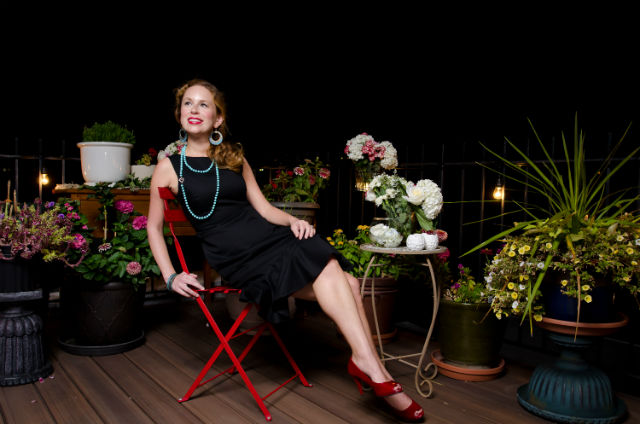 Designer Rebecca Ballard of Maven Women. (Photo by Verena Radulovic)
Maven Women
Rebecca Ballard of Maven Women knows the feeling well.
“This is a more-than-full-time endeavor to run a company,” says the woman behind the ethical workwear fashion line, “especially if you’re doing it in a socially conscious way, because you have to unravel the traditional processes, and then you have to sell it.”
Ballard came across the concept for her line through her previous work as a lawyer focusing on social justice work, human rights, and labor rights.
“The ethical fashion space was exploding, but there really wasn’t something you could wear if you were a lawyer, a consultant, a banker, or a professor,” she says. “I felt like that really spoke to the D.C. woman and to the D.C. aesthetic.”
Maven clothing is made a little differently than the average fashion line. Before releasing clothing, Ballard interviews scores of women about their fashion preferences and what pieces they’d like to see. She then releases designs on her site, and her customers can vote on their favorite options for Maven to create.
It’s an approach that allows Ballard to monitor the line’s output, reducing waste and only releasing clothing that is excellently made and meets demand.
“We would rather create one perfect product than 20 mediocre products,” she says. “We design very slowly and carefully and methodically. Each dress has been fit on close to 50 people; we want to make sure it works really, really well across different sizes.”
This consciousness extends to other areas of the line, too. Ballard doesn’t use models for her photoshoots, instead selecting real women that exemplify the everyday customer. “We don’t just want it to be white women with blond hair who are six feet tall,” she says.
She also places a premium on restorative justice, she says. “This industry has created a lot of harm,” says Ballard. “It’s the second-worst polluted industry in the world…the way workers are treated are horrible. I think we have an opportunity to flip the script and turn this into an industry that creates really good jobs and is thoughtful about environmental impact.”
Ballard’s passion extends to her love of D.C., as well, and the importance of creating home-grown businesses here in the District.
“I absolutely love it here,” she says. “I would not want to be doing Maven Women in New York, for example,” citing the multifaceted yet welcoming D.C. design community as an advantage for new fashion lines.
Casarez agrees. “This community is very supportive of local designers,” she says. “Everybody wants to be involved in fashion because it’s something so creative and different compared to the whole politics thing in D.C.”
It’s important to Flowers, as well, who feels a sense of hometown pride when her city is recognized as a fashion destination. “It’s a political city, but it’s slowly turning,” she says. “I like being part of that forefront where D.C. is getting recognized for its design talent. I think it’s always been there, but it was still underground. Now I think it’s becoming widespread.”
Miller calls it the “big fish in a small pond” phenomenon, but that’s selling this talent short. No matter the size of the pond, these D.C designers can hold their own.
Previously:
This D.C. Fashion Designer Ditched Her Law Career To Make Clothes For Tall Women
First Look: Peek Inside Shop Made In D.C., Where Everything Is Indeed Crafted Here
D.C.’s New Crop Of Boutique Hotels Are Letting Tourists Live Like Locals
From Coasters to Posters, 11 Brands Repping D.C. Pride