Rachel Kurzius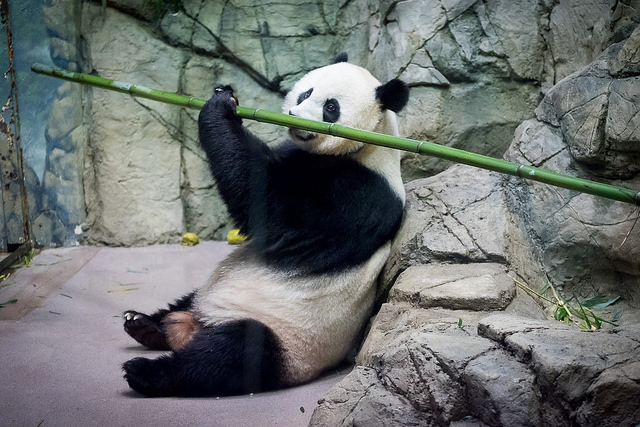
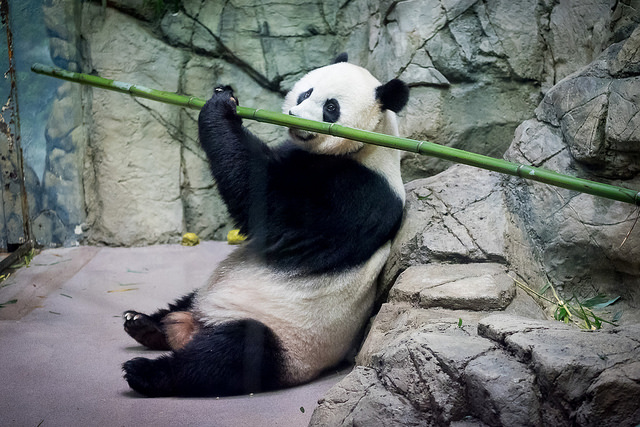 Giant panda Mei Xiang. (Photo by Michelle Lee)
Zookeepers say that giant panda Mei Xiang is normally awake and waiting for them at the door to bring her bamboo breakfast. Of late, though, she sleeps in and only gets up after keepers have filled her yard with bamboo.
That’s one of the behavior shifts that indicates Mei Xiang is either experiencing a pregnancy or a pseudopregnancy, after she was artificially inseminated in March. The National Zoo is closing the panda house to visitors so she can have some peace. Outdoor habitats and viewing areas remain open.
Pandas are among the species that experience false pregnancies, in which all hormonal and behavioral signs are identical to real gestation. The only way to tell for sure whether she’s got a bun in the oven is through an ultrasound.
Veterinarians have already trained Mei Xiang to submit to twice-weekly ultrasounds, though she can always opt out. “If she chooses not to participate, she can leave the training chute at any time and veterinarians will not perform an ultrasound,” the zoo says.
Mei Xiang isn’t the only animal at the zoo who has gotten comfortable with an ultrasound—prehensile-tailed porcupine Bess learned to stay in a standing position and allow the application of ultrasound gel on her belly with a rewards system of nuts and bananas. Ultimately, though, her quills were too thick for the ultrasound to penetrate.
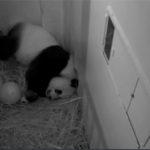
The zoo similarly closed the panda house last August when Mei Xiang exhibited the same signs of a second hormone rise in pregnancy. She eats less, sleeps more, is more sensitive to loud sounds, and has been building a nest in her den. Last summer, it was a pseudopregnancy. As she turns 20 in July, Mei Xiang is nearing the end of her reproductive life cycle.
She has already given birth to three panda cubs at the zoo—Bei Bei, Bao Bao, and Tai Shan—all through artificial insemination of the genetic goods of male giant panda Tian Tian. All panda cubs born at the zoo must return to China by the time they turn four.
Bei Bei and Tian Tian may be outside until 2 p.m., but the zoo recommends heading over between 8 and 10 a.m. for the best chance of seeing the pandas.