 Rachel Sadon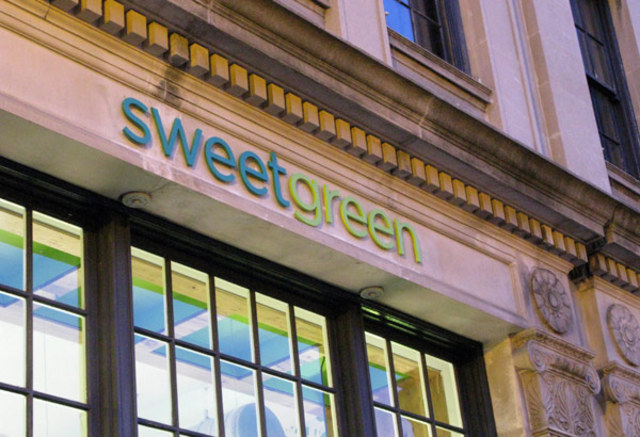
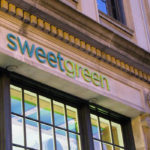
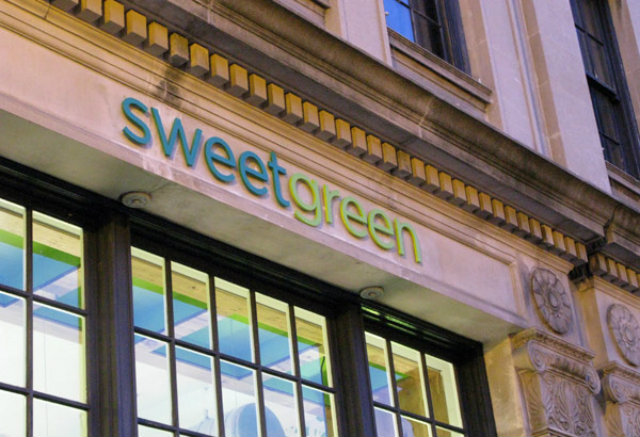 Sweetgreen stopped accepting cash at all of its restaurants in 2017. (Photo by Alicia Mazzara)
At-large Councilmember David Grosso argues that refusing to accept cash is tantamount to discrimination against people experiencing poverty, youth, and others who may not have access to a debit or credit card.
“By denying patrons the ability to use cash as a form of payment, businesses are effectively telling lower-income and young patrons that they are not welcome,” Grosso said in a press release announcing legislation that would ban the practice at restaurants, bars, and other retail food establishments. “Practices like this further stratify our diverse city when we should be working to foster greater inclusion.”
Chairman Phil Mendelson and Councilmembers Anita Bonds, Brianne Nadeau, Vincent Gray, and Trayon White co-sponsored the bill. Should it become law, it would also bar restaurants from charging different prices for using a credit card rather than bills or coins.
A number of fast casual restaurants in the District have stopped accepting cash, either to speed up operations, act as a theft deterrent, or both. Sweetgreen, the salad chain that has mushroomed across the country, is one of the most prominent businesses to have done so.
“One of the biggest complaints at Sweetgreen is the line, so by reducing cash we’re able to serve customers a lot faster,” co-founder Jonathan Neman told the New York Times after beginning to experiment with going cashless at some shops in 2016. The company stopped accepting cash at all of its stores the following year, and it says the move hasn’t affected their bottom line. Sweetgreen declined to comment on Grosso’s legislation.
It is not the only food establishment in the District to either go cashless or consider the option.
“We talked about it intensely, and there were a lot of strong opinions,” Kevin Thompson, chief financial officer of Jetties, told the Washington City Paper last year. “We knew we’d lose business and piss off customers, but in the end, we decided it was something we were going to do.”
In a quirk of timing, Grosso’s legislation came on the same week that Metrobus launched a pilot program to experiment with barring cash fare payments. It will be in place over the next six months on the 79 route.
Not accepting cash “means effectively that you’re not equally serving all people, and that has an impact in terms of race, income, and age,” says Jesse Van Tol, the CEO of the National Community Reinvestment Coalition. “Aside from a disproportionate impact on low income and younger people, immigrants are also less likely to have a credit card and more likely to use cash.”
Nearly 11 percent of the D.C. regional population doesn’t have access to a bank account, according to FDIC data, and another 25 percent is considered “underbanked” (meaning that they do have access to a checking or savings account but they also rely on financial services outside the banking system).
“These are customers who could otherwise afford the simple luxury of a glazed treat from B Doughnut in Union Market, though they may not have the ability to obtain a credit card,” Grosso said in introducing the bill.