Rachel Kurzius
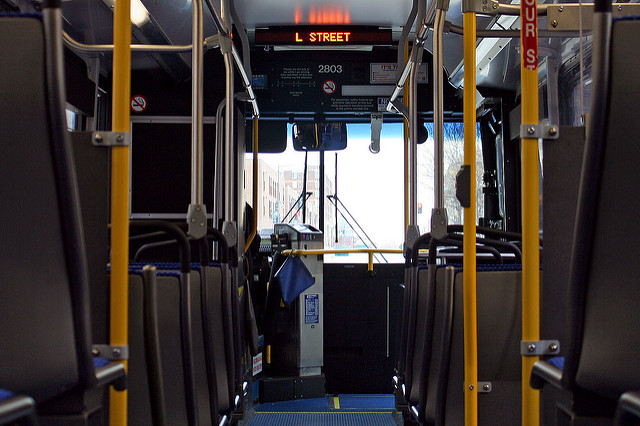 Photo by IntangibleArts.
Put your dollars and cents away when it comes to paying for the 79 bus.
As of Sunday, Metro is embarking on a six-month pilot program to see whether nixing cash payments will make bus travel more efficient. Riders can only use their SmarTrips, and cannot add money to their cards when boarding the bus.
The idea is to cut down on “dwell time,” the time buses spend at each stop rather than driving.
On the 79 bus, only 3 percent of people board using cash, with an additional 6 percent adding cash to their SmarTrips when they board, per a Metro analysis (cash payments are 12 percent of transactions systemwide and represent 24 percent of boarding time). For every dollar of cash fare payment on a bus, 10 cents goes to administrative and processing costs.
The 79 is an express, limited-stop bus that traverses George Avenue and 7th Street NW from the Silver Spring to Archives stations. The transit agency selected the route because it’s close to stores and Metro stations where people can buy or reload their SmarTrips. The Georgia Avenue corridor is also the site of other Metro experiments, like a dedicated bus lane.
There’s no official policy for how bus operators should handle people who attempt to pay the 79 fare with cash. WMATA spokesperson Ron Holzer notes that the 70 bus travels on the same path and still accepts cash payments. While the 79 makes 16 stops, the 70 bus makes 50.
Before the pilot program was approved, some raised concerns about how it would impact marginalized riders.
“Cash-free buses are something we have always worried about for the disability community and the underserved community, because there is a group that doesn’t have access to anything but cash — do not have credit cards, do not have bank accounts, do not have checking accounts,” Metro Accessibility Advisory Committee Chair Phil Posner told the Metro Board, according to WTOP.
If Metro deems the pilot a success, it will need to hold a public hearing and get board approval to make the cash-free program permanent.
“Travel time is a significant influence on ridership, and the slower fare payment transactions may discourage potential riders from choosing Metrobus,” reads the WMATA board action summary of the pilot program. “MetroExtra limited-stop routes are excellent candidates for cash-free service, as the MetroExtra brand is already established as a faster alternative to local routes.”
The 79 started cashless service today. Let’s get the party started. pic.twitter.com/4kV7aA1jEJ
— Colleen Hawkinson (@CollHawk) June 25, 2018