Natalie Delgadillo
 (Redbrick LMD)
Aristotle Theresa, the man behind a gentrification lawsuit against D.C., as well as several other lawsuits to halt planned developments in gentrifying neighborhoods, is taking on another project.
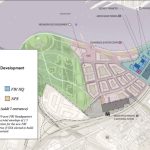
He filed a lawsuit in June with the D.C. Court of Appeals contesting the Zoning Commission’s approval of a new project at Poplar Point. The project, which is being branded as “Columbian Quarter,” would put mixed-use apartment and retail space on one of the city’s largest swaths of underdeveloped land, right on the waterfront east of the Anacostia river.
The D.C.-based development firm Redbrick LMD filed an application with the Zoning Commission outlining its plans at the end of 2016, and the Zoning Commission published its approval on May 15 of this year, according to Bisnow, which first reported the lawsuit. Redbrick’s plans call for three office buildings and two apartment buildings with a total of 700 units. Retail space will be built into the bottom of all five buildings and around 70 apartment units will be reserved as affordable.
The development would be right near the Anacostia Metro station. It also happens to be one of the four sites D.C. proposed as potential homes for Amazon’s second headquarters.
Poplar Point is a 130-acre plot of parkland that developers have been eyeing for decades now. It makes up a big chunk of Anacostia Park, and a number of abandoned buildings are scattered there. The Office of the Deputy Mayor for Planning and Economic Development calls it “one of the last great urban waterfront redevelopment opportunities on the East Coast.”
Poplar Point has long been floated as a potential site large companies or federal agencies. It was one of the finalists under consideration to house the Department of Labor, and was also pitched for the Securities and Exchange Commission and the new FBI headquarters.
The Redbrick project comes right as the District has been pouring billions of dollars into waterfront redevelopment. The Wharf, D.C.’s most recently reinvented riverside area full of restaurants and retail, cost a total of $2.5 billion, according to the Washington Post. The paper reports that condos in one of the area’s first residential buildings are going for more than $1,000 per square foot, and surrounding median home prices rose more than $50,000 between 2015 and 2016, going from $321,167 to $378,625.
Theresa, who filed his appeal on behalf of several native Washingtonians and CARE, a local community group, says this is the exact kind of outcome he is trying to prevent at Poplar Point. He appeared on WAMU’s The Kojo Nnamdi Show on Monday to discuss his appeal, where he said he believes the Zoning Commission’s approval violates Washington D.C.’s Comprehensive Plan by failing to account for possible displacement and gentrification.
“If I’m going to speak for my clients, some of them do appreciate some retail and development, it’s just the manner in which this project comes.” he said on the show. “We’ve seen this kind of development before…and we know where it goes.”
Theresa also mentioned the Barry Farm case, where he sued the city for its planned redevelopment of the public housing complex. Back in April, the D.C. Court of Appeals halted the redevelopment after ruling that the Zoning Commission hadn’t considered the loss of affordable family units in its approval of the redevelopment plan.
Theresa said on the Kojo Show that he believes the Commission made the same mistake in its approval of the Poplar Point development. “We want the District to follow the comprehensive plan,” he said. Theresa declined to comment further.
The city does not comment on pending litigation. Theresa is now waiting on a scheduling order in the Poplar Point case.