Jacob Fenston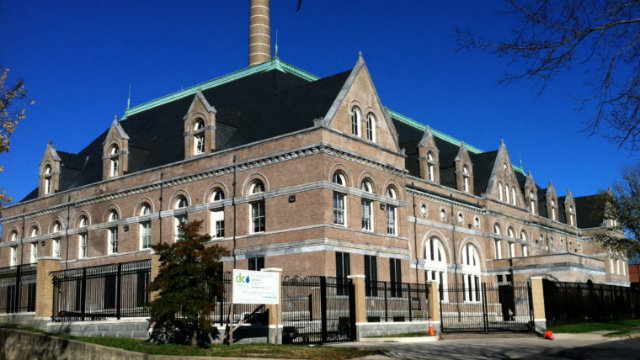
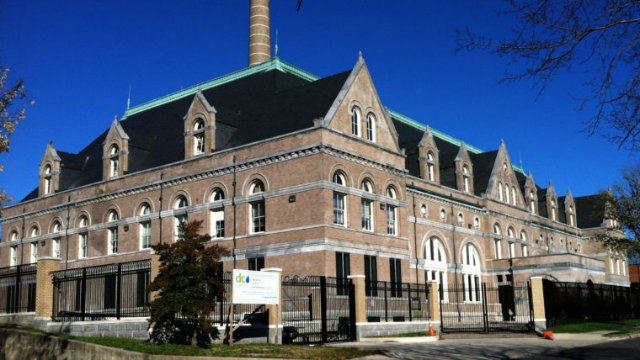 A problem at DC Water’s Bryant Street Pumping Station led to a boil water advisory affecting huge swaths of the city. (Photo by Mr.TinDC)
Tens of thousands of D.C. residents spent the weekend boiling water or hunting for bottled water, after news Friday that there was possible contamination in part of the water system. By Sunday, DC Water had lifted the boil water advisory, but some residents say officials didn’t communicate the warning quickly or broadly enough.
“Nobody called and said anything to us,” said Bernard Clark, who lives in Ft. Lincoln, one of the affected neighborhoods in Northeast Washington. “I didn’t find out until I went downtown late that evening.” If the water had actually been contaminated, he said, “It’s too late then. It coulda killed 100,000 people by then, all that time.”
The contamination scare started with an incident Thursday night, when customers across parts of Northwest and Northeast D.C. started reporting low water pressure. DC Water quickly identified the cause of the problem: a valve left open at the Bryant Street Pumping Station by the McMillan Reservoir. When pressurized water pipes go dry, the loss of pressure can allow contaminants to seep in. As a precaution, DC Water issued the boil water advisory to an area affecting 34,000 customers. The order actually affected many more people than that—one customer could be a household or multi-unit building.
DC Water made 22,000 robocalls to warn those customers, but it took hours for the calls to go through, and the calls only went to people whose accounts with the utility had associated phone numbers.
“It was slower than what we expected,” said David Gadis, CEO and General Manager of DC Water. “We didn’t know that beforehand, that the robocalls could only handle so many calls per minute.”
But, said Gadis, the water utility used “every tool that we have in our toolbox,” to get the advisory out to residents, starting in the early hours of Friday morning. These tools included social media, interviews on TV, radio and print media, and alerts through D.C.’s Homeland Security and Emergency Management Agency.
The first of those alerts went out to 104,000 residents at about 4:30 a.m. on Friday. But as with the robocalls, the alerts reached only a portion of those people affected: those who had voluntarily signed up for the AlertDC system.
If it had been a true emergency, Christopher Rodriguez, director of the D.C. HSEMA, said there is at least one more tool in the toolbox that could be used—the wireless emergency alert used for situations like amber alerts or shelter-in-place warnings.
“There are strict federal guidelines for issuing a wireless emergency alert,” said Rodriguez. Wireless emergency alerts can only be used for three types of messages: alerts issued by the president, amber alerts, and “alerts involving imminent threats to safety or life,” according to the Federal Communications Commission. Rodriguez said the boil water advisory did not rise to that level of threat, which is reserved for events such as “a terrorist threat or a terrorist attack, where we have to give life-saving information to the public.”
Many residents found out about the water problem not through official channels, but from friends or the news.
“A friend shared it through social media,” said Ifeta Smajic, who says she got no official notification, but still found out fairly early in the morning Friday, before 8 a.m.
“The word did get around, but I do think it’s the authorities’ responsibility to make sure this kind of information is spread in a bullet-proof way,” Smajic said.
Some officials are also questioning the response. Ward 3 Councilmember Mary Cheh wrote a letter to DC Water’s Gadis, expressing concern about how the advisory was communicated to the public and requesting a meeting, “to discuss how the advisory was communicated and how to develop a better system of communication for future water advisories that could affect the health and safety of District residents.”
For his part, Gadis said DC Water is reviewing its handling of the incident, asking whether, for example, there is a better vendor that can make robocalls more quickly, whether notifications should to be made available in more languages, and how and when wireless emergency alerts might be used.
“Hopefully it never happens again, but if it does happen again, we’ll be I think in a better position to understand what our tools can do and can’t do,” Gadis said.