 Rachel Sadon
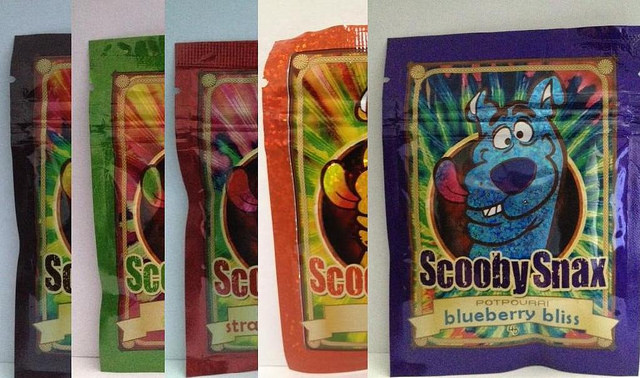 (Photo by Fine Herbal Incense)
Four people have died and more than 200 people have been hospitalized with symptoms that D.C. officials believe may be related to a potentially fatal batch of synthetic drugs.
In the span of just over a week, first responders transported more than double the numbers of patients than they saw in the entire month of July last year.
“We think it is a new variant that had not previously been identified,” said Tanya Royster, director of the D.C. Department of Behavioral Health, Monday on The Kojo Nnamdi Show.
Mayor Muriel Bowser and a number of city agencies issued an emergency alert on Friday, warning that a batch of K2, also popularly known as “Spice,” has led to the apparent spike in overdoses. Officials are encouraging people who may have used the drug to stay hydrated and seek treatment.
In a period of eight days, from July 14-22, D.C. Fire and EMS transported 234 patients believed to be suffering from symptoms related to synthetic drugs. By comparison, the agency transported 105 people total for the month of July in 2017, according to public information officer Vito Maggiolo.
Four deaths that may be linked to the bad batch occurred on July 13, 14, 16, and 18. The Office of the Chief Medical Examiner is currently investigating the cause.
Synthetic cannabinoids, often referred to as “synthetic marijuana” or by a wide variety of brand names—K2, Spice, Bizarro, Scooby Snax, and Trainwreck—actually have very little in common with marijuana.
As DCist reported in 2015 after a series of overdoses and incidents of violent behavior in the city, the drugs have much more dangerous, far-ranging effects:
What someone gets when they purchase a bag of, say, Scooby Snax, is potpourri. But it’s not regular potpourri; it’s been sprayed with a chemical compound meant to mimic the effects of marijuana, albeit without using illegal cannabinoids. Dr. Malik Burnett, a former policy organizer for the Drug Policy Alliance, says that the reason the moniker “synthetic marijuana” has unfortunately stuck to these particular drugs is because of the way manufacturers engineer a chemical structure meant to be like THC, the active chemical cannabinoid in marijuana…
Every person has cannabinoid receptors in their brain. When you consume THC, those cannabinoids react with your receptors and produce a physical reaction (i.e. getting high). But cannabinoids aren’t perfect fits with your receptors, which keeps the reaction relatively in check. Synthetic cannabinoids, however, are perfect fits for the receptors, which means that it binds at a greater strength than normal cannabinoids, Burnett says. So the reaction is much stronger….
What’s most dangerous about “synthetic marijuana” is the uncertainty of what’s in each package, which Burnett says is “almost impossible to say.” He says “there’s no standardization or uniformity to any of these compounds, even within a single package,” which means that one package of K2 could be completely different than another package of it. And that means a person’s reaction to the chemicals can vary wildly, often resulting in erratic, violent, and psychotic behavior.
When forensics teams test packets—which are colorful and often have cartoon characters— they often find as many as five different compounds, according to Royster.
“We had a variant where people were very agitated, hallucinating,” she said. “Then we had people sedate, like zombies, passed out on the street.”
After an education campaign targeted at young people in 2013, Royster says D.C. saw a drop in the use of synthetic drugs. Following another spike, particularly among homeless adults in 2015, the Department of Health rolled out another campaign the following summer.
“We’ve seen a substantial decrease in the use of K2 and the amount of Fire and EMS calls” since then, Royster said. “So when we saw this spike it was very obvious very quickly that we had something going on.”
First responders are finding people who have collapsed, are physically aggressive, vomiting, or unconscious, according to Maggiolo.
The areas that they have most frequently been called to include Union Station, Judiciary Square, underpasses in NoMa, and the blocks around a number of homeless shelters, including the 400 block of 2nd Street NW and the 1300 block of New York Avenue NE.
Despite the dangers, synthetic drugs are often sold in single, cigarette-type packages and are much cheaper than marijuana, making them more accessible for people experiencing poverty or homelessness. Speaking on the Kojo Show, Corey Beuford, the clinical care coordinator at Clean and Sober Streets, estimates that between 20 and 30 percent of the group’s clients are abusing K2.
“Many of our clients can attest to the lethality of the drug,” Beuford says. “Some of our clients have stated that it’s even more potent than PCP.”
More:
The “Zombie-Like” Overdoses In D.C. And What The City’s Doing To Stop Them
‘Synthetic Marijuana’ Actually Has Very Little In Common With Marijuana