Natalie Delgadillo
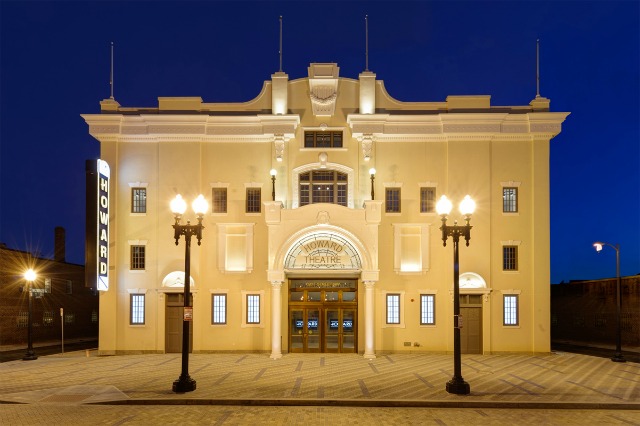 Photo by Tim Cooper
D.C.’s Historic Howard Theatre had yet another tough week after photos started circulating online of an alcohol license suspension notice posted outside its doors.
Someone snapped a photo of the notice, which said the music venue’s alcohol license was subject to an ‘indefinite suspension’ due to nonpayment of a fine, and sent it into local scuttlebutt blog Popville, which got the rumor mill turning: was this the end for the troubled theater that, once upon a time, hosted the likes of Ella Fitzgerald and James Brown?
Turns out: if the Howard is nearing its end, this isn’t it.
General manager Shani Pace says that the notice was posted due to a clerical error on the part of the Alcoholic Beverage Regulation Administration, and the liquor license was never suspended.
In a letter Pace shared with DCist, a spokesman for ABRA wrote: “Due to a discrepancy between the Board Order and transcript, ABRA prematurely posted suspension placards for Howard Theatre for non-payment of a fine. As soon as the error was discovered, the suspension placards were immediately removed from the premises. The licensee has since paid the fine and ABRA considers the matter resolved.”
But it isn’t exactly surprising that the public jumped to conclusions. The Howard has had seemingly endless woes since it re-opened to much fanfare in 2012, after spending decades as a blighted, fenced-in property, slowly crumbling in on itself as glitzy new restaurants and apartments popped up around it.
The Shaw theater was once a center of black culture in the city, hosting top-tier acts from its opening in 1910 through the riots, when it started a steep decline. Mayor Marion Barry bought the building for the city in the 1980s, and in 2008, Chip Ellis, a local developer, took over the space and did a $29 million restoration—$12 million of which came from D.C. taxpayers.
For a while, things seemed to be going well for Ellis and for the theater, but it wasn’t long before cracks started to show. This Washington Post piece from 2016 lists a pretty comprehensive rundown. Perhaps the most urgent problem: ticket sales weren’t as strong as expected, and Howard Theatre Restoration (the nonprofit that Ellis set up to pay back the loans taken out for restoration) was in a “precarious position” with its lenders, Myla Moss, the nonprofit’s chairwoman, told the Post. Moreover, people did not like the menu, which was also expensive.
More damning reports and bad PR started trickling out as the years wore on: Howard Theatre Restoration tried to cut ties with the venue’s operator for mismanagement, and vendors, employees, and music acts were going unpaid or receiving bounced checks. And then earlier this year, the D.C. Attorney General filed suit against Howard Theatre Restoration, making several allegations, including that it had failed to file its taxes correctly and get independently audited for each of the last seven years. That lawsuit is currently in discovery and is ongoing.
So when the photo of the liquor license suspension started going around, people thought the struggling venue might have finally collapsed.
“There was all this hate going out everywhere, blowing it up out of proportion. [People were saying] ‘Oh the Howard Theatre messed up again.’ So much damage was done with this,” Pace says. “We have had everyone across D.C. attacking our character. And it’s kind of annoying because we didn’t actually do anything wrong, and people are saying, ‘oh I’m not surprised, this was inevitable.’ What did we do to make you dislike us so much?”
Though the suspension for nonpayment was issued prematurely, the Howard did owe ABRA a $4,500 fine for security issues discovered in September of 2017 (security was apparently not wearing the required uniforms). Management paid the fine on August 15, the day after photos of the sign started circulating. According to Pace, the payment wasn’t due yet, which ABRA’s letter confirms.
While Pace acknowledges some of the serious shortcomings of the last several years (“there were a lot of bills that weren’t being taken care of”), she says that the problems of the past are attributable to old management. She came back to the theater about a year ago in an effort to help clean things up. Current management and ownership has everything “very much under control,” she says.
The venue is focused on addressing some of its reputational damage, which may mean doing fewer shows and more private events, Pace says. But she thinks that D.C. patrons are too quick to rush to judgment or spread negative talk about the Howard.
“We would like for people to understand that nothing is a perfect mathematical equation. We are wholeheartedly doing the best we can, we care so much about the building and its history,” Pace says. “The residents of D.C. appear not to be able to see that, but that is the truth. It would be helpful if they would just give us a chance.”