Ally Schweitzer
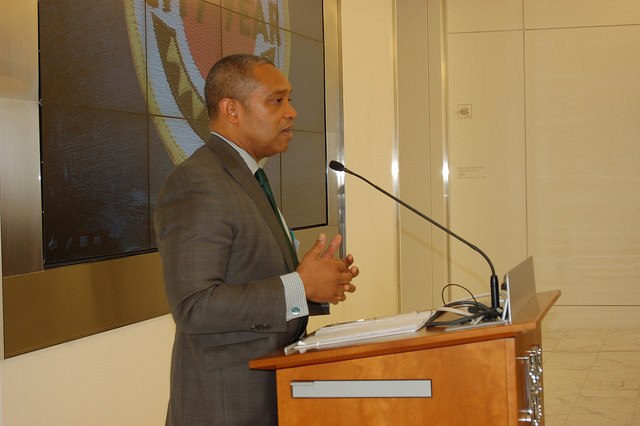 D.C. Attorney General Karl Racine (Photo by City Year)
D.C. Attorney General Karl Racine is requesting more information from 19 apartment building owners and managers that offer short-term, hotel-style rentals in the city, in order to determine whether they are violating consumer protection or rent-control laws.
Racine says he sent letters to landlords at 33 residential apartment buildings, asking them to turn over documents related to “hoteling” services that operate at their properties.
“Hoteling” refers to the practice of a landlord leasing out a block of apartments to a third party, which turns the apartments into short-term housing for tourists or business travelers. The model has become widespread in apartment buildings across the Washington region, even as local officials figure out how to regulate similar rental platforms such as Airbnb.
“Under the law, landlords are required to tell tenants if there are short-term rentals in their buildings,” Racine says in a release. “We’ve heard complaints that some landlords misled their long-term residents about these rentals. Today’s letters put building owners and managers on notice that short-term rentals must comply with the District’s consumer protection and rent control laws.”
WAMU recently published a story about hoteling services and why some developers are choosing to lease apartments to them.
But while hoteling companies offer services similar to Airbnb and VRBO, they’re different in one key way: landlords and tenants don’t usually operate the hotel rooms themselves — third parties do. Hoteling companies rent units from landlords, furnish them and rent them through their own websites or websites such as Booking.com. Some of these services offer what’s known as corporate housing — temporary accommodations for business travelers who stay for 30 days or more. But other companies, such as Stay Alfred and Global Luxury Suites, offer apartments for less than a few nights at a time.
Hoteling is especially common within newer buildings in high-demand, transit-adjacent neighborhoods like NoMa and Logan Circle. Developers and managers have embraced it as a way to reduce turnover costs, fill vacancies, increase the vibrancy of a new building or allow potential tenants to “try” a new development before they sign a lease.
Bao Vuong, a co-founder of the hoteling startup WhyHotel, says his company helps developers reduce their financial risk during what’s called the “lease-up” period.
“When large, brand-new apartment buildings are being built, it takes anywhere from eight to 24 months — or potentially even longer — to fill them with long-term residents,” Vuong told WAMU in July. “We help de-risk those projects over the time, so that the developers are getting some interim income at a point in the life cycle of the property where they’re probably losing quite a bit of money.”
WhyHotel does not operate out of any buildings in the District, but it plans to make its D.C. debut at a luxury building in NoMa this fall. Vuong says WhyHotel takes steps to make sure it does not disturb residents, and only rents apartments out of new buildings that expect to have high vacancy rates in their lease-up period.
Tenants have complained that hoteling hoteling services such as Stay Alfred raise security concerns, and in some cases allows temporary guests to take advantage of building amenities that full-time tenants pay to maintain. Others say turning apartments into hotels worsens the city’s housing shortage, and may even help drive up rents by reducing the region’s housing supply.
Racine says residents have complained to the city’s Office of Consumer Protection that their landlords never informed them that their buildings were functioning like hotels — and that could be illegal.
“Consumer protection laws require landlords and management companies to be fulsome in regards to not only the apartment unit that they have for lease, but also in regards to the types of tenants that they’re leasing to,” Racine says. “The landlord or property management company must disclose if it is making it a practice to rent out short-term rentals in the building.”
A spokesperson for the attorney general declined to identify specific landlords the office has contacted, but his office has published a sample letter they say is similar to ones they sent the 19 property owners and managers. The letters ask landlords to provide copies of contracts signed with hoteling services as well as any notifications managers have given their tenants about short-term housing offered in their buildings.
Racine’s office recently settled with a landlord in Columbia Heights that admitted to illegally renting out rent-controlled units on Airbnb and VRBO. The landlord paid the city $100,000 in civil penalties and fees.
Racine says landlords have until Sept. 5 to respond to his request for more information, and he’s confident they will comply.
“In the past when we’ve sent these kinds of letters out, we’ve gotten real good cooperation and we expect the same here,” Racine says. “If we’re not getting the cooperation that we seek … and to the extent that we learn of information that would suggest there are violations of law, of course, we won’t hesitate to bring the appropriate action.”
This story originally appeared on WAMU
This story has been updated to clarify details regarding WhyHotel’s business model and presence in D.C.