Natalie Delgadillo
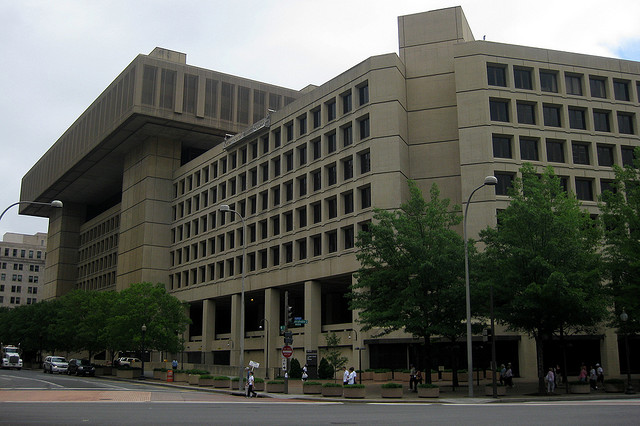 Photo by wallyg
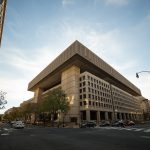
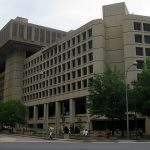
A new report released Monday suggests that President Trump was more involved in conversations about the FBI headquarters’ relocation and reconstruction than the Trump Administration has let on.
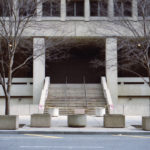
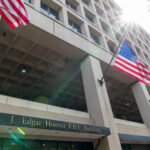
The Inspector General of the General Services Administration, Carol F. Ochoa, released the report Monday after looking into the government’s changing plans for the FBI headquarters. The GSA declared the crumbling J Edgar Hoover building functionally obsolete in 2011, and began developing plans to build a new headquarters in the suburbs. It was a major surprise last year when the five-year search for a location came to an end, reportedly due to congressional underfunding. It was a blow to Fairfax and Prince George’s counties, which were finalists in the search for the new campus.
Axios has reported before that Trump believes the headquarters should stay where it is. “This is prime real estate, right on Pennsylvania Avenue. This is a great address. They need to stay there. But it needs a total revamp,” he reportedly said.
Lawmakers have said his potential involvement in the decision making, however, is inappropriate given the building’s proximity to the Trump Hotel, which is located across the street. In fact, Congressman Gerry Connolly, a Democrat from Virginia, requested the inspector general’s report for that very reason.
“I also suspected that President Trump was more involved in this procurement than Administration officials were letting on in their sworn testimony to Congress. The Trump International Hotel is across the street from the J. Edgar Hoover Building, and the Trump Organization has a longstanding and documented interest in the Hoover property,” Connolly wrote in a statement following the release of the report.
Turns out, the Trump White House was indeed more involved in the process than officials have made clear to Congress.
The inspector general found that GSA Administrator Emily Murphy did not disclose a meeting she had with the president regarding the project in her April testimony to the House Subcommittee on Financial Services and General Government. During that testimony, Illinois Democrat Rep. Mike Quigley questioned Murphy about whether the White House had had any involvement in making decisions about the FBI’s new plan for its headquarters.
From that testimony:
Representative Quigley: To your knowledge was the president or
anyone at the White House involved in those discussions either with your
predecessors or people you’re working with now or yourself?Murphy: Sir, to my knowledge—the direction that we got came from the FBI.
They—it was the FBI that directed GSA as to what its requirements would be.
We obviously did, given that it is a substantial budget request, we coordinated
that request with OMB to make sure that—to provide for funding but the
requirements were generated by the FBI.
During the exchange, Murphy failed to mention a January 24 meeting she had with the president to discuss the project. There are photos of Murphy, together with Deputy Attorney General Rod Rosenstein and FBI Director Christopher Wray, at this meeting, according to the report.
When the inspector general asked Murphy why she didn’t mention this meeting, she said she did not think that’s what Quigley was asking about.
“We found that Murphy’s congressional testimony was incomplete and may have left the misleading impression that she had no discussions with White House officials in the decision-making process about the project,” the report reads.
GSA tried to invoke executive privilege in order to avoid speaking to the inspector general about the January 24 White House meeting.
“We sought to determine whether GSA took the position that executive privilege precluded sharing information with the OIG, which is part of GSA and within the Executive Branch,” the report reads. Eventually, “GSA employees were authorized to disclose to the OIG the existence of the White House meetings, discuss who attended, and discuss any high level agreements that resulted from the meetings; but not to disclose any statements made by the President.”
So it’s impossible to say whether the president actually directed the FBI regarding the headquarters project. GSA contends its preference has always been the original plan to leave the downtown location, and the FBI decided on its new plan before any involvement from the White House, according to the report.
In addition to the controversy with Murphy, the report also addresses GSA’s cost estimates for the raze-and-rebuild plan versus the vacate-and-find-new-headquarters plan. It says that GSA underestimated the costs of the raze-and-rebuild plan, so that it seemed like the less expensive option; in fact, the inspector general contends, it’s more expensive.
GSA officials disagree with the report’s conclusions.
“As the FBI’s representative stated under oath before the Senate Committee on Environment and Public Works, the FBI made the decision to keep its headquarters on Pennsylvania Avenue,” the agency said in a statement Monday. “GSA is unaware of any White House involvement in the FBI’s decision. Further, GSA stands by the cost analysis in its revised plan, as those numbers are accurate, transparent, and more representative of the full costs of the project than the analysis put forth in the IG review.”
Connolly, the congressman who requested the report in the first place, says that these findings necessitate further action.
“This IG report is only the beginning. We must develop a comprehensive understanding of the President’s involvement in this procurement and what it has cost the United States in terms of both national security and taxpayer dollars,” he wrote in a statement after the report was released. “I am calling on the Oversight and Government Reform Committee to convene immediate hearings on this matter and to subpoena any GSA officials who are suspected of misleading Congress.”
Previously:
Other D.C. Brutalist Buildings Trump Would Probably Hate If They Were Across From His Hotel
Feds Cancel Five-Year Search For New FBI Headquarters