Natalie Delgadillo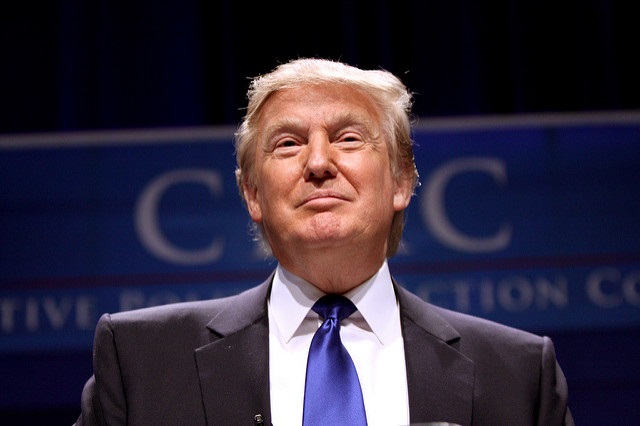
 (
(
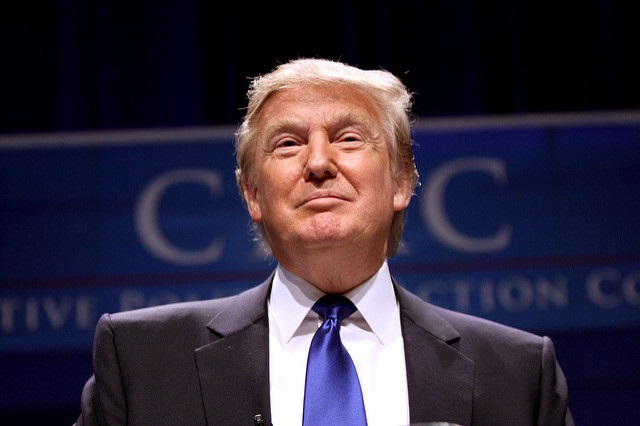
President Donald Trump on Thursday announced once again that he does not want federal workers to receive pay raises next year.
In a letter to Congressional leaders, Trump said strained federal budgets make the planned increases untenable. “We must maintain efforts to put our Nation on a fiscally sustainable course, and Federal agency budgets cannot sustain [the] increase,” the letter reads.
Twitter was alight Thursday afternoon with speculation about what Trump’s letter would mean for the Washington region, which is home to more than 300,000 federal workers. Under Trump’s direction in the letter, those workers would lose the 2.1 percent pay increases set to kick in on January 1 of next year.
If Trump’s preference goes into effect, the Washington region stands to lose about $882 million in wages it would otherwise get, according to the Washington Business Journal.
But it’s not time to count out raises yet. The president doesn’t ultimately decide what federal pay raises will be—Congress does.
“There’s a little bit of a misunderstanding on this to begin with. This is not the final word,” said Max Steier, president and CEO of the Partnership for Public Service. “The president has announced that his intention is that the federal workforce will not be getting a pay raise…but at the end of the day, Congress’s voice still has to be heard and is usually the more powerful one. Typically, you will see this conversation going on on an annual basis, but it’s not going to get resolved until at least October 1, [the end of the fiscal year].”
The House and the Senate have so far failed to agree on pay raises for federal workers next year; the House passed an appropriations budget with zero increases, while the Senate agreed on an increase of 1.9 percent.
In such a case, federal law holds that larger pay raises will automatically kick into effect (this is the 2.1 percent increase cited by the President in his letter). Federal law also allows for the president to override those automatic raises with an “alternative pay plan,” which is exactly what Trump is doing in this letter.
That law also calls for workers in D.C. to receive an even larger pay increase, reserved for federal workers who live in particularly high-cost areas.
So: the long and short of it is that we have no idea whether there will be pay raises for federal workers next year, or how high they will be if so. The letter the president sent out today is a normal part of the budget process.
Congressional leaders in the D.C. area, though, are not happy about it.
““President Trump is feeling cornered and lashing out by cancelling a modest, planned pay increase for our dedicated federal workforce. His tax bill exploded the deficit, and now he is trying to balance the budget on the backs of federal workers. I will not accept President Trump’s mismanagement of the federal government,” said Democratic Congressman Gerry Connolly of Virginia in a statement.
Patrick Fort contributed to this report.