Rachel Kurzius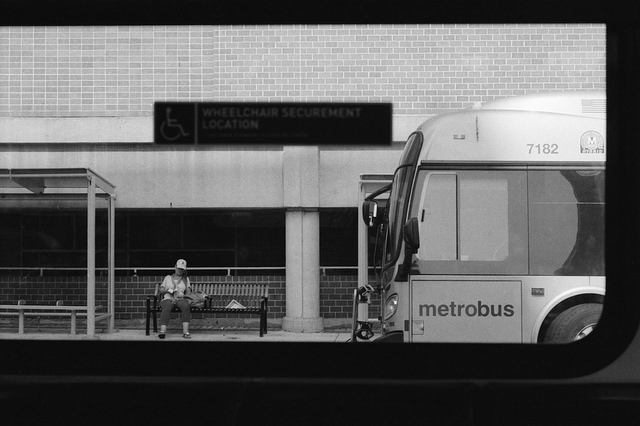
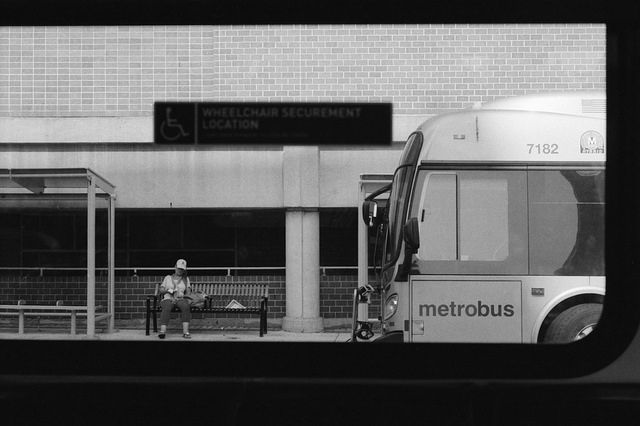 Photo by Julian Ortiz.
Metro is considering an expansion of its experiment with cashless bus fares.
Back in June, the transit authority started a six-month pilot program on the 79 route, an express, limited-stop bus that goes from the Silver Spring to Archives Metro stations on George Avenue and 7th Street NW. Through December, passengers can only use their SmarTrips to ride the bus. The 70 bus, which takes the same route (and has more than three times as many stops), still accepts cash and allows riders to add money to their cards while boarding.
The pilot program is an effort to shave off what transit officials call “dwell time,” or the moments buses spen idling at stops instead of driving. Boarding and fare payment takes up to a quarter of all travel time, according to Metro.
Now, the system may nix cash payments on the following limited-stop bus routes:16Y, 37, 39, 59, A9, G9, J4, K9, S9, X9, REX, and Metroway. The agency emphasizes that all of these express MetroExtra routes have corresponding local buses that would continue to take cash.
Metro is soliciting comments on its proposal either online through September 24 at 9 a.m. or during a public hearing at Metro’s D.C. headquarters on September 17 at 7 p.m. In addition to a public hearing, Metro needs board approval to make the cash-free program permanent.
Already, some groups are pointing out that going cashless has adverse impacts on some lower-income passengers.
“This move will harm poor transit riders who may not have credit cards, bank accounts, or SmarTrip cards,” advocacy group Collective Action for Safe Spaces wrote on Twitter, urging its members to comment in opposition.
In its action summary for the pilot program, the WMATA board characterized cash payments as “expensive to process,” noting that 10 percent of cash payments go to administrative and processing costs. The summary says there is no revenue impact expected from the change, because “cash-paying customers are expected to make use of the alternatives available.”
This debate in some way mirrors the conversation about restaurants going cashless. On one hand, owners of establishments characterize cash exchanges as rare, burdensome, and even dangerous, making businesses potential targets of theft.
But At-large Councilmember David Grosso has introduced legislation to ban going cashless. “By denying patrons the ability to use cash as a form of payment, businesses are effectively telling lower-income and young patrons that they are not welcome,” Grosso said.
Previously:
Metrobus Is Considering Doing Away With Cash Fares. It’s Starting With The 79