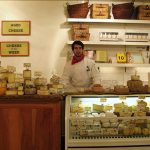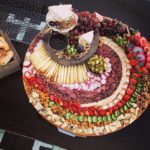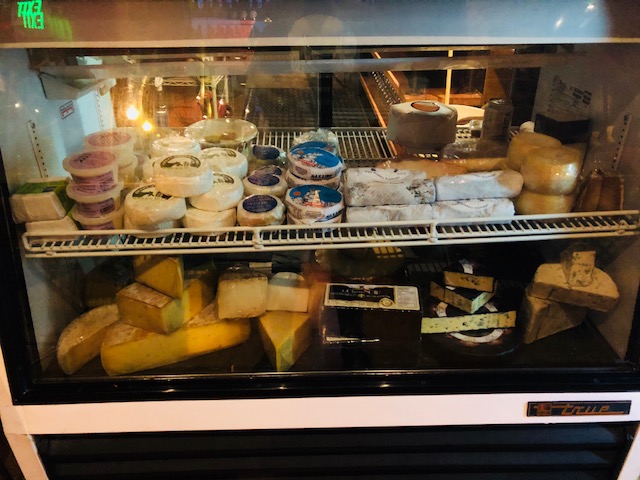
 Right Proper’s cheese counter. (Photo courtesy of Right Proper)
By DCist contributor Josh Kramer
Righteous Cheese may have left Union Market in January, Cowgirl Creamery may have closed up its Penn Quarter shop in 2013, and Sona Creamery may have called it quits in 2016, but that doesn’t mean there’s nowhere to get good cheese in D.C.
It takes some know-how to navigate the cheese landscape in D.C. Here are some tips from experienced cheese professionals and me, a former cheesemonger, to make the most out of a shopping trip in the District.
Ask for a taste
Cheese buying should start as a conversation. Don’t be afraid to ask your cheesemonger for their favorites or recommendations.
Take it from Angelica Ames, also known as “Queso Queen Supreme.” She started her cheese career at Cork Market (now Cork Wine Bar & Market), worked at the now-closed Sona Creamery, and is now the head cheesemonger at Right Proper Brewing, which sells 20-35 cheeses cut to order in addition to cheese plates for guests dining in. “I definitely would always ask for a sample if I’m a guest, for sure, no matter where I am,” says Ames. “Just tell them what you’re using it for.”
Crumble and grate your own cheese
“Go more towards cheese that has not been pre-cut or pre-shredded,” says Alice Bergen Phillips, owner and operator of Cheesemonster, a local source for on-demand cheese boards, classes, and tastings. Bergen Phillips also plans to open a base of operations called Cheesemonster Studio in Brightwood. “Usually with pre-shredded cheeses, in order for the shreds to stay not-clumping together they get coated in all sorts of weird stuff—things that aren’t cheese,” she says.
One staple to buy at the grocery store: Parmigiano Reggiano. A local chain that rhymes with “Paris eater” usually cuts parm incorrectly, yielding huge pieces with little rind. Either way, save parm rinds in the freezer and add them to soup stocks.
Buy small amounts
Victoria Swaynos is another former manager of Cowgirl’s shop in the District. After eight years in D.C., she returned to her native Texas where she’s a part-time cheesemaker and jam and biscuit shop manager in Austin. Swaynos recommends buying “only buy as much as you think you can eat within the next seven to ten days.”
“Getting small amounts, especially if you can get them cut fresh off the wheel, gives you a better chance at eating a cheese at the height of its flavor,” says Swaynos. “Also getting smaller pieces means more chances to try something new next time.”
Buy small-format cheeses
Often, cheese stores will sell small cheeses that are wrapped and sold individually instead of a piece cut off of a wheel that’s priced by the pound. Usually these cheeses are young, soft and creamy. They might be marginally more expensive, but the quality can be higher because the cheese isn’t cut, just wrapped and shipped. “They’re just perfect for two people or one person who just really loves cheese a lot and doesn’t mind leftovers,” says Ames.
Know bad cheese when you see it
Cheese is expensive, and the good stuff should be, so don’t waste your money on poor quality cheese. Mold on the rind is not unusual, but spots on the cut sides are a warning sign.
“The cheeses should look healthy,” Bergen Phillips says. “You shouldn’t see rinds that are slimy looking. Healthy mold is one thing, but if you have something that looks like its been suffocated and is just turning into mush, that’s definitely a no-go.”
Buy local, and not just for ethical reasons
Every cheese professional I spoke with was enthusiastic about buying cheeses from local farms. Similarly to small format cheese, this can mean fewer middlemen involved in distribution—your money stays in your community, the producer gets a greater percentage of the sale and you get a fresher, better tasting cheese.
Get back to the land
If you are able to get out of town, driving to a cheese farm is often a fun and delicious weekend day trip. There are plenty of artisan cheesemakers about two hours or less from D.C.: Chapel’s Country Creamery, Pipe Dreams Farm, Cherry Glen Goat Cheese Company, Blue Ridge Dairy Co. Swaynos notes added incentives to a farm trip: “Not only are you supporting a local business but you will inevitably learn so much more about seasonality, farm life highs and lows and maybe even get a chance to scratch the ear of a goat or two.”
Take care of cheese at home
Cheese will last longer and taste better if it’s cleaned and re-wrapped after purchase. Swaynos says, “use the back of a small paring knife to gently scrape off the surface of the cheese.” Then, ideally, wrap it in cheese paper. “Cheese paper more or less replicates the environment of a cheese cave—letting air flow in, while keeping the cheese moist and protected from external flavors,” says Swaynos. Before you want to eat, leave the cheese out for about a half hour to come to room temperature.
Learn what you like
The best way to get good cheese is to educate yourself. Fortunately, this involves eating a lot of cheese. But there are resources that can help foster a lifelong passion and make you a varsity-level shopper. For the scientifically inclined, check out Cheese Science Toolkit. If you want to get to know the cheesemakers, try listening to “Cutting the Curd” podcast. And if you just want to page-through a slick magazine with mouth-watering pictures of cheese, try Culture and Cheese Connoisseur magazines.
Finally, here’s a unofficial list of cheese counters in the area where you can buy good cheese to take home:
- Right Proper Brewing (624 T St. NW)
- Cheesetique (multiple locations in Virginia)
- Arrowine & Cheese (4508 Lee Highway, Arlington)
- Via Umbria (1525 Wisconsin Ave. NW)
- Each Peach Market (3068 Mount Pleasant St. NW)
- Glen’s Garden Market (2001 S St. NW)
- Cork Wine Bar & Market (1805 14th St. NW)
- Wine & Butter Cafe & Market (1023 East Capitol St. SE)
- Lupo Verde (1401 T St. NW)
- Calvert Woodley (4339 Connecticut Ave. NW)
- Bowers Fancy Dairy Products (225 Seventh St. SE)