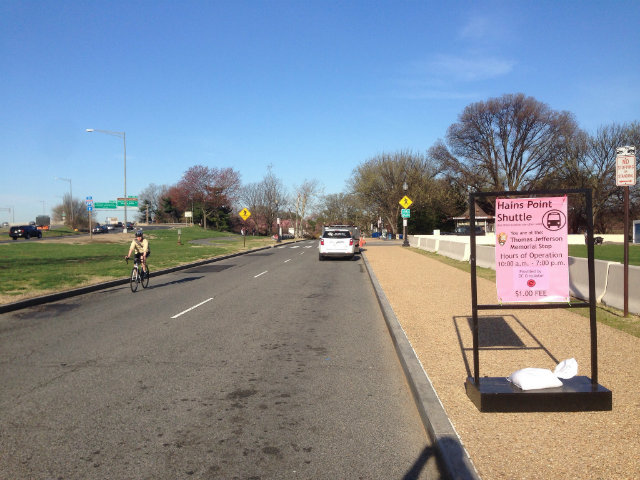
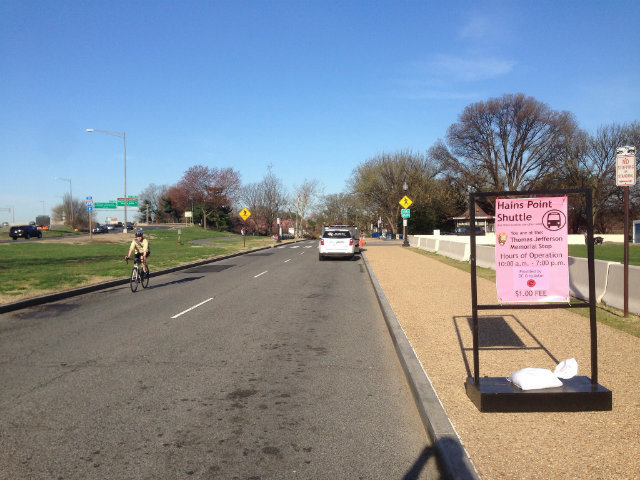
 The 14th Street Bridge. (Photo by Edward Russell)
By DCist contributor Edward Russell
Cyclists and runners are going to have a slightly easier time getting on the 14th Street Bridge from D.C. soon, though the much-despised poles just off the bridge are not going anywhere just yet.
The National Park Service will temporarily close the ramp from East Basin Drive SW to the bridge for 10 weeks beginning Monday, September 24. The plan is to widen the ramp, improve the surface, and reduce the grade in an effort to improve access to the bridge’s multi-use trail.
In addition, NPS will install a two-way protected bike lane on East Basin Drive in front of the Jefferson Memorial, providing a safer route to the bridge for cyclists.
“The 14th Street Bridge connector is a primary route for pedestrians and cyclists to access historic sites, recreational opportunities, and communities in Washington D.C. and Virginia,” says Eliza Voigt, park planner for the National Mall and Memorial Parks at NPS. “Improving this trail connection increases access and circulation for users of the trail [and] resolves an existing gap in the city’s bike system connectivity.”
Moving the poles, which sit just off the bridge in D.C. and force trail users to go around them, was too complicated to include in this project, says NPS spokesperson Mike Litterst. The agency hopes to move them in the future, likely when the highway signage and street lights are replaced next.
Cyclists and pedestrians can access the bridge via the stairs immediately next to the structure on Ohio Drive SW during the estimated 10 weeks of construction. The bridge will be closed to both bikes and pedestrians from October 7-14, depending on weather, for work. There will be a detour that will direct to the Memorial Bridge.
The $275,000 project is funded by a Federal Highway Administration grant, NPS, and the District Department of Transportation.
Bridge users have long called for improvements to the D.C. side of the 14th Street Bridge. While there is a wide, paved, shared trail from Maine Avenue SW to the crosswalk to the ramp on East Basin Drive, the trail often gets congested with tourists immediately in front of the Jefferson Memorial, and the ramp itself is narrow and steep.
A more gradual ramp will make it easier to bike up to the bridge, and the protected bike lane should help to eliminate conflicts between cyclists and visitors to the memorial.
The 14th Street Bridge is an important connection in the region’s trail network. NPS characterized it as a high-volume corridor of regional significance in its 2016 Paved Trail Plan.
“The 14th Street Bridge is one of the most heavily trafficked Potomac River crossings for people walking and biking,” says Greg Billing, executive director of the Washington Area Bicyclist Association. While happy to see the improvements happen, he calls the planned detour and week-long closure disruptive and an example of why the region needs more trail river crossings.
The Paved Trail Plan calls for more and improved trail connections across the Potomac and throughout the region. Proposals include extending the 15th Street NW protected bike lane from its Pennsylvania Avenue terminus to the 14th Street Bridge, building a new connection from the Virginia side of the bridge to Long Bridge Park in Arlington, and potentially a new Potomac River crossing as part of the Long Bridge replacement project.
“Projects such as the Long Bridge replacement provide opportunities to build additional river crossings, increasing access and building resiliency into the transportation system,” says Billing.
Progress by NPS on the plan, however, has been slow. These 14th Street Bridge access improvements represent some of the first works undertaken since the report was published.
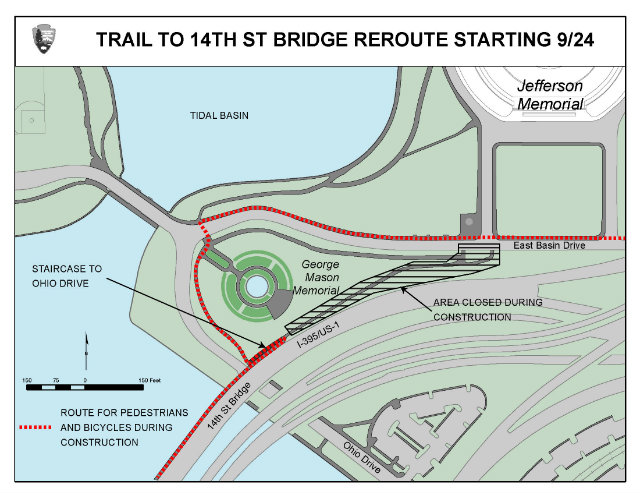 Image courtesy of NPS.