Rachel Kurzius
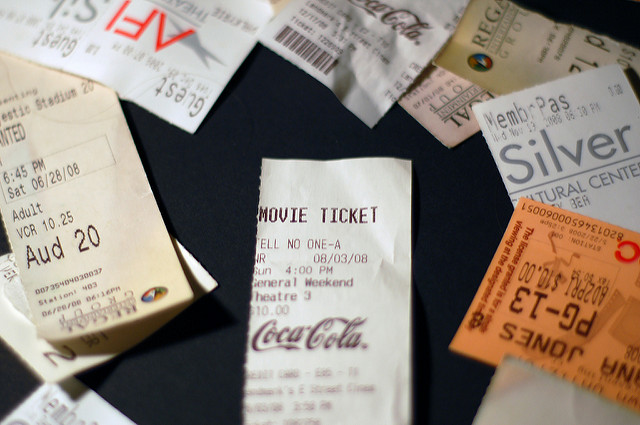 Photo by erin m.
Theaters in D.C. would be required to offer open captions for some of their film showings to improve the movie-going experience for deaf and hard-of-hearing people, under a new bill introduced by Ward 6 Councilmember Charles Allen on Tuesday.
Over the summer, Allen met with three organizers of DC Deaf Moviegoers, a group of deaf and hard-of-hearing cinema-lovers in the District who plan and share information about area film screenings with open captions, says lead organizer Erik Nordlof over email. The District is home to about 7,094 adults with some type of hearing disability, according to Gallaudet University.
Movie theaters are required under the Americans with Disabilities Act to provide accommodations for deaf and hard-of-hearing people, which most often come in the form of closed captioning devices like captioning glasses and displays placed on armrests.
According to Nordlof, the problems with these devices are plentiful: battery failure, and lack of connectivity or sporadic connectivity, which leads to dropped dialogue.
He says that any theater with those kinds of audio issues would likely go out of business. “The challenge is that deaf moviegoers are not numerous enough to vote with their wallets in this way, so we feel stuck with these devices,” he says. “There is a running joke in the deaf community to have a drawer full of ticket vouchers, reflecting the number of times we’ve tried to go see a movie, experienced an issue with the device, and received a voucher for our troubles.”
The solution, he says, is open captioning, which displays the captions on the screen for everyone, including dialogue, sound effects, and music. Currently, movie theaters can decide if and when they use open captions during screenings.
But Allen’s bill would change that. Under the “Open Movie Captioning Requirement Act of 2018,” movie theaters with more than three screens must play open captioning during four showings of each film they’re screening weekly, including two during “peak movie attendance hours” (after 6 p.m. on Friday, or after noon on weekends) and one between 6-11 p.m. on weekdays.
Erik Salmi, Allen’s spokesperson, says that the vast majority of screenings wouldn’t be affected by the legislation. “A typical blockbuster movie probably shows around 56 times a week—so that’s well over 90 percent of showings [that] still won’t have captions,” he says over email.
Movie theaters with two or three screens need to show each of the films they’re screening with open captioning at least twice weekly, including once during peak movie attendance hours. And movie theaters that have one screen are required to do so monthly. The measure also mandates that theaters advertise their open caption shows.
Movie theater companies AMC and Landmark have not responded to a request for comment. However, Ward 2 Councilmember Jack Evans expressed concern that owners of movie theaters would not want to add open captions. “People don’t like to go to movies with captions, period,” Evans said at the D.C. Council breakfast on Tuesday morning, reports WAMU’s Martin Austermuhle.
The Avalon, an independent nonprofit cinema in D.C., already has an open caption screening program. At first, they showed films with open captions on Thursday mornings, but have since added another one for Saturday matinees.
“By pulling it into the weekend, we’re opening it up to younger professionals who are interested in the open caption screening,” says Danielle Mouledoux, The Avalon’s marketing manager. As a two-screen theater, The Avalon may already be in compliance with the legislation, as long as it is screening both of the films with open captions weekly.
She notes that, for many small-distribution indie movies, distributors do not offer open captions. Additionally, foreign language films offer subtitles, but those only show dialogue, not music or sound effects, and don’t include dialogue for anything said in English.
“We’d like it to be universally available,” says Mouledoux. “As a hearing person myself, I’d prefer open captions but not all of our patrons do.” She says the theater works to communicate which screenings are open caption so that it’s not a surprise to viewers.
“The open caption program is an important part of accessibility and inclusion,” she says. “In D.C., it’s kind of a no-brainer.”
If the bill passes, D.C. would join Hawaii in requiring theaters to screen some of its films with open captioning. Co-introduced by Ward 1’s Brianne Nadeau and At-large Councilmembers Anita Bonds and David Grosso, it has been directed to the Committee of the Whole.
This story has been updated with quoted from Ward 2 Councilmember Jack Evans and Danielle Mouledoux.