Natalie Delgadillo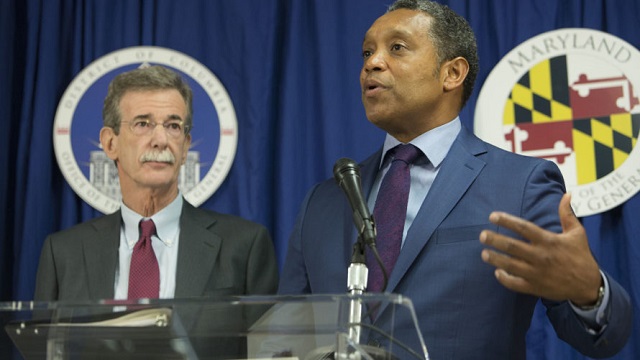
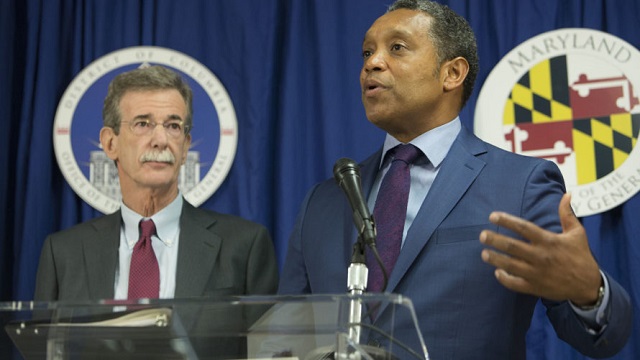 A special victims unit in the office of D.C. Attorney General Karl Racine (right) will be specially trained to handle sensitive cases. (Photo by Tyrone Turner/WAMU)
D.C. Attorney General Karl Racine announced on Thursday the creation of a special victims unit for prosecuting certain types of crimes in the District.
Prosecutors in the SVU will handle cases of sexual assault and human trafficking, cases involving a victim younger than 13 and 65 or older, and cases involving victims with a disability, according to a press release.
“Special victims share certain characteristics in common. First off, due to age [or other characteristics], they’re vulnerable,” Racine told DCist on Thursday. “Second, the offenses can be incredibly traumatizing.”
That’s why, Racine says, the prosecutors in the SVU will receive special training in how to handle sensitive cases. “They’ll be trained in how to work with [victims] as they go through another different process that can also be traumatizing—the criminal justice system.”
The SVU will also provide prosecutors with training in forensic science, litigating, and techniques for interviewing child victims, victims with disabilities, and elderly victims with dementia or some other kind of cognitive decline.
Before the creation of the SVU, prosecutors in the attorney general’s office handled a myriad of cases at the same time, with no distinction drawn between types of crimes, Racine says. This new unit will be dedicated only to crimes with special victims, and it will also implement a “vertical prosecution” model—that is, one prosecutor (or a small group) will handle the same case from beginning to end, allowing them to closely follow the gathering of evidence by partner agencies effectively.
“In the past, different prosecutors, depending on their caseload and assignments, would randomly be assigned cases,” Racine says. “So you might have prosecutors that are prosecuting for the first time that are handling special victims.”
Racine says the new unit will consist of three to four experienced prosecutors who have handled many of these types of cases before. Most of them already have specialized relationships with the Metropolitan Police Department, Racine says, which is invaluable while cases are being investigated by police.
All of the people currently being assigned to the SVU have already received specialized training, Racine says. Everyone added in the future will also have to be trained, he says.
The attorney general’s office decided to add the SVU after examining other jurisdictions, Racine says. “It’s becoming a best practice,” he says.