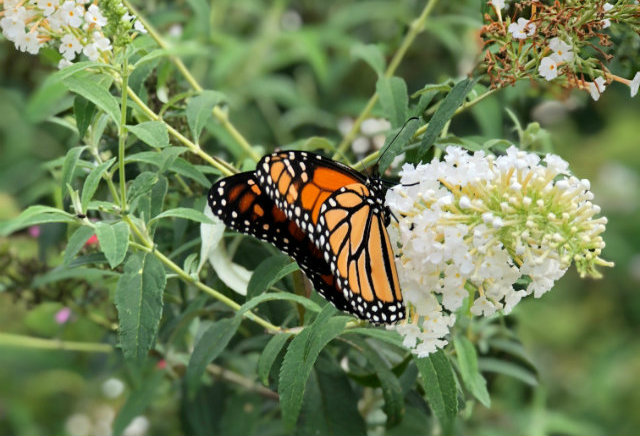
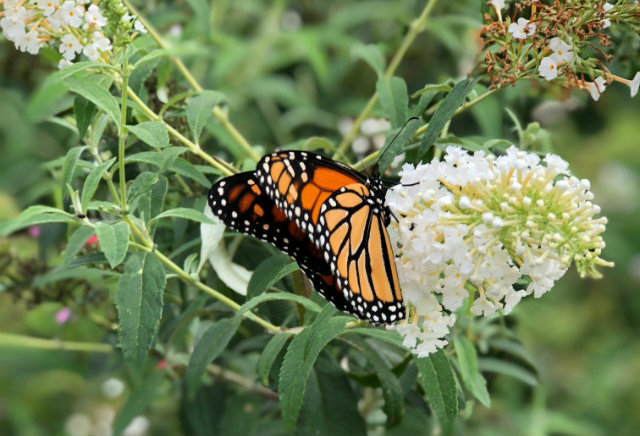
 Monarchs flit down south from the northern U.S. each fall. (Photo by Justin Fritscher)
Monarch butterflies are fluttering through the District this week as they migrate south to Mexico.
Every fall, millions of monarch butterflies leave their summer home in the northern U.S. and Canada and travel around 3,000 miles south to reach their winter home in Mexico, National Geographic reports.
Justin Fritscher, a communications coordinator at the U.S. Department of Agriculture’s Natural Resources Conservation Service, says this migration is unique to this type of butterfly and usually starts in early September. Journey North, a group of citizen scientists that track migration, created a map of the butterflies’ estimated route based on sightings.
While Journey North’s map may seem to show a lot of butterflies, the yearly count of monarchs over-wintering in Mexico has actually declined by more than 80 percent over the past 20 years, the Center for Biological Diversity reports. In the mid-1990s, the population was estimated at nearly one billion butterflies, but this year’s population is down to approximately 93 million butterflies, the center reports.
But it’s not just the butterflies that are disappearing—it’s their food, too. The marshy lands that grow milkweed, the only food the butterflies can eat, has steadily declined over the past two decades, according to NPR. Scientists at the Field Museum in Chicago are among those who have been cultivating milkweed in urban cities for butterflies to eat and lay their eggs on.
It amazes me how they navigate even downtown DC! City butterflies. pic.twitter.com/ML3MISW2TN
— Kate Furby (@seakaterun) October 3, 2018
Additionally, on Sept. 25, the Congressional Pollinator Protection Caucus released 50 monarch butterflies in the District to to raise awareness about their population decline.
The Congressional Pollinator Protection Caucus is about to release 50 of these monarch butterflies to raise awareness about their population decline pic.twitter.com/pkvKMc688U
— Cecelia Smith (@ceceliasmith12) September 25, 2018
As the butterflies travel through the District this week, they’ll be fueling up on milkweed Fritscher says. The main attractions for these butterflies are milkweed and wildflowers, but it’s important to not touch them.
“Don’t touch the monarchs or the caterpillars because we don’t want to hurt them,” he says. “Watch them and check them out. It’s really neat to see them feed.”