 Mikaela Lefrak
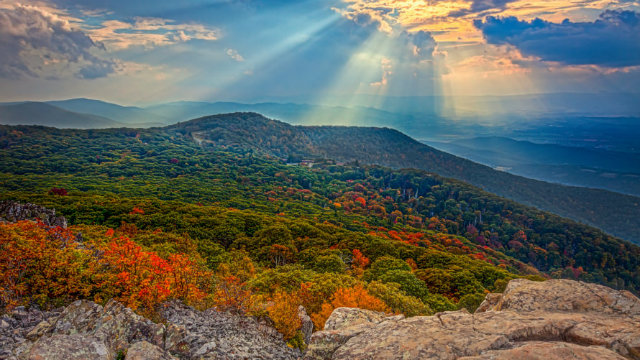 The view from Stony Man Mountain in Shenandoah National Park, a two-hour drive from downtown D.C., in 2012. (Photo by Eric B. Walker / Flickr)
Pour your hot apple cider in a travel mug, put a decorative gourd on your dashboard, and gas up your motor vehicle. It’s almost fall foliage season and we take this time of year very seriously.
The next two weeks are the best time to see fall foliage in the mountains surrounding the Washington region, according to foliage experts. The Capital Weather Gang predicts cool, brisk fall weather to finally hit the area this coming weekend, too.
Here’s our 2018 guide for where and when to see the autumn leaves both in and outside the Beltway.
Wait a minute. Didn’t all the rain the last few months ruin fall?
Not completely, you naysayer. The rain has actually been pretty great for nearby forests. Vegetation growth has been strong and soils are “really, really well-recharged going into the most critical time of the fall season,” said John Seiler, a tree physiology specialist and professor at Virginia Tech.
But it’s not all good news. The remnants of Hurricane Florence did blow off a lot of leaves in hard-hit areas, including parts of Shenandoah National Park. Park ranger Sally Hurlbert reported that some trees have also been hit harder than usual by mold and diseases that flourished during the heavy rains. Their leaves have turned brown and dropped to the ground rather than change colors. The Foliage Network blames fungus, “a direct result of the abundance of precipitation.”
Shenandoah National Park has had nearly 80 inches of rain this year, 25 inches more than usual. “We just don’t have a recent precedent of this wet a summer and how it will affect the fall,” reads the park’s Facebook page. Hurlbert, for her part, isn’t too worried. “Normally,” she said, “a wet season will lead to really beautiful fall colors.”
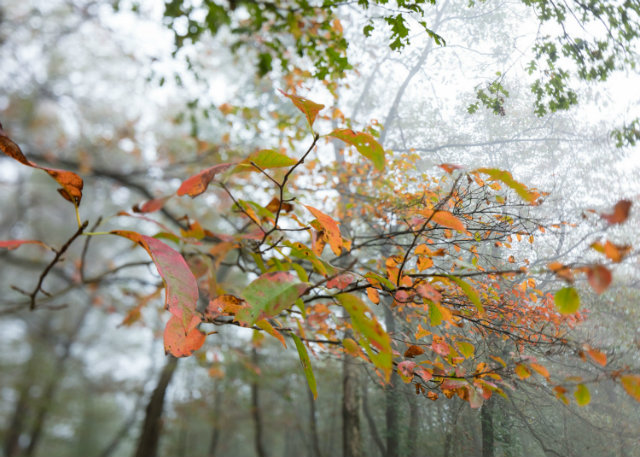 The leaves are just starting to turn at Jeremy’s Run Overlook at milepost 26.5 of Skyline Drive. (Photo by Lewis / National Park Service)
Alright, get me to the mountains!
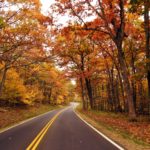
If you’re ready to get out of the city immediately, the leaves are beginning to change in Shenandoah National Park’s higher elevations. Peak foliage will most likely hit during the week of Oct. 22—a perfect time to hit Skyline Drive.
Pro tip: Arrive at the park as early as possible on weekend days. While the park tries to add more staff to the entrance stations during foliage season, the lines can still get pretty long by late morning.
If you’re looking for a longer getaway, head farther south into the Blue Ridge. You have some lead time to plan your trip, too: Peak foliage seems to be a bit behind schedule. Foliage experts at Blue Ridge Mountain Life report that the peak period has already begun for areas above 5,000 feet and will last through Oct. 15. But the areas between 4,000 and 5,000 feet of elevation, which include most of the Blue Ridge Parkway in Virginia and North Carolina, will peak from Oct. 15-25.
If you want to avoid high-trafficked areas, check out the Virginia Department of Forestry’s inaugural set of five forester-designed fall foliage driving tours.
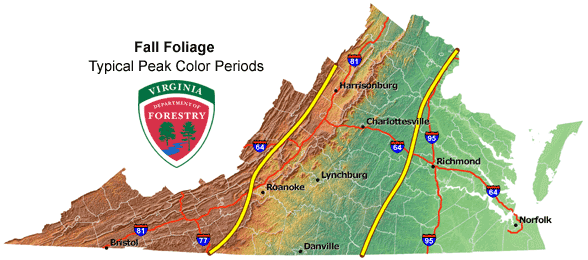 Image via Virginia Department of Forestry.
Ugh, driving? No thanks. Where can I see fall colors in the city?
If trekking out to Shenandoah isn’t your cup of pumpkin spiced latte, there are lots of places to see the fall colors in the District, too.
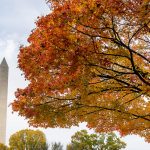
Your first stop should be the Tidal Basin, particularly if you prefer to stay far, far away from that area during the spring and summer to avoid the hordes of cherry blossom peepers and confused tourists on bikeshares. The cherry trees lining the Basin explode with color during the fall. The first week of November is typically the best time to go see them, according to the Capital Weather Gang.
Head to the National Arboretum if you’re looking for more of a respite from the city. The arboretum hosts its annual OAKtoberfest festival on Oct. 27. It features a 5K fun run, costume parade, and tree-climbing for kids and adults.
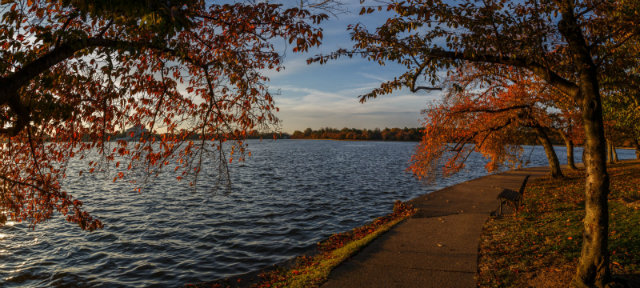 Fall at the Tidal Basin in 2017. (Photo by Mark Andre / Flickr)
Why do leaves change colors? And be succinct—I don’t have all day.
Welcome, nerds, who have made it this far.
You probably remember chlorophyll from middle school science lessons. It’s a key component in trees’ energy-making process and it’s what makes leaves green.
As daylight hours decrease in the fall, that chlorophyll begins to break down. Yellow and orange pigments called carotenoids then get the chance to shine through.
Red coloration comes from a different pigment called anthocyanin. Towards the end of summer, trees produce anthocyanins from excess sugar compounds. They help protect trees from the sun as they pull nutrients in from their leaves for later use. If it’s not sunny, the trees don’t produce that red sunscreen. That’s fine for the trees, but bad for us.
“The reds need some nice, clear days of sunshine to develop,” Seiler said. “Too much rain and not enough sunshine could dampen red colors.”
Happy leaf peeping, everyone!
This story was originally published on WAMU.