Natalie Delgadillo
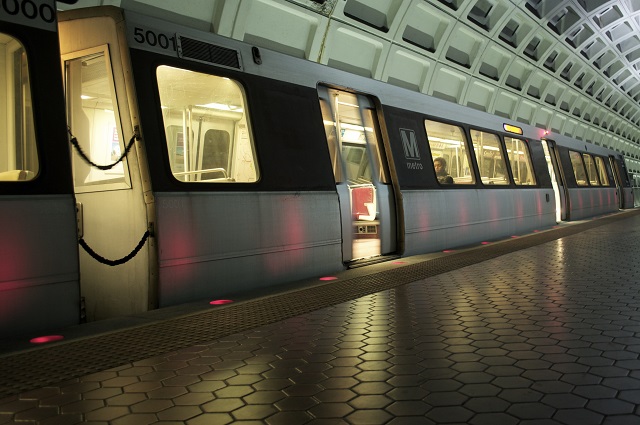 One of Metro’s supposedly retired 5000-Series trains. (Photo by Jeffrey)
October 12 ushered in a new era for WMATA and its—dwindling—ridership: the 5000-series railcars were finally retired.
At least, that’s what was supposed to happen.
That morning, Metro announced to much fanfare that it was retiring the 5000-series cars after the end of the day, replacing them with newer 7000-series trains. (You might know the 5000-series cars as the ones with carpeting.) The transit agency has already retired previous fleets, like the 1000-series and 4000-series cars. A Metro spokesperson told NBC Washington that the 5000 series were among the least reliable cars the agency has run.
“On average, a 7000-series railcar is five times more reliable than a 5000-series, in terms of distance traveled before encountering a failure,” the representative said. Refurbished 2000, 3000, and 6000-series cars were still slated to be in operation, in addition to the 7000-series, according to the outlet.
END OF THE LINE: Today is the last day you’ll ride a 5000-series railcar! The entire fleet is being retired, replaced with new, more reliable 7000-series cars. (All 1Ks and 4Ks already retired — resulting in sharp improvements in OTP and reliability.) #wmata pic.twitter.com/UaP3VxqBRN
— Metro (@wmata) October 12, 2018
A small group of people were nostalgic at the thought that they might never ride another 5000. That is, until it became clear that eagle-eyed passengers were still spotting 5000-series trains all over the place.
It’s October 15 and I’m on a 5000 series New Carrollton bound train. pic.twitter.com/eUgma912jM
— Ross Terry (@rosswterry) October 15, 2018
@wmata claims that Saturday was the last day of the 5000 series metro cars. Today is Monday. I literally just saw two at Fort Totten in regular revenue service. They lied about THAT, I’m sure they’re lying about THIS POST.
— T.M. (@TM15284349) October 15, 2018
lol. I just got off a 5000 series train.
— Pretty Jimmy From Beautiful Baltimore, Maryland (@Mr_Westside) October 16, 2018
More questions for GM:
-Why are 5000 series trains still service after their retirement last Thursday? What does this say about #wmata‘s asset management system?
-How does Metro’s safety analysis of “ATO during peak hours” plan address increased risk of mode errors & RWP? https://t.co/RUHcjhIXXl
— 20 TRAINS PER HOUR, ALL OF THEM 8 CAR TRAINS (@HeadwaysMatter) October 16, 2018
Eventually the transit agency hopped on Twitter, seemingly just as confused as the rest of us about where, why, and how 5000-series trains were still delivering passengers to their destinations.
Hi, can you please tell us where you boarded a 5000-series train and the direction you were traveling in? Can you also please confirm the time you boarded?
— Metrorail Info (@Metrorailinfo) October 16, 2018
Plenty of angry passengers used this opportunity to express their general displeasure with the agency’s management of the system (in case you haven’t heard, we would like hot yoga in rail cars and artisanal charcuterie samples at the stations).
How can you all tout that the 5000 series cars are retired yet put multiple 5000s in service for multiple days after the announcement? And you want us to believe ATO will be back in 2019?! #wmata
— Michael Lyons (@slapshotlyons) October 16, 2018
DCist has reached out to WMATA to try to figure out what’s going on here, and will update when we hear back.
This isn’t the first time the agency has experienced some drama surrounding its rail car series. As recently as August, a report found that wiring on all the new 7000-series cars needed to be reinspected. WMATA has also faced safety concerns around the missing barriers between 7000-series cars meant to alert the visually impaired that the space is not an open Metro door.
That’s not to mention the trouble with its older cars: once, a door opened while a 4000-series car (long considered the least reliable fleet in the system) was in motion. Its 1000-series trains were found to be particularly vulnerable to serious damage in crashes after a 2009 crash that killed nine people.
Meanwhile, Metro has already started procurement for its 8000-series cars.