 Jordan Pascale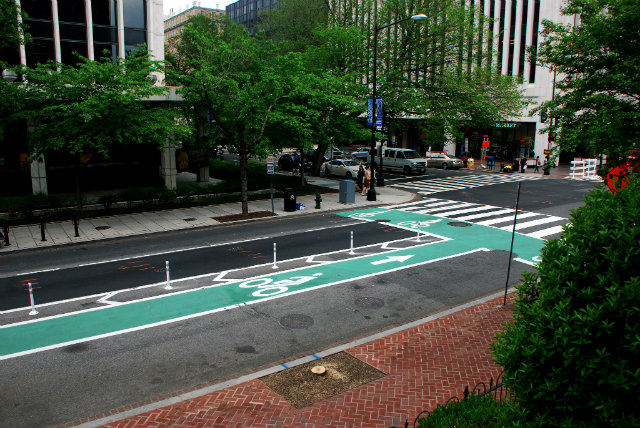
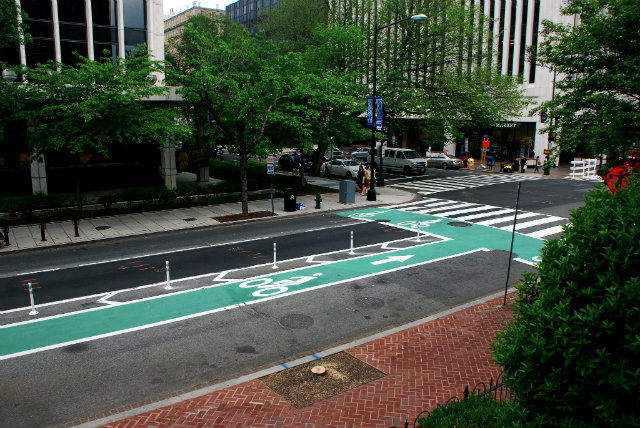 In response to an increase in traffic deaths in recent years, Mayor Muriel Bowser is proposing building new bike lanes on an accelerated time frame. (Photo by Elvert Barnes)
District agencies are looking at fast fixes and longer-term policy changes to combat the recent uptick in traffic, bike, and pedestrian fatalities.
More than a dozen agencies met for two hours Monday to talk about next steps in achieving the city’s Vision Zero goal, which aims to eliminate traffic fatalities and serious injuries by 2024.
So far this year, 31 people have died in traffic crashes, the highest total in seven years, and an increase over the 30 fatalities in 2017. Fatalities have fallen dramatically from a peak of 72 people killed in 2001.
The number of deaths have increased every year since Vision Zero launched in 2015
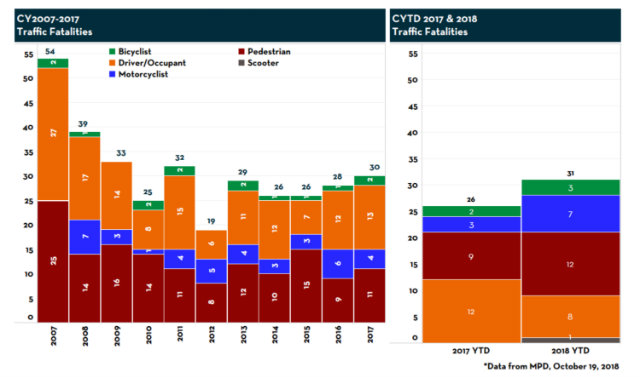 Graphs courtesy of the Metropolitan Police Department
Bike and pedestrian communities have put intense pressure on the administration of Mayor Muriel Bowser to do something, saying the city has not moved fast enough to reach the goal.
Now, the District Department of Transportation (DDOT) is proposing two quick fixes: reducing speed limits from 25 to 20 miles per hour on neighborhood streets, and accelerating the construction of protected bike lanes on more than a dozen corridors, which could be completed in less than three years.
DDOT officials may also soon be responsible for automated ticket enforcement that will allow them to move speed and red light cameras, customize the speeding threshold for certain corridors and shorten the time it takes to mail out tickets. All of these measures aim to make the program more effective.
Bowser also is hosting a series of Vision Zero events this week to highlight the problems and educate the public.
On Tuesday, she will host a Mayor-Council breakfast to talk about the issue. Later in the day, she will visit Garfield Elementary for a “Slow Down campaign,” reminding drivers to slow down and use caution around school zones.
On Thursday, District police will launch a Traffic Safety Blitz to increase ticketing and raise awareness around the dangers of double parking, blocking the box, obstructing bike lanes and other violations that threaten the safety of pedestrians, cyclists and motorists.
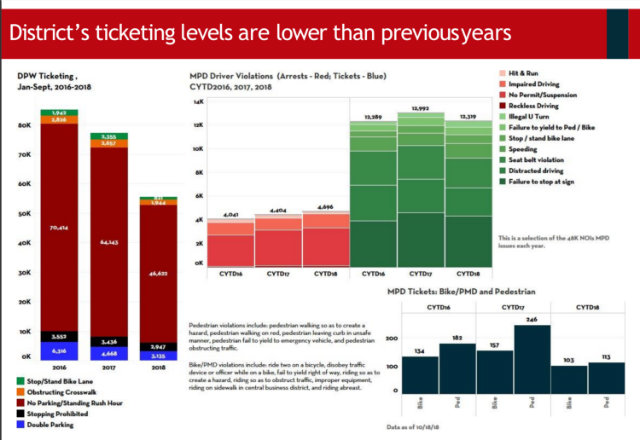 Graphs courtesy of the Metropolitan Police Department
Cyclists have expressed frustration with the lack of enforcement around bike lane obstruction.
Bowser said the issue really comes down to making sure drivers, pedestrians and bikers all follow the rules of the road and change bad behavior.
Asked if education and enforcement were enough to change behavior, Bowser said the government tools will help, but that it also takes peer influence.
“I do think that people can change behavior — look what happened when a bunch of moms got together and said no more drinking and driving,” Bowser said pointing to Mothers Against Drunk Driving, the group that highlighted and helped reduce the behavior in the ’80s and ’90s. “So I don’t think that we can underestimate the power of the influence of our peers in this regard. But I do think that we have to be consistent (with enforcement).”
Bowser said the District doesn’t have to reinvent the wheel when it comes to addressing Vision Zero.
Among tactics tried in other cities that may be tried here:
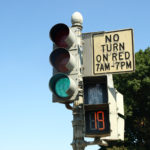
- Banning vehicle right turns on red in more than intersections in the downtown business district and near school zones and cycle tracks.
- Creating four-way stops at all residential intersections.
- Adding “hardened” medians at high-conflict intersections, slowing vehicles left turns. Or eliminating left turns all together at certain intersections.
- Establishing pedestrian-only zones.
- Giving Public Works the ability to mail citations to vehicles that block the bike lane, but leave before a ticket can be written. (Currently staff must physically place the ticket on the vehicle. This change would allow them to ticket by mail if they saw the violation in person, or if a camera caught footage of the violation.)
- Retesting drivers on the rules of the road before they can renew their license.
“If we see it working in other cities like ours, then we can try it here, too,” she said.
Vision Zero’s four strategies include creating safer streets through engineering, protecting vulnerable users like cyclists and pedestrians, preventing dangerous driving and using data to be transparent and responsive.
This story originally appeared on WAMU.