Rachel Kurzius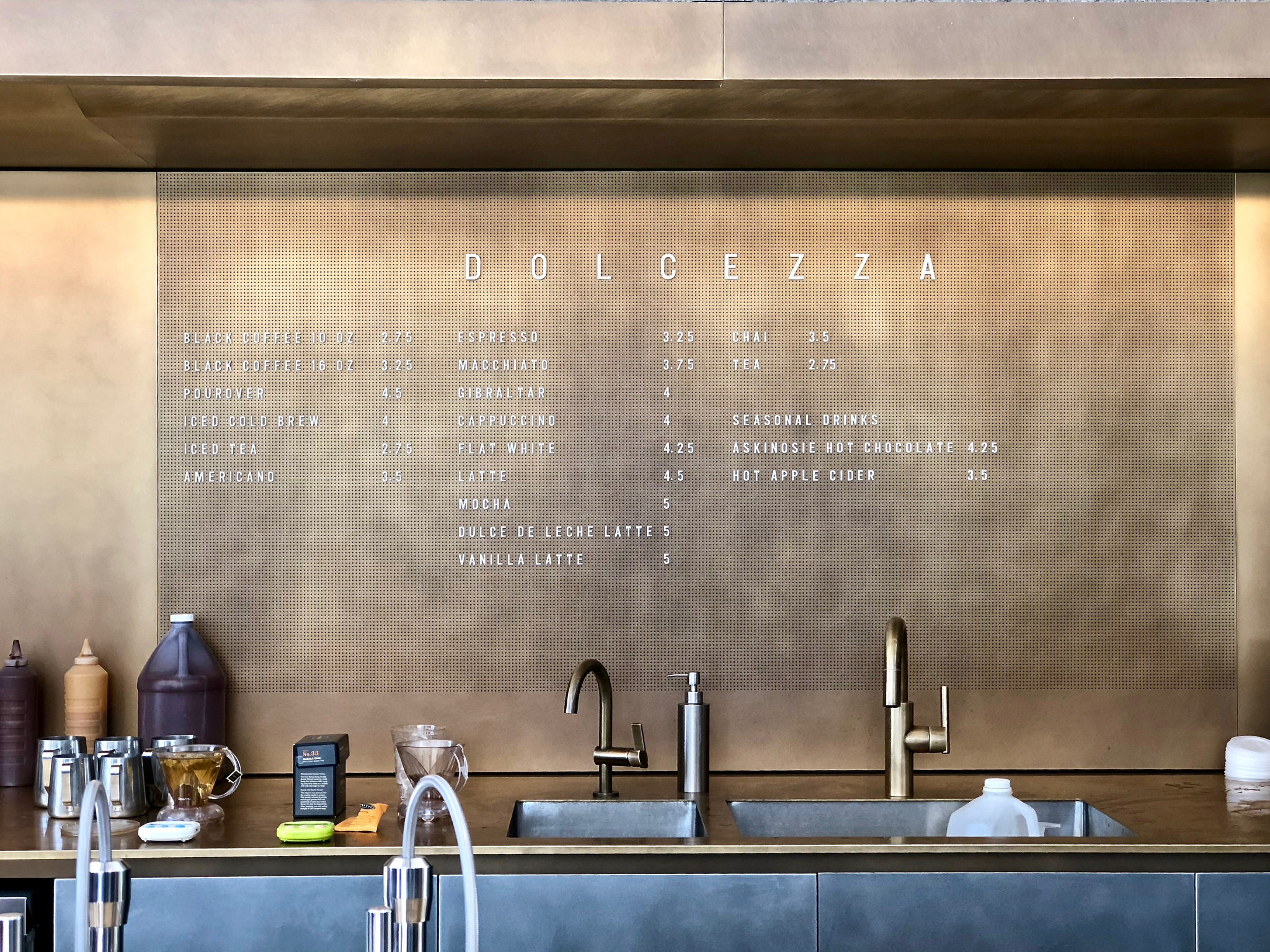
When Blaine Smith arrived for work as a barista at the CityCenter Dolcezza last Wednesday, he learned that his hourly wage was changing from $13.25 an hour plus tips to $10.50 plus tips, effective that day.
The shift is emblematic of a growing tension in D.C., as both the cost of living and doing business continue to rise. Legislators in the District have been accused by the restaurant industry of making it too financially burdensome to operate in the city, while labor activists say that there are still too few protections for service workers or enforcement of already-existing regulation.
Smith made $11.50 hourly plus tips when he started working at the D.C.-based coffee and gelato shop in February 2016. “That they would downgrade my pay to a dollar less than what we were making two-and-a-half years ago is absolutely absurd,” he says.
But Robb Duncan and Violeta Edelman, the co-founders and co-CEOs of Dolcezza, say the change to their wage structure is the only way for them to stay afloat amid the rising costs of doing business in the District.
“D.C. now is a totally different landscape than what it was when we opened up in 2004,” says Duncan, listing the increase in competition and food and labor costs as the three primary changes. “Businesses have to be super smart to navigate all these costs. The change that we made to supplement minimum wage was to help us with that.”
Prior to March of this year, Dolcezza’s baristas made $13 per hour plus tips and gelato scoopers made $12.50. (In D.C., the regular minimum wage rose to $13.25 this July from $12.50, part of a step-ladder of increases that will end with a $15 minimum wage in 2020.)
In March, Dolcezza switched the pay structure for new D.C. hourly employees to a tipped wage, wherein baristas would get a starting hourly rate of $10.50 plus tips, while gelato scoopers would get $9.75 plus tips. People who already worked for Dolcezza, like Smith, were grandfathered into the old pay rate system—until now.
Under the federal Fair Labor Standards Act, workers who make more than $30 a month in tips are eligible for a tipped wage, in which employers pay workers less than the regular minimum wage with tips bringing them to the full wage. If the sub-minimum wage and tips add up to less than minimum wage on average during a pay period, the employer is legally obligated to pay the difference. The tipped minimum wage in D.C. is currently $3.89.
That system has come under intense scrutiny over the past few months in the District. Initiative 77, a ballot measure in D.C.’s June primary, sought to eliminate the tipped minimum wage entirely, joining eight states that do not have a two-tiered wage system. While more than 55 percent of voters approved it, Initiative 77 was repealed by the D.C. Council last week.
Smith is concerned that the new system will leave him at the whims of customers. “Usually, tips average out to $3-4 an hour, but that’s during the summer, when Dolcezza is a gelato shop,” he says. “We’re exponentially more busy.”
Dolcezza’s co-CEOs say that won’t be an issue. They’ve already calculated the tips from each of their stores to “make sure everyone is taken care of,” says Edelman.
Plus, they add, the switch to a tipped wage for longer-term baristas isn’t the only change to their payment structure. They’ve also added a certification program, for which each certification will increase the hourly rate (for example, a customer service or food handler certification will each result in an increase of $0.25 per hour and the barista and advanced barista certifications come with an hourly increase of $1.50). Bonuses also range from $250-1,000 for a thousand hours worked, depending on whether workers are scoopers or baristas and how many certifications they’ve earned.
“We’re making sure that we have a system in place that allows them, through training and certifications, to exceed the amount they were making previously,” says Edelman.
But Smith says that the new certification system doesn’t reflect the qualifications he’s earned from years of working at Dolcezza. “Why aren’t the trainings I’ve already completed in the last few years counting towards that?” he asks. “Why am I starting out at $10.50 an hour? It shows a complete lack of regard for loyal employees.”
Duncan agrees that “it sucks. It totally, totally sucks. If I could pay my employees twice the minimum wage and give them health benefits, I would do it in two seconds. But for any small business, especially in D.C. right now, one needs to make adjustments. We’re doing what we feel is necessary to stay strong in D.C.”
The change to the base wage isn’t happening in all of Dolcezza’s nine stores, Duncan and Edelman say, just the six in the District. Maryland and Virginia both have a lower minimum wage (Maryland’s is currently $10.10/hour statewide, though it’s higher in Montgomery County, and Virginia’s is $7.25), though the certification program also applies to those employees.
Edelman says that their initial plan wasn’t to change the wage structure for the District workers grandfathered into their previous minimum wage, but “labor costs were so high for us and we didn’t have the turnover that we thought we would.”
She adds that other D.C. business owners are facing the same quandary. “Talk to any restaurant or café and they’ll say labor has gone through the roof and the margins are not there,” she says. “We know of many other coffee shops and small businesses in the city that are doing the same thing—they may not be doing it retroactively, but it’s something that we see.”
Two other local coffee shops DCist reached out to—Qualia and Emissary—confirmed that they too pay some of their employees at an hourly rate below the non-tipped wage.
“The minimum wage in D.C. outstripped increases in our starting wage,” says Qualia owner Joel Finkelstein over email.
Elias Montilla, the manager at Emissary, says there are different pay tiers for employees depending on skills, but baristas earn between $11-15 before tips.
Smith, who is currently looking to leave Dolcezza for a new barista job, says that in his search he has found that “most coffee shops pay $12-13 plus tips, and then there are a handful that pay minimum wage plus tips.”
Compass Coffee is one of the local coffee shops that pays hourly workers at least the minimum wage, plus tips. Its barista apprentices receive a starting hourly wage of $13.25 plus tips, says co-founder Michael Haft, and baristas receive $13.50 plus tips. The company also provides healthcare for employees who work more than 30 hours a week and paid time off for baristas, according to Haft.
“When we were just one café getting started, we couldn’t afford a lot of these things,” says Haft. “As we’ve grown, we’ve seen that taking care of our team is hugely beneficial. If you take care of your team, they’re going to take care of the customers.”
The average hourly tip rate for Compass employees is $5.71, according to documents Haft provided DCist, which they receive on top of their hourly wage.
Montilla, of Emissary, says that the tipped wage still allows workers to earn a consistent income. “Usually customers are really generous,” he says.
But David Cooper, a senior economic analyst at Economic Policy Institute who is in favor of eradicating the tipped minimum wage, says that consumers don’t always know that they should be tipping baristas and other service workers.
“Unless there is a norm of tipping for a particular service, it adds to instability in terms of what workers will be taking home each week,” Cooper says. “It’s perfectly fine if we establish if there is tipping at coffee shops, but I don’t think workers should have to shoulder more of the risk of a business operating on a daily basis.”
Businesses aren’t the only ones looking at increased costs in D.C. One 2017 estimate, from website GoBankingRates, said residents need to earn about $38.59 per hour to “live comfortably” in the District. And a new study from researchers at the University of Notre Dame found that hiring managers at low-wage jobs were less likely to call back applicants who lived further from the center of D.C.
Edelman says that she can see both sides of the issue. “I wish I wouldn’t have to do this,” she says. “But I still want to be in business and I want to hire people and grow.”

This story has been updated to include wage information for gelato scoopers at Dolcezza and Compass employees.